Joseph Stalin: Historical Interpretation from Revolutionary to Supreme Leader of the Soviet Union
Learn more about the life, thought and historical evaluation of Joseph Stalin. As the supreme leader of the Soviet party and country, Stalin led socialist industrialization and the Patriotic War, turning the Soviet Union into a heavy industrial and military power. He also launched movements such as the "Great Purge". Through the 8 Values political value orientation test, explore the historical background of the Stalin era and its impact on global ideologies.
Joseph Vissarionovich Stalin (Russian: Иосиф Виссарионович Сталин, English: Joseph Vissarionovich Stalin) was a Georgian who had a profound impact on the Soviet Union and the world in the twentieth century. He was not only a Soviet proletarian revolutionary, politician and militarist, but also the supreme leader of the Soviet party and state (1924-1953). He led the whole party and the people of the country to realize socialist industrialization and agricultural collectivization, making the Soviet Union a heavy industry and military power. In World War II, Stalin led the Soviet Red Army and the Allied Forces to defeat the Axis Powers and achieved victory in the Soviet Patriotic War. However, his period in power was also accompanied by great controversies, including the Great Famine in Ukraine, the Great Famine in Kazakhstan, the establishment of a personality cult, condoning Lysenkoism, and launching the "Great Purge" movement.
_Want to know which historical leader your decision-making style is most similar to? Try the Political Leaders Decision-Making Style Test to see if you have Stalinist leadership traits. _
Stalin's early life and revolutionary path
Stalin's original name was Joseph Vissarionovich Dzhugashvili. He was born in Gori, Tbilisi Province, Russian Empire, on December 18, 1878 (one official source said his birthday was December 21, 1879). He came from a humble background, the son of a shoemaker and the grandson of a serf. Stalin entered an Orthodox middle school in Tbilisi at the age of 16, received excellent grades and received a scholarship. During this period, he came into contact with revolutionary books and was deeply influenced by Marxism.
In 1898, Stalin joined the Russian Social Democratic Labor Party. Expelled from school in 1899 because he could not pay his tuition, he later worked at the meteorological observatory in Tbilisi and became active in revolutionary activities. In 1903, the Russian Social Democratic Labor Party split, and Stalin chose to join the Bolsheviks (большевик), led by Lenin (ленин) . He was arrested seven times for participating in revolutionary activities, exiled six times, and escaped from exile five times. In March 1913, Stalin published the article "Marxism and the National Question" and used the pseudonym "Stalin" (meaning "steel") for the first time to show his strong and unyielding character.
After the Russian February Revolution (февральская революция) in 1917, Stalin was released and returned to St. Petersburg to assist Lenin in editing the Bolshevik Pravda. During the July Bloodshed of the same year, Stalin assisted Lenin in escaping to Finland. In October, he was elected to the party headquarters that led the uprising and participated in the organization and leadership of the October Socialist Revolution, in which the Bolsheviks finally succeeded in seizing power.
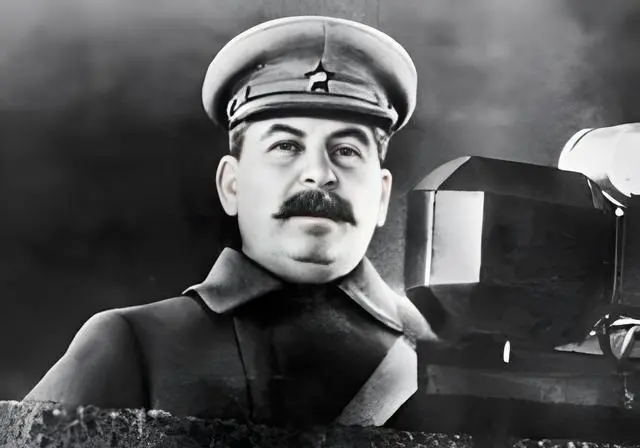
The road to power and intra-party struggle
During the period of opposition to foreign armed intervention and civil war (1918-1920), Stalin served as a member of the Workers' and Peasants' National Defense Committee and a member of the Revolutionary Military Committee of the Republic. He distinguished himself in the battle to defend Tsaritsyn, which was later renamed Stalingrad (Сталинград). During the civil war, Stalin repeatedly defied the decisions of Trotsky, Chairman of the Soviet Revolutionary Military Council, and strengthened his influence in the army.
In April 1922, Stalin was elected as General Secretary of the Central Committee of the Soviet Union (Bolsheviks) at the first meeting of the newly elected Central Committee at the 11th Congress of the Soviet Union (Bolsheviks). At the end of the same year, he made a report on the establishment of the Union of Soviet Socialist Republics (ссср).
On the eve of Lenin's death (December 1922), he dictated a number of letters to the upcoming Party Congress in which he expressed concern about Stalin's unlimited power and suggested that comrades carefully think of a way to remove Stalin from the position of general secretary because he was " too rough ." Although Lenin recommended that Stalin be removed from his post, in 1923, Kamenev, Zinoviev and others believed that Lenin's suggestion was inappropriate and unanimously elected Stalin to continue as general secretary.
After Lenin's death in January 1924, Stalin gradually became the main leader of the Soviet party and state. He proposed the idea of " building socialism first in a country ." In the subsequent political struggle, he first joined forces with Kamenev and Zinoviev to fight against Trotsky and denounced "Trotskyism" as a heresy. Soon after, Stalin had differences with the "New Opposition" formed by Kamenev and Zinoviev, and in 1927 he expelled Trotsky, Zinoviev, Kamenev and others from the party. By 1929, the Bukharin (Бухарин) group was also expelled from the Politburo, and Stalin's position was firmly established.
Socialist Construction and the Establishment of Stalin’s Model
industrialization and collectivization
In December 1925, the Fourteenth National Congress of the Communist Party of the Soviet Union (Bolsheviks) established the general policy of socialist industrialization, aiming to transform the Soviet Union from an agricultural country into an industrial country centered on heavy industry. During the implementation of the first two Five-Year Plans (starting in 1928), the Soviet Union formed a relatively complete industrial system and achieved national industrialization. By 1940, the Soviet Union's steel, coal, oil, and electricity production had reached new highs, and it had become the world's third most powerful industrial country after the United States and Germany.
At the same time, in December 1927, the Fifteenth National Congress of the Communist Party of the Soviet Union (Bolsheviks) established the policy of agricultural collectivization (кольского хозяйства). The movement aimed to unite and transform individual small-scale peasant economies into large-scale collective economies in order to provide finance and food for industrialization. However, there were serious mistakes in the agricultural collectivization movement, including violating farmers' willingness to join voluntarily, excessively adopting rich peasant (кулак) policies, and levying excessive funds from farmers, which seriously damaged farmers' enthusiasm for production. For example, during the agricultural collectivization movement, the state implemented a compulsory sales system , which resulted in overburdened farmers and triggered passive resistance, which ultimately led to severe famine that spread across vast areas of the Soviet Union from 1932 to 1933. About 2.2 million people in Ukraine starved to death.
Highly centralized political and economic system
The promulgation of the new constitution in 1936 marked the establishment of the basic socialist system in the Soviet Union, and also marked the formation of the highly centralized political and economic system created by Stalin (the "Stalin model"). The characteristics of this model include: economically managed by administrative orders, negating the law of value, rejecting commodities and markets; politically, power is highly concentrated, the party and government are not separated, lack of mass supervision, and neglect of democracy and the rule of law.
Although the Stalin model played an important role during the war and the recovery of the national economy, its serious flaws and drawbacks later increasingly seriously hindered the development of the Soviet national economy and various undertakings. This planning system that emphasizes the priority of national interests will eventually hinder positive and open development, causing the Soviet Union to lack vitality in international competition. If you are interested in economic and social development under different political systems, you can take the 8values political test to explore the emphasis of different ideologies on the economic dimension.
Stalin: The Great Purges and the Cult of Personality
As Stalin's status was firmly established, the Personal Cult of him reached quite serious proportions. This kind of personal worship was reflected in the later period of his rule. Stalin even began to like this kind of worship, so much that his works must be quoted or his name mentioned on various occasions. In order to improve his image, some painters even used elevation angles to make the short Stalin look like a giant, and specially invented special "height-increasing shoes" for him.
While the cult of personality was prevalent, the Soviet Union went through a period known as the Great Purge (or the Great Terror) in 1937-1938. This massive purge began in 1934 with the assassination of Sergey Kirov. During this period, approximately 1.3 million people were sentenced and 682,000 of them were shot .
The Great Purge not only targeted political opponents (such as the old Bolsheviks during Lenin's time), but also affected outstanding leaders of the party, government, and military, famous intellectuals, and ordinary cadres and the masses. For example, two-thirds of the members of the Party Central Committee during the October Revolution were shot. More than 40,000 Red Army commanders and political workers were purged, including three of the five marshals.
In the fields of science and technology and culture, many famous scientists and experts were not spared. For example, the breeder Vavilov, the aircraft designer Tupolev, the inventor of the Katyusha rocket launcher Langemark, and the chief designer of the Soviet Union's first artificial satellite Korolev were all executed or arrested. Stalin himself emphasized in 1939 that the purges were to "eliminate the enemies of the people", and although he admitted that serious mistakes had been made, he believed that the purges were inevitable and "generally produced good results."
supreme commander in world war ii
In June 1941, after Nazi Germany tore up the "Soviet-German Non-Aggression Pact" and launched the "Barbarossa Plan" to attack the Soviet Union, Stalin served as Chairman of the Soviet Defense Council and Supreme Commander of the Soviet Armed Forces. Although he had not made adequate preparations because he believed that Germany would not attack the Soviet Union before defeating Britain, the Soviet army suffered heavy losses in the early stages.
At the critical moment of the Great Patriotic War, Stalin demonstrated his tenacity and military leadership. When the German army approached Moscow in November 1941, he resolutely stayed in the city to organize a counterattack and held a military parade in Red Square, which greatly boosted the morale of the Soviet soldiers and civilians.
In the Battle of Stalingrad, the Soviet army fought fiercely for 200 days and wiped out 1.5 million enemies. This battle is considered the turning point of World War II . Under Stalin's outstanding command, the Soviet army eventually won a series of victories, including the Battle of Kursk, and drove the German army out of the Soviet Union. He led the Soviet people to ultimately defeat Nazi Germany. British Prime Minister Winston Churchill once commented on Stalin: " Fortunately for Russia, in the years when she endured difficult tests, she was led by the genius and perseverance of the commander-in-chief Joseph Stalin. "
In terms of international diplomacy, Stalin participated in several important summit meetings of the allies, including the Tehran Conference and the Yalta Conference, and reached an agreement on the conditions for war against Japan. In August 1945, the Soviet Red Army sent troops to Northeast China and quickly defeated the Japanese Kwantung Army.
Death in later years and historical conclusion
After the end of World War II, Joseph Stalin fostered a series of satellite countries in the occupied areas of Eastern Europe and formed the Socialist Bloc headed by the Soviet Union.
Stalin died of cerebral hemorrhage in Moscow on March 5, 1953 at the age of 74. Although the cause of his death was controversial, the autopsy report showed that Stalin died of natural causes.
After Stalin's death, his body was initially placed alongside Lenin's body in Lenin's Mausoleum in Moscow's Red Square. However, in view of his serious violation of Lenin's will, abuse of power, and widespread repression, in 1961, the 22nd Congress of the Communist Party of the Soviet Union passed a resolution to remove Stalin's body from Lenin's Mausoleum and bury him under the red wall of the Kremlin.
In 1956, Khrushchev gave a secret report at the 20th Congress of the Communist Party of the Soviet Union, exposing Stalin's expansion of anti-revolutionary campaigns in the 1930s, his cult of personality, and his mistakes in the early stages of the war.
Historical assessments of Stalin are complex and contradictory. Russian President Vladimir Putin once pointed out that the country transformed from an agricultural country to an industrial country during the Stalin era. This was a positive achievement, but the price was unacceptable . He emphasized: "There is no doubt that what we encountered during this period was not just a simple cult of personality, but massive crimes against one's own people. This is also true.". Churchill concluded: " What he inherited was a backward Russia cultivated by plowmen, and what he left behind was a Soviet Union equipped with atomic weapons. "
Stalin's philosophical thoughts are part of Marxist philosophy. He adheres to the party spirit principle of Marxist philosophy and the principle of integrating theory with practice. In terms of military theory, Stalin put forward the military theory that the fate of war is determined by factors that often play a role based on the new historical conditions. He also emphasized that the art of modern combat lies in mastering all forms of war and scientific achievements, and being good at using them rationally.
Extended reading : If you are attracted by Stalin's leadership style and want to explore your own political decision-making tendencies, welcome to the Political Test Center to experience the political leaders' decision-making style test . Through 48 professional questions, you will analyze your leadership characteristics from six dimensions such as decision-making style, view of power, and economic concepts to see whether you are most like Stalin, Churchill, Roosevelt, or other historical leaders.
_A brief summary of Stalin's personal life:_ Stalin married his first wife Ekaterina Svanidze in 1904. She died in 1907. The two had a son, Yakov Dzhugashvili. Yakov was captured and sacrificed by the Germans in World War II. In 1919, Stalin married his second wife, Nadezhda Alliluyeva, and they had a son, Vasily Dzhugashvili, and a daughter, Svetlana Alliluyeva. Nadezhda committed suicide in 1932. Vasily later became a major general in the Soviet Air Force, but was arrested and sentenced after Stalin's death.