Vladimir Lenin: An in-depth interpretation of his life, thoughts and historical status
Vladimir Lenin was the founder of the Union of Soviet Socialist Republics, the founder of the Bolshevik Party, and one of the most influential politicians of the 20th century. This article reviews Lenin’s legendary life, revolutionary theory (Leninism) and its impact on the world in detail, helping readers gain a deeper understanding of the political values and ideology represented by this historical giant. You can explore your own ideological stance through the 8values political values orientation test.
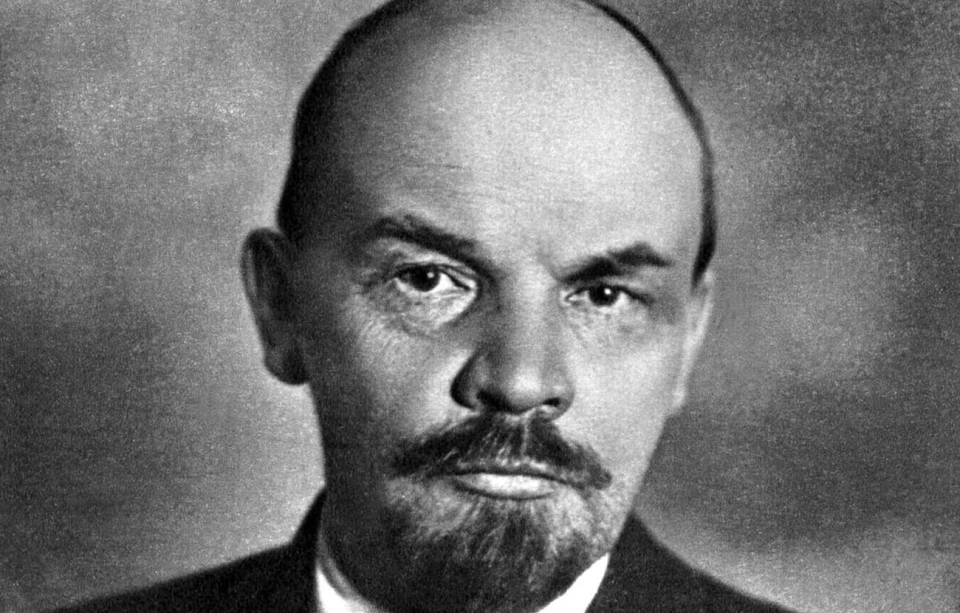
Vladimir Ilyich Lenin (April 22, 1870 - January 21, 1924), formerly known as Vladimir Ilyich Ulyanov, was born in Simbirsk, Russia (now Ulyanovsk). He was a great proletarian revolutionist, politician, theorist, and thinker. He once served as Chairman of the People's Commissar of the Soviet Union (ie, Prime Minister of the Soviet Union) and other important positions. Lenin was the founder of the world's first socialist country and the world's first proletarian ruling party. He successfully led the Russian October Socialist Revolution and transformed socialism from scientific theory into great practice.
_Want to know which historical leader your decision-making style is most similar to? Try the Political Leader Decision-Making Style Test to see if you have Leninian leadership traits. _
Vladimir Lenin’s studies and revolutionary enlightenment
Lenin's early life and academic journey laid the foundation for his later revolutionary career. He was born on April 22, 1870 (April 10 in the Russian calendar) in the city of Simbirsk on the Volga River. Lenin was diligent and studious since he was a child. He achieved excellent results while studying at the Simbirsk Classical High School. He received the highest marks in almost all his subjects and graduated with a gold medal in 1887.
As a teenager, Lenin witnessed with his own eyes the difficult lives of the urban poor and nearby farmers, which aroused his sympathy for the working people and his strong dissatisfaction with the current social situation. He read extensively the progressive works of Russian revolutionary democrats and was deeply influenced by revolutionary democratic ideas. In his senior year of high school, he was first exposed to Marxism, reading "Das Kapital" brought home by his brother Alexander (Alexander Ulyanov).
In May 1887, when Lenin was about to graduate from high school, his brother Alexander was arrested and killed for participating in an assassination attempt on the Tsar. This incident had a huge impact on Lenin, who firmly stated: "We will not take this road." In August of the same year, Lenin entered the Law Department of Kazan University to study, but at the end of the year he was arrested and exiled for participating in the progressive student movement. The following fall, he returned to Kazan, joined the Marxist group, and began to systematically study Karl Marx's Capital and the works of Georgi Plekhanov, eventually becoming a Marxist.
In 1891, Lenin passed the external examination at the Law Faculty of St. Petersburg University and received a diploma cum laude. He subsequently qualified as a paralegal and regularly defended poor peasants in the Samara District Court.
The struggle for party building and the formation of Leninism
In August 1893, Lenin came to St. Petersburg to organize and lead Marxist group activities and actively spread Marxism. He criticized the erroneous ideological trends of the time by writing theoretical works, such as "What Are the "Friends of the People" and How Do They Attack Social Democrats?" in 1894. ”, criticizing the views of liberal Populism.
In 1895, upon his return, Lenin united the Marxist groups in St. Petersburg and founded the St. Petersburg Association for the Liberation Struggle of the Working Class. At the end of the same year, he was imprisoned after being denounced by a traitor, and was subsequently exiled to Siberia in 1897. While in exile, he completed the book "The Development of Capitalism in Russia" and began to use the pen name "Lenin". After his exile in 1900, Lenin moved to Western Europe and co-founded Russia's first Marxist political newspaper, Iskra, with Julius Martov.
In the struggle to build the party, Lenin established his core theory. In 1901-1902, Lenin wrote What to Do? "What Is to Be Done?", criticizing the "economist" line within the party and the revisionism of Eduard Bernstein. He proposed the idea of building the party into an institution with "professional revolutionaries" as the vanguard core and strict organizational disciplines, that is, democratic centralism.
In 1903, the Russian Social Democratic Labor Party held a congress in Brussels, forming the Bolsheviks (majority) with Vladimir Lenin as the core. The emergence of the Bolsheviks and their ideological system marked the formation of Leninism . Leninism is called "Marxism in the period of imperialism and proletarian revolution" by later generations. It is a revision and supplement to the basic theory of Marxism based on Russian practice.
The greatest feature of Leninism is its theory of "dictatorship of the proletariat." Lenin believed that in the imperialist stage, the proletarian party could only gain power through violent revolution. He emphasized that after gaining power, even if the bourgeoisie no longer exists, it is still necessary to adopt a dictatorship to defend the proletarian power and that the bourgeois democratic system should not be retained.
In terms of philosophical theory, Lenin clearly put forward the major proposition that the unity of opposites is the core of materialist dialectics in his "Philosophical Notes", achieving a major breakthrough in the history of materialist dialectics. He also wrote "Materialism and Empirio-Criticism", which systematically expounded the basic principles of dialectical materialism and historical materialism.
World War I and the Analysis of Imperialism
During the First World War (1914-1918), Lenin adhered to the position of proletarian internationalism. He severely condemned the behavior of most leaders of the Second International (Social Chauvinism) in abandoning the anti-war resolution and supporting their own government's war. Lenin put forward the slogan "turn imperialist war into civil war" .
Based on the law of uneven economic and political development of imperialism, Lenin put forward the idea in 1915 that "socialism may first win victory in a few or even a single capitalist country." This was his epoch-making new contribution to the theory of socialist revolution. In 1916, Lenin wrote "Imperialism is the Highest Stage of Capitalism", which comprehensively analyzed the nature, characteristics and basic contradictions of imperialism and pointed out that imperialism is the eve of the proletarian socialist revolution.
Leading the October Revolution
The February Revolution in Russia in 1917 overthrew Tsar Nicholas II. Vladimir Lenin knew that he needed to return to Russia immediately. With the help of the Swiss Social Democrats, he took a "sealed train" arranged by Germany through the German border and arrived in Petrograd on April 16, 1917.
After returning home, Lenin quickly became the leader of the revolutionary movement. He proposed the famous "April Theses" , stating that the Russian revolution must transition from a bourgeois democratic revolution to a proletarian socialist revolution, and put forward the slogan "all power to the Soviets" .
In July of the same year, after the "July Bloody Incident", the provisional government wanted Lenin. He lurked in a hut on the shores of Lake Razliv and wrote The State and Revolution.
In October 1917, Lenin secretly returned to Petrograd from Finland and personally directed the armed uprising. On November 7 (October 25 in the Russian calendar), workers, soldiers and sailors supporting the Bolsheviks occupied the Winter Palace, the seat of the provisional government, and declared the overthrow of the Russian provisional government. Known as the "October Revolution" in history.
On the 8th of the same month, Lenin was elected as Chairman of the People's Committee of the First Workers' and Peasants' Government. The world's first socialist country was thus born. The new government promulgated the Peace Decree and the Land Decree, and in December established the All-Russian Extraordinary Committee for the Elimination of Counterrevolution and Sabotage ( Cheka ).
Consolidation of political power and construction of the Soviet state
After the success of the October Revolution, the new Soviet regime faced threats from domestic and foreign reactionary forces, including the counterattack of the remaining forces of the bourgeois provisional government and the armed intervention of 14 capitalist countries including Britain, France, the United States, and Japan. Lenin pointed out that there was an urgent need to consolidate the new Soviet power, and the implementation of proletarian dictatorship was the most fundamental measure to consolidate power.
War Communism and the New Economic Policy (NEP)
In order to maximize the supply of materials in response to the civil war (1918-1920), Soviet Russia implemented the policy of "war communism" in June 1918. This policy mainly includes the forced expropriation of farmers' grain (surplus grain collection system), nationalization of large and medium-sized enterprises, implementation of planned rationing system and strict worker management system.
However, wartime communist policies led to economic collapse and severe famine (1921), in which it is estimated that more than 5 million people starved to death. The peasants strongly resisted the grain requisition, and the Tambov rebellion broke out, and the Kronstadt sailors also rioted.
Lenin analyzed the situation realistically and admitted that there were errors in the previous plan. Beginning on March 21, 1921, Soviet Russia abandoned wartime communism and switched to the implementation of the "New Economic Policy" (New Economic Policy, NEP). The main contents of the new economic policy include: replacing the surplus grain collection system with grain taxes, allowing the sale of goods, relaxing foreign trade controls, and allowing a certain degree of private enterprise economic existence. The New Economic Policy gradually restored the Soviet Russian economy, and by 1928, industrial and agricultural output successfully returned to the 1913 level.
In economic construction, Lenin put forward the famous slogan in 1920: "Communism is Soviet power plus nationwide electrification." He attaches great importance to the All-Russian Electrification Plan (GOELRO), calling it the "second party platform."
Building the Ruling Party and Combating Bureaucracy
Lenin attached great importance to the construction of the ruling party and the construction of Soviet power. He emphasized that the party must continuously strengthen its own construction, improve its governance capabilities, promote intra-party democracy, and enforce strict discipline to maintain the party's advanced nature and unity. In order to improve the Marxist theoretical level of the whole party, Lenin promoted the large-scale publication of classic works and established local party schools at all levels across the country.
Lenin believed that the fight against bureaucracy was an "internal political task" of the Soviet state. He vigorously developed socialist democracy and believed that promoting democracy was the fundamental political measure to overcome bureaucracy. Lenin emphasized the need to use the power of the people to restrict power by continuously expanding and realizing the people's democratic rights, such as implementing an electoral system and ensuring that the people have the right to supervise and recall state officials. He believes that supervision by the people can best reflect the essence of people's democracy and is an effective means to prevent and overcome bureaucracy.
Foreign Policy and the Comintern
During Lenin's period, the guiding principle of Soviet Russia's (later the Soviet Union) foreign policy was to safeguard national equality and independence, and to strive for world peace and international cooperation.
Regarding relations with capitalist countries, Lenin advocated necessary "compromises" in order to achieve the policy of "peaceful coexistence." For example, in order to win temporary peace and consolidate power, Lenin overcame all objections and firmly advocated signing the Treaty of Brest-Litovsk with Germany, even though the conditions were very harsh.
In order to break the economic blockade of imperialism, Lenin worked hard to establish normal diplomatic and trade relations with various countries, such as signing a trade treaty with Britain in 1921.
Regarding the international communist movement, Lenin made a lot of theoretical and organizational preparations after World War I led to the collapse of the Second International, and established the Communist International (Third International) in Moscow in early March 1919. The Comintern is committed to uniting the left-wing forces of socialist parties in various countries and formulating the strategies and tactical principles of the international communist movement.
Lenin paid great attention to the liberation movements of colonial and oppressed nations. He enthusiastically supported the Chinese people's just struggle against foreign aggression and feudal oppression. Under Lenin's instructions, the Soviet Russian government stated on July 25, 1919 that it would return all occupied territories plundered from China by the tsarist government. However, despite repeated consultations with the Beiyang government, Soviet Russia refused to abandon the Chinese Eastern Railway and withdraw its troops from Khalkha Mongolia.
Later life, death and posthumous studies
Lenin's health was seriously damaged due to intense revolutionary and war work and the shooting of Socialist Revolutionary Fanny Kaplan on August 30, 1918.
In April 1922, the bullet in Lenin's neck was removed. In May of the same year, he suffered his first stroke, which left him partially paralyzed on his right side. In December 1922, he ceased political activity after suffering a second stroke. After his first stroke, Lenin completed a testament in which he commented on six senior leaders of the Soviet Union, including Leon Trotsky, Joseph Stalin , Grigory Zinoviev, Lev Kamenev, Nikolai Bukharin, and Georgy Pyatakov.
In a supplement to the dictated record of January 4, 1923, Lenin suggested that Stalin should be removed from the position of general secretary because he was "too violent." In March 1923, Lenin suffered his third stroke and remained bedridden and unable to speak until his death.
At 18:50 on January 21, 1924, Lenin died of a stroke in the village of Gorki at the age of 54. During the autopsy, medical experts concluded that the cause of Lenin's death was hardening of the blood vessel walls (arteriosclerosis), and the cause was the carotid artery.
After Lenin's death, his body was buried in Lenin's Mausoleum on the west side of Moscow's Red Square.
Lenin’s brain research and historical evaluation
After Lenin's death, the Soviet Union established a special laboratory in order to study the special features of his brain. The famous German neuroscientist Oskar Vogt led the study. Vogt pointed out in his 1927 report that the structure of Lenin's brain was different from that of ordinary people. His pyramidal cells were very developed and the connecting fibers were very strong. He believed that Lenin's brain had a higher quality.
Lenin is generally recognized by communists around the world as "the great mentor and spiritual leader of the international proletarian revolution."
- Joseph Stalin praised Vladimir Lenin for his simplicity, humility and lack of pretentiousness , and commented that the logic in Lenin's speech was "like an omnipotent tentacle" .
- Sun Yat-sen highly admired Lenin and considered him to be the "hero of ten thousand men" who turned theory into reality.
- Winston Churchill once commented that the worst thing that could happen to the Russian people was the birth of Lenin, and the second worst thing was his death.
- Jawaharlal Nehru (former Prime Minister of India) believed that Lenin's theory continues to be revitalized and that he is one of the few immortal world figures now.
As a new development and new achievement of Marxism in the era of imperialism and proletarian revolution, Leninism opened up the road to the nationalization of Marxism. Some Chinese scholars believe that Lenin's thought plays a connecting role in the history of the development of Marxism and still has important enlightenment significance and reference value for the comprehensive realization of socialist modernization.
If you are interested in the origins and impact of different ideologies, you can learn more through the 8values All Resulting Ideologies page, and for more, keep browsing our official blog .
Extended reading : If you are attracted by Lenin's leadership style and want to explore your own political decision-making tendencies, welcome to the Political Test Center to experience the political leaders' decision-making style test . Through 48 professional questions, you will analyze your leadership characteristics from six dimensions such as decision-making style, view of power, and economic concepts to see whether you are most like Stalin, Churchill, Roosevelt, or other historical leaders.