Benito Mussolini: Founder of Fascism and Italian Dictator
As the founder and dictator of Italian fascism, Benito Mussolini’s life, extreme nationalist ideology, and profound influence on the world political landscape of the twentieth century are important issues that cannot be avoided in understanding modern history. By fully understanding Mussolini's political leanings, you can also take an in-depth 8values political values leaning test to compare the characteristics of different ideologies.
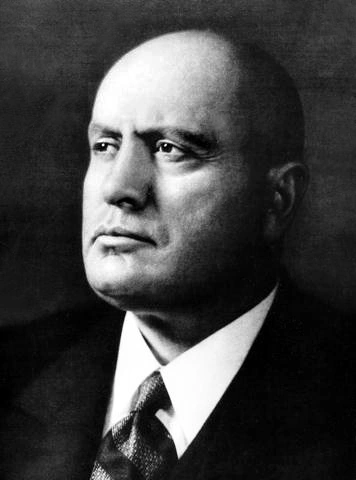
Benito Amilcare Andrea Mussolini (Italian: Benito Amilcare Andrea Mussolini, July 29, 1883 – April 28, 1945) was an Italian politician, dictator, founder of Fascism , and Prime Minister of the Kingdom of Italy from 1922 to 1943. He called himself "Il Duce" (The Leader) and ruled Italy with an iron fist for more than two decades. He was one of the core figures in the wave of totalitarianism in Europe in the 20th century. He joined hands with Hitler to forge the Rome-Berlin axis , dragging Italy into World War II and ultimately annihilating it in the ruins of the war.
_Want to know which historical leader your decision-making style is most similar to? Try the Political Leader Decision-Making Style Test to see if you have Mussolini-like leadership traits. _
Trouble in early years and budding ideas
Mussolini was born on July 29, 1883 in Varano di Costa, a small village in the Province of Forlì, Emilia-Romagna, Italy. His father, Alessandro Mussolini, was a blacksmith and a fervent socialist and anarchist; his mother, Rosa Maltoni, was a devout Catholic primary school teacher. The contradictory tension of this family environment - his father's revolutionary passion and his mother's sense of religious order - to a certain extent shaped Mussolini's later complex and contradictory political character.
In his youth, Mussolini had a violent personality and was expelled from school many times for fighting. In 1901 he qualified as a primary school teacher but had no interest in a quiet teaching career. In 1902, he moved to Switzerland and made a living doing odd jobs. At the same time, he read a lot of works by Marx, Nietzsche, Sorel and others, and gradually became a radical socialist and syndicalist. While in Switzerland he was active in politics and was expelled several times for inciting workers to strike.
After returning to Italy, Mussolini quickly rose to prominence within the Italian Socialist Party with his sharp writing and provocative speeches, and in 1912 he became the director of the party newspaper Forward! 》(Avanti!), which greatly increased its circulation. However, the outbreak of World War I became an important turning point in his thinking. He abandoned his socialist anti-war stance and instead advocated Italy's participation in the war, believing that nationalism was far more powerful than class struggle. This stance got him expelled from the Socialist Party, but it also set him on a completely new political path.
The founding of the fascist party and its seizure of power
After the end of World War I, although Italy was listed as the victor, it failed to obtain the expected territorial compensation at the Paris Peace Conference. There was a strong sentiment of "Vittoria mutilata" (Incomplete Victory) in the country. Social unrest, economic depression, and worker strikes occurred one after another. The impact of the Bolshevik Revolution made the middle class and capitalist families panic. This situation provided Mussolini with excellent political soil.
On March 23, 1919, Mussolini convened veterans, nationalists and various dissatisfied elements in Milan's Piazza Sansepolcro to formally establish the Italian Fighting Fascism (Fasci Italiani di Combattimento), which was the prototype of the fascist movement . The word "Fascio" comes from the rod that symbolized authority in ancient Rome and means unity and strength.
The early fascist movement had the "Black Shirts" (Camicie Nere) as its armed core, launching violent attacks on socialist workers' organizations, trade unions and communists, and acting as thugs for capitalists and landlords to suppress the labor movement. This organized violence has the support and connivance of conservative forces.
In 1921, the fascist movement was reorganized into the National Fascist Party (Partito Nazionale Fascista), with Mussolini as leader. In October 1922, he imitated the spirit of the ancient Roman generals and organized tens of thousands of Blackshirts to launch the "Marcia su Roma" (Marcia su Roma) to put pressure on the capital. The weak Italian King Victor Emmanuel III refused to declare martial law and instead appointed Mussolini prime minister on October 29. This almost bloodless political gamble allowed Mussolini to ascend to the pinnacle of power in an almost "legal" way.
The establishment of dictatorship and the era of "leaders"
Mussolini initially adopted a relatively moderate coalition government, but he soon began to systematically dismantle Italy's democratic system. After the 1924 election, opposition lawmaker Giacomo Matteotti publicly exposed electoral fraud and was immediately assassinated by fascists. This incident caused an uproar, but Mussolini resolved the political crisis with his tough stance and took the opportunity to accelerate the dictatorship process.
Between 1925 and 1926, Mussolini promulgated a series of fascist totalitarian laws , abolishing political parties, dissolving parliament, banning independent trade unions, controlling the press and publishing, and establishing the secret police "Argo" (OVRA) to monitor and suppress dissidents. He combined executive, legislative and military powers into one body and formally established a dictatorship. Italy thus became the first fascist totalitarian state in Europe, providing a blueprint for Hitler and others to follow.
In terms of external propaganda, Mussolini carefully created the personality cult image of "The Leader" (Il Duce) - strong, courageous, and omnipotent. His portraits and quotations are all over Italy's towns and villages, and his great achievements are celebrated in schools and the media. He frequently delivered passionate speeches on the balcony, inciting crowd emotions with his magnetic voice and exaggerated body language. He was considered one of the most provocative political speakers of the 20th century.
When analyzing Mussolini's extreme totalitarian and nationalist ideology, it helps us understand the polarization of the political spectrum. You can measure your inclination on such issues by taking the 8values political values orientation test , and view detailed interpretations of all 8values ideological results.
Internal Politics: Economy, Society and Culture
economic policy
Mussolini positioned the economy of fascist Italy as the "third way" between capitalism and socialism - corporativismo . The state has established a series of "Corporazioni" to bring both labor and capital into a unified management framework. On the surface, it reconciles class conflicts, but in fact it deprives workers of their independent organizational rights and makes capital subject to the will of the state.
After the outbreak of the world economic crisis in 1929, Mussolini implemented the "relief for work" policy and built large-scale roads, railways, water conservancy and agricultural reclamation projects. The most famous of these was the large-scale drainage and reclamation project of the Agro Pontino , which converted hundreds of thousands of hectares of swampland into agricultural land. It was touted as a "great achievement" by the fascist propaganda machine.
He also promoted a "wheat-centered" food self-sufficiency policy (Battaglia del Grano) in an attempt to reduce Italy's dependence on imported food. However, this policy resulted in an unbalanced agricultural structure and unsatisfactory overall economic benefits.
Culture and Thought Control
In the cultural field, Mussolini also implemented strict state control. The fascist government controlled the education system and required schools to instill nationalist and fascist ideologies; it implemented strict censorship of news, radio, and movies and turned them into tools for political propaganda. Cinecittà , founded in 1936, became the center of the Italian film industry and an important front for fascist propaganda.
Mussolini adopted a carrot-and-stick strategy toward intellectuals: those who complied received funding and honors, while those who resisted were imprisoned, exiled, and even assassinated. The famous economist and Nobel Prize winner Enrico Fermi left Italy in 1938 because his wife was Jewish and became one of the victims of fascist racial policies.
relations with the catholic church
In 1929, Mussolini and the Vatican signed the historic Lateran Treaty (Patti Lateranensi), which resolved the unresolved "Rome Question" since Italy's unification in 1870, recognized the Vatican as an independent sovereign state, and established Catholicism as the state religion of Italy. This move greatly enhanced his prestige among conservative Catholics in Italy, and also won the brief endorsement of Pope Pius XI.
Expansionism and foreign aggression
Mussolini dreamed of restoring the glory of the ancient Roman Empire and establishing an Italian empire with the Mediterranean as "Mare Nostrum" (our sea). To this end, he implemented a series of foreign aggression policies.
In October 1935, Italy invaded Ethiopia (then called Abyssinia), used poison gas and aerial bombing, and annexed it in May of the following year. This naked act of aggression sparked international condemnation, and the League of Nations imposed economic sanctions on Italy, but failed to prevent the war. The move marked a rupture in Italy's relations with Western democracies and pushed Mussolini further into Hitler's arms.
In 1936, Mussolini signed an agreement with Hitler to form the Asse Roma- Berlino axis ; in the same year, Italy and Germany jointly supported Franco's rebels in the Spanish Civil War, using Spain as a testing ground for new weapons. In May 1939, the two countries signed the "Steel Treaty" (Patto d'Acciaio) and formally formed a military alliance. In April of the same year, Italy annexed Albania.
However, when Hitler launched World War II in September 1939, Mussolini, who was well aware of Italy's inadequate military preparations, initially declared "non belligeranza" (non belligeranza). It was not until June 1940, when he saw that France was about to fall and Germany had won a great victory, that he could not wait to declare war on Britain and France, hoping to take the opportunity to share the spoils of war. The Italian army immediately suffered disastrous defeats in many battlefields such as North Africa, Greece, and East Africa, and had to repeatedly rely on German rescue.
Racial policy and anti-Semitic laws
Mussolini did not regard anti-Semitism as his core ideology in his early days, and there were even Jews serving in the fascist party. However, as the alliance with Nazi Germany deepened, he promulgated the Italian version of the Leggi razziali in 1938, which excluded Jews from public life and prohibited them from holding public office, attending public schools, or marrying non-Jews.
This policy caused widespread dissatisfaction in Italian society, and even the Catholic Church expressed dissent. After Germany occupied Italy in 1943, some eight thousand Italian Jews were deported to Nazi concentration camps, most of whom did not survive.
destruction and death
From 1942 to 1943, the Italian army suffered successive defeats in North Africa and the Soviet battlefield, the domestic economy deteriorated, and anti-fascist sentiment grew day by day. In July 1943, Allied forces landed in Sicily. On July 25, the Fascist Grand Council overthrew Mussolini with a vote of no confidence, and the king ordered his arrest.
However, a dramatic scene unfolded immediately: In September 1943, German SS commandos, led by Otto Skorzeny, rescued Mussolini from the Gran Sasso camp in the mountains of central Italy. Hitler immediately supported him to establish the "Repubblica Sociale Italiana" (Repubblica Sociale Italiana) actually controlled by Germany in northern Italy, known historically as the "Republic of Salò" (Repubblica di Salò), and Mussolini became a puppet of the Germans.
In April 1945, with the Allied forces advancing in full force, Mussolini tried to escape Switzerland in disguise. On April 27, he was discovered and arrested by Italian guerrillas in Dongo on the shores of Lake Como. The next day, April 28, 1945 , he and his mistress Clara Petacci were shot on the spot in Giulino di Mezzegra. He was 61 years old. The bodies of the two men were transported to Milan's Piazzale Loreto, hung upside down, and were reviled and beaten by the public. This scene became an iconic image of the fall of fascism and shocked the world.
Historical influence and evaluation
Mussolini is one of the most controversial political figures of the twentieth century, with a complex and far-reaching historical influence.
The founder of fascism: Mussolini was the founder of modern fascist ideology and movement. His theory and practice provided a template for subsequent dictators such as Hitler and Franco, and had a profound impact on the European political landscape in the twentieth century.
Promoter of the war: Italy's entry into the Axis Group under his leadership objectively contributed to the scale and intensity of World War II and brought profound suffering to the people of the Mediterranean region and Africa.
Participants in racial persecution: The racial decree promulgated in 1938 pushed thousands of Italian Jews into the abyss of Nazi extermination camps, which is their unshirkable historical responsibility.
Promoter of Italian modernization (limited evaluation): Some historians have also pointed out that Mussolini promoted part of Italy's infrastructure construction and administrative modernization during his administration, and solved the long-standing problem of church-state relations that had plagued Italy through the Lateran Treaty. However, these achievements are based on deprivation of freedom and brutal repression and cannot excuse their crimes.
A warning to future generations: Mussolini’s rise and fall profoundly revealed the fragility of democratic systems and how populism and ultra-nationalism can erode the foundation of the rule of law in times of crisis. His history remains an important example for political scholars studying the rise of authoritarianism.
Extended reading : If you want to explore your own political decision-making tendencies, you are welcome to go to the Political Test Center and experience the political leaders’ decision-making style test . Through 48 professional questions, you will analyze your leadership characteristics from six dimensions such as decision-making style, power concept, and economic philosophy to see whether you are most like Mussolini, Churchill, Roosevelt, or other historical leaders.