Jawaharlal Nehru: leader of the Indian independence movement and founder of modern India
As the core leader of the Indian independence movement and the first prime minister of the Republic of India, Jawaharlal Nehru's life, secular democratic concepts, and profound influence on the national liberation movements in Asia and Africa are key issues in understanding the political history of Asia in the twentieth century. By fully understanding these political leanings, you can also take an in-depth 8values political values leaning test to compare the characteristics of different ideologies.
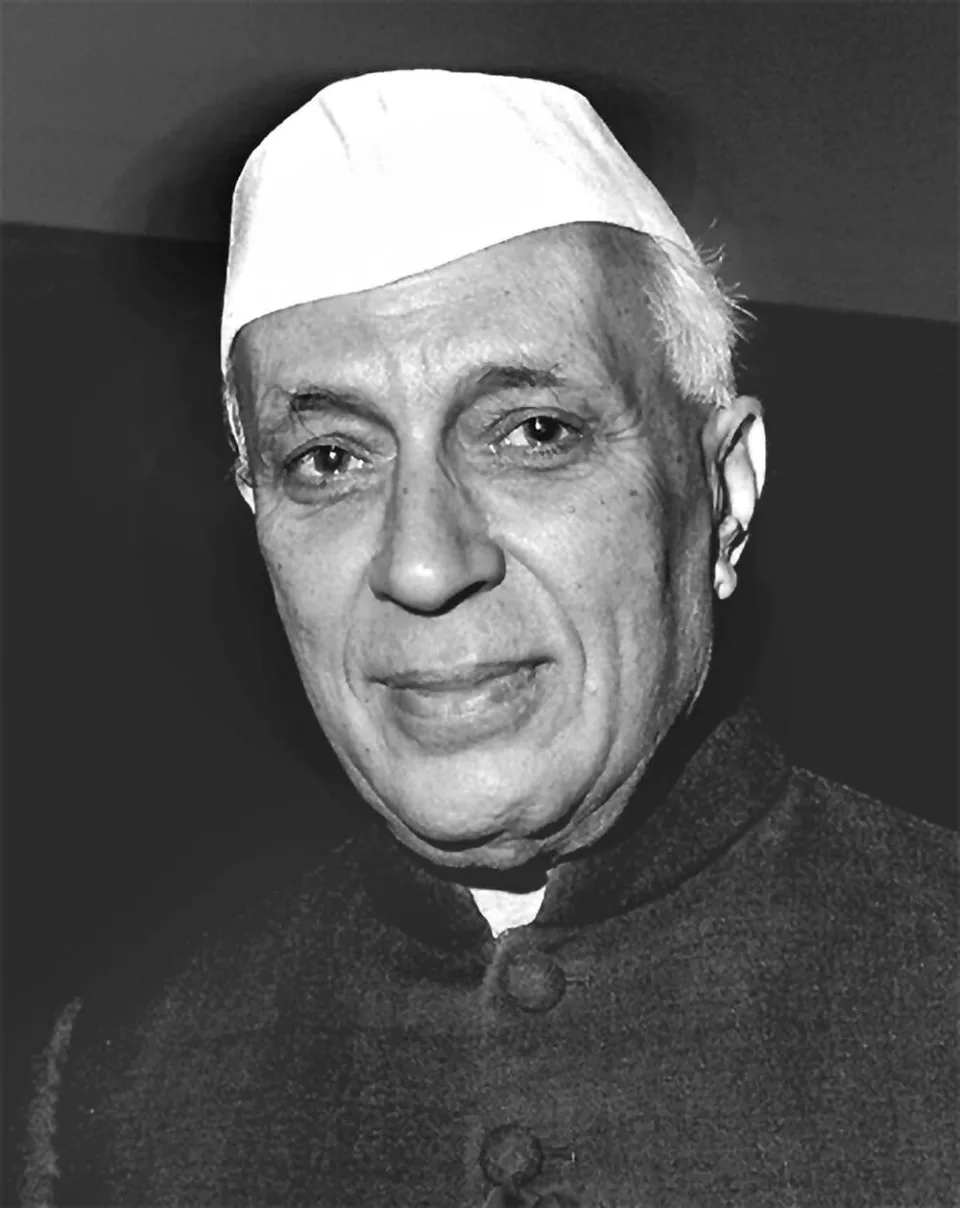
Jawaharlal Nehru (English: Jawaharlal Nehru, November 14, 1889 - May 27, 1964) was an important leader of the Indian independence movement, a core figure of the Indian National Congress, and the first Prime Minister of the Republic of India. He actively advocated secularism , democratic socialism , anti-colonialism and the Non-Aligned Movement (Non-Aligned Movement), and was committed to building a multi-ethnic country that had been traumatized by colonial rule into a modern democratic republic. Inspired by the spirit of Mahatma Gandhi, Nehru became one of the most influential political figures in Asia in the 20th century with his outstanding political talents and international vision.
Nehru was born on November 14, 1889 in Allahabad, United Provinces of British India. He died of a heart attack while in office on May 27, 1964, ending his legendary journey of dedicating his life to India.
_Want to know which historical leader your decision-making style is most similar to? Try the Political Leaders Decision-Making Style Test to see if you have Nehru-like leadership traits. _
Jawaharlal Nehru’s early growth and ideological enlightenment
Nehru was born into a wealthy Brahmin family. His father, Motilal Nehru, was a prestigious lawyer who later became an important leader of the Indian National Congress. Nehru received a British-style elite education since childhood. He first studied at Harrow School, then entered Trinity College, Cambridge to study natural sciences, and finally qualified as a lawyer at the Inner Temple in London.
While studying in England, Nehru was deeply influenced by Western liberalism, Fabian Socialism and the Irish nationalist movement. He read widely, his thoughts gradually matured, and he developed a clear critical awareness of colonial rule. After returning to India in 1912, he joined the Indian National Congress and began his political career. In 1919, the Jallianwala Bagh massacre caused by the British army in Amritsar completely aroused his nationalist enthusiasm. From then on, he devoted his life to the cause of fighting for Indian independence.
Joining the Independence Movement and Gandhi’s Spiritual Inspiration
The encounter between Nehru and Mahatma Gandhi was the most decisive master-disciple relationship in the history of the Indian independence movement. Nehru was deeply moved by Gandhi's non-violent non-cooperation movement (Satyagraha), and quickly became Gandhi's most effective assistant and ideological inheritor. The two men had different emphases in their political concepts - Gandhi focused more on spiritual and moral power, while Nehru focused on the institutional construction of a modern country - but they respected each other and jointly promoted India's independence process.
During the independence movement, Nehru was imprisoned many times. He was arrested nine times by the British colonial authorities and spent a total of about nine years in prison. While in prison, he kept writing and wrote important works such as "The Discovery of India" and "Glimpses of World History", demonstrating his profound knowledge and profound thinking about human civilization.
In 1929, Nehru was elected chairman at the annual conference of the Congress Party in Lahore and read out the historic resolution of India's struggle for complete independence (Purna Swaraj), marking a new stage in the Indian independence movement. Since then, he has become one of the most influential voices within the Congress Party and has been elected as the Chairman of the Congress Party for several terms.
When analyzing Nehru's composite ideology that integrated democracy, socialism and secularism, it helps us understand the multi-dimensional characteristics of the political spectrum. You can measure your inclination on such issues by taking the 8values political values orientation test , and view detailed interpretations of all 8values ideological results .
India’s independent founding and the historical responsibilities of its first prime minister
On August 15, 1947, India finally got rid of British colonial rule and declared independence. Nehru delivered a famous speech on that historic midnight, beginning with "Tryst with Destiny" and announcing the birth of a new country. He immediately became the first Prime Minister of the Republic of India, a position he held for seventeen years until his death in 1964.
At the beginning of independence, India faced huge challenges: the Partition of India caused large-scale migration of millions of people and serious religious conflicts. The country's economic foundation was weak, the illiteracy rate remained high, and there were many feudal states everywhere. With his extraordinary political skills, Nehru promoted the incorporation of many princely states into the Indian Union and completed the arduous task of national unification.
In terms of domestic affairs, Nehru established India's secular democratic constitutional framework, emphasized the separation of religion and state, and protected the rights of ethnic minorities. He vigorously promoted industrialization, establishing steel plants, dams and nuclear energy research institutions, calling these facilities "the temples of modern India". He promoted a mixed economic model with the five-year plan as the core, which not only retained the private economy but also promoted the development of heavy industry through state intervention. He was deeply inspired by the Soviet planned economic model, while retaining the structure of the democratic system.
In the field of higher education, Nehru vigorously built the Indian Institute of Technology (IIT) and the Indian Institute of Management (IIM), laying the foundation for India to become an important exporter of scientific, technological and management talents in the future. His admiration for science and rationality made him an indispensable promoter in India's modernization process.
The Non-Aligned Movement and International Influence
On the international stage, Nehru's most historic contribution was co-initiating the Non-Aligned Movement with Egyptian President Gamal Abdel Nasser and Yugoslav President Josip Broz Tito. This movement advocates that developing countries in Asia, Africa and Latin America should be neither dependent on the Western camp headed by the United States nor the Eastern camp headed by the Soviet Union, and should pursue an independent third path.
The Bandung Conference in 1955 was the highlight of Nehru's international diplomatic career. Together with Chinese Prime Minister Zhou Enlai, he proposed the norms of international relations based on the Five Principles of Peaceful Coexistence , advocating that countries handle relations between countries on the basis of mutual respect for sovereignty and territorial integrity, mutual non-aggression, non-interference in each other's internal affairs, equality and mutual benefit, and peaceful coexistence. This concept had a profound impact on the post-war international order.
Nehru's diplomacy was not without setbacks, however. The Sino-Indian border war in 1962 was a heavy political blow. The defeat of the Indian army in the border conflict greatly damaged Nehru's international reputation and plunged him into deep depression and embarrassment in his later years. Many historians believe that this defeat was one of the important factors that accelerated the deterioration of his health.
Ethnic policy, religious secularization and social change
Nehru was a staunch agnostic and held a rational and critical attitude towards religion. As the leader of a country with extremely diverse religious cultures, he always insisted on the secular nature of the country and opposed any form of religious fanaticism and caste discrimination. He was committed to promoting the reform of Hindu personal laws and ensuring women's equal rights in marriage, inheritance, etc. This was a revolutionary measure in Indian society at that time.
On the issue of caste, Nehru supported the implementation of a reservation system for lower caste groups (scheduled castes and scheduled tribes) in order to correct historical structural inequalities through institutional protection. This policy caused long-term controversy in the future, but its original intention was to promote social justice and class mobility.
Personal life and cultural contributions
Nehru was quite low-key and elegant in his personal life. His wife Kamala Nehru died of tuberculosis in 1936. After that, Nehru raised his daughter Indira Gandhi (later the third Prime Minister of India) alone. He loved literature, history and science, and maintained extensive reading habits throughout his life. His works reached a very high level in terms of literariness and ideological depth.
His iconic look - a white Nehru jacket with a red rose - has become a classic symbol of Indian political culture and took the Western fashion world by storm in the 1960s and 1970s.
On May 27, 1964, Nehru died of a sudden heart attack while in office, and the whole country mourned. The Indian government designated his birthday, November 14, as Children 's Day to commemorate this leader who loved children deeply.
Historical evaluation and heritage controversy
Nehru's influence on Indian history was profound and complex. Supporters believe that he laid a solid foundation for democratic constitutionalism in India, promoted the country's secularization and modernization process, and fought for dignity and voice for developing countries in the international community. The Nehru dynasty- style political inheritance he established (his daughter Indira Gandhi and grandson Rajiv Gandhi successively became prime ministers) profoundly shaped the pattern of Indian politics.
Critics pointed out that his excessive belief in the planned economy caused India to miss the opportunity for economic take-off; his excessive trust in China directly led to the border fiasco in 1962; and the gradual formation of a political elite monopoly by the Congress Party under his leadership also laid hidden dangers for future corruption problems.
No matter how you evaluate it, as historians agree, Nehru was one of the few political giants in the twentieth century who truly shaped the direction of a country at a critical juncture in history. A diverse civilization with hundreds of millions of people, dozens of languages, and hundreds of ethnic groups was able to maintain democratic constitutionalism without falling into authoritarian rule at the beginning of independence. This is largely due to the political and cultural tradition established by Nehru.
Extended reading : If you want to explore your own political decision-making tendencies, you are welcome to go to the Political Test Center and experience the political leaders’ decision-making style test . Through 48 professional questions, you will analyze your leadership characteristics from six dimensions such as decision-making style, power concept, and economic philosophy to see whether you are most like Nehru, Churchill, Roosevelt, or other historical leaders.