Joe Biden: Political Career and Legacy from Delaware Senator to 46th President of the United States
As the oldest president in the history of the United States when he took office, Joe Biden's political career spanning half a century has witnessed the transformation of the United States from the peak of the Cold War to a multi-polar world. By gaining a deeper understanding of his tendencies in establishment politics, centrist diplomacy, and post-pandemic economic policies, you can also conduct an in-depth 8values political values test to compare the characteristics of different ideologies.
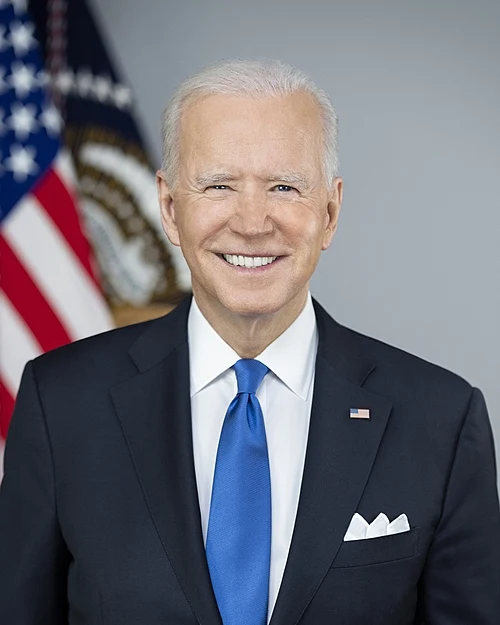
Joe Biden (English: Joe Biden, November 20, 1942-) is the current 46th President , former Vice President and former senior U.S. Senator of the United States. As a leader of the Democratic Party, he is a representative of moderates and liberalism in American politics. During his 36-year career as a senator, Biden served as chairman of the Senate Foreign Affairs Committee for a long time, profoundly influencing the United States' global strategy. During the Obama administration, as vice president, he was responsible for handling many major domestic and international crises. In 2020, he defeated Donald Trump in a highly controversial social atmosphere and committed to restoring the "soul" of the United States and reshaping multilateral diplomacy.
Biden was born on November 20, 1942 in Scranton, Pennsylvania. After experiencing multiple family tragedies and political ups and downs, he finally officially entered the White House on January 20, 2021.
_Want to know which historical leader your decision-making style is most similar to? Try the Political Leader Decision-Making Style Test to see if you have the Biden-like traits of consultation and consensus. _
Early life: Scranton’s roots and tenacity
Biden was born into an Irish-Catholic family, the eldest of four children. His childhood was not affluent, and his father experienced serious financial setbacks, which gave Biden a deep resonance with the economic plight of the middle class from an early age. The biggest challenge he faced growing up was a severe stutter . To overcome this obstacle, he often recited poetry in front of a mirror. This experience not only tempered his will, but also shaped his communication style that emphasized empathy in the future.
Biden graduated from the University of Delaware in 1965 and later received his J.D. from Syracuse University. Although he was not an academic in the traditional sense, he showed great enthusiasm for politics. In 1972, at the age of 29, Biden created a political miracle in Delaware, defeating senior Republican incumbents and becoming one of the youngest senators in U.S. history. However, shortly after he was elected, a tragic car accident claimed the lives of his first wife and young daughter, and his two sons were also seriously injured. Biden was sworn in at his son's hospital bed. This tragedy made him almost give up politics, but it also made him the most humane politician in Washington.
The Long Years in the Senate: The Formation of the Establishment and the Legal Game
For 36 years from 1973 to 2009, Biden worked hard in the Senate. He is recognized as a representative of the "establishment" in the Senate and is good at reaching agreements through cross-party collaboration . He served twice as chairman of the Senate Judiciary Committee and three times as chairman of the Foreign Affairs Committee.
While on the Judiciary Committee, he led the Violent Crime Control and Law Enforcement Act of 1994. Although the act was intended to address rampant crime rates at the time, it later sparked widespread controversy for causing a surge in the U.S. prison population and injustice against minorities. In addition, his handling of the confirmation hearings for Justice Clarence Thomas became a complex legacy that was often mentioned later in his political career.
As a diplomatic veteran, Biden has traveled all over the world. He advocated that the United States should maintain its global leadership but show caution in specific military operations. He supported NATO expansion, but his voting choices on the Iraq war —from initial support to later fierce criticism—reflected his adjustment as a pragmatic politician. The experience during this period accumulated profound political capital for his later handling of complex situations such as Sino-US relations and the Russia-Ukraine conflict.
The Vice Presidency: Obama’s Golden Partner and Crisis Response
In 2008, Barack Obama chose Biden as his running mate mainly because of his rich experience in diplomacy and legislation. As vice president, Biden is entrusted with a great deal of trust. He oversaw the 2009 economic recovery plan to help the United States emerge from the shadow of the Great Recession.
In foreign affairs, Biden is often dubbed Obama's "diplomatic vanguard." He visited Iraq and Ukraine many times and led the initial implementation of the Obama administration's "pivot to Asia-Pacific" strategy. In an increasingly partisan Washington, Biden has relied on his personal friendships with top Republicans such as McConnell to reach agreements on the brink of fiscal crisis many times. In 2017, Obama awarded Biden the Presidential Medal of Freedom , calling him "the best vice president in American history."
Analyzing Biden’s ideology that emphasizes multilateralism and the middle path is helpful in understanding the transformation of the modern Democratic Party. You can measure your inclination on such issues by taking the 8values political values orientation test , and view detailed interpretations of all 8values ideological results .
The 2020 Election and the White House: Repair and Rebuild
In 2020, in the face of the COVID-19 outbreak and profound social divisions, Biden set out again with the slogan "Restore the Soul of America." He promised to end the turmoil of the Trump era and return to normal politics . In an election full of confrontation and controversy, Biden received more than 81 million votes, setting a new record in American history.
In the early days of taking office, Biden faced serious challenges: an out-of-control epidemic, a declining economy, and political divisions caused by the riots on Capitol Hill on January 6. He quickly signed the American Rescue Plan Act to provide direct subsidies to people. He subsequently pushed for the extremely ambitious Infrastructure Investment and Jobs Act . This US$1.2 trillion bill is the largest infrastructure investment in the United States in decades and aims to achieve the return of industry through government intervention.
Bidenomics and the climate transition: A new era of state intervention
In terms of economic policy, Biden has deviated from the neoliberal logic of the past few decades and instead pursued so-called "Bidenomics" . At its core, it is about driving the economy through middle-class growth rather than relying solely on trickle-down effects.
- Industrial policy and chips: He signed the "Chips and Science Act" (CHIPS Act) to attract semiconductor manufacturing back to the United States through large-scale government subsidies. This is seen as a key measure to compete with China in technology.
- Inflation Reduction Act: The Inflation Reduction Act passed in 2022 is the largest investment in combating climate change in U.S. history. The bill compulsorily promotes the development of green energy industries such as new energy vehicles and photovoltaics through tax credits and other means.
- Labor rights: Biden claims to be the most pro -union president in U.S. history. He has personally appeared at the Auto Workers Union's strike to support workers' efforts for higher wages, which is extremely rare among modern American presidents.
However, these radical expenditures are also accompanied by high inflationary pressure, which has become the main shortcoming of the Republican Party's attack on its policies. Biden has struggled with balancing Social Security spending with fiscal discipline.
Diplomatic Strategy: The Return of Multilateralism and the Game of Great Powers
Biden's foreign policy has been summed up as "diplomacy for the middle class." He emphasized alliance politics and tried to contain competitors by strengthening NATO, the Group of Seven (G7), and emerging small multilateral mechanisms (such as AUKUS and Quad).
Russia-Ukraine Conflict: After Russia invaded Ukraine in 2022, Biden quickly organized joint sanctions from the Western world and provided tens of billions of dollars in military aid to Ukraine. He defined this conflict as a struggle between "democracy and autocracy", which successfully united the disintegrated NATO, but also plunged the United States into long-term geopolitical consumption.
China policy: Biden has basically continued his predecessor’s tough stance toward China, but is more systematic in his methods. He proposed the concept of "De-risking" rather than "Decoupling" and implemented a so-called "high wall" blockade in key technical areas. At the same time, he also emphasized the establishment of "guardrails" to prevent the relationship between the two countries from slipping into direct conflict through multiple high-level meetings (such as the San Francisco meeting).
Withdrawal from Afghanistan: In August 2021, the chaotic withdrawal of U.S. troops from Afghanistan became a major diplomatic crisis during Biden's term. Although the move ended the longest war in U.S. history, the chaotic scenes during the withdrawal greatly damaged Biden's poll support and raised questions about his leadership.
Culture and Social Policy: The Balance Beam of Radicalism and Moderation
On social issues, Biden is trying to find common denominators between radical and moderate voters in the party. He supported abortion rights and repeatedly called for federal legislation to protect women's rights after Roe v. Wade was overturned. He also made a breakthrough in the field of gun control , signing the first major federal gun control bill in the past 30 years.
However, when it comes to illegal immigration , the Biden administration faces an unprecedented border crisis. The large influx of immigrants into southern states has depleted local resources and exposed him to Republican attacks on this issue. In addition, his age and health have always been the focus of public discussion. As a leader over 80 years old, every slip of the tongue or stumble he makes is amplified by the opposition and serves as evidence that questions his fitness for a second term.
Joe Biden’s historical status and evaluation
Joe Biden’s political legacy is still being dynamically written. He is a political figure at a turning point in history, with a sense of order during the Cold War in the 20th century, but also having to face the impact of populism and technological revolution in the 21st century.
- Defender of the system: After the storm of the Trump era, Biden is regarded by many as the "firefighter" of the American democratic system. He is committed to restoring the professionalism and operational effectiveness of government agencies.
- The twilight of centrism: Biden represents the last generation of consensus- leaning leaders in American politics. As the polarization between the two parties in the United States intensifies, his style of seeking cross-party compromise is facing unprecedented challenges.
- A promoter of social justice: Although his early career was controversial on issues of race and justice, during his presidency he appointed the first African-American female justice in U.S. history and achieved extremely high ethnic diversity in his cabinet.
As many political commentators have said, Biden is a typical "transitional president." He may lack strong personal charisma, but through his familiarity with the system and his grasp of human nature, he tried to find a steady path for the United States in an era of drastic changes.
Extended reading : If you want to explore your own political decision-making tendencies, you are welcome to go to the Political Test Center and experience the political leaders’ decision-making style test . Through 48 professional questions, you will analyze your leadership characteristics from six dimensions such as decision-making style, power concept, and economic philosophy to see whether you are most like Biden, Obama, Reagan, or other historical leaders.