Barack Obama: The political career and legacy of the first African-American president
As the 44th President of the United States, Barack Obama is not only remembered in history for his symbolic status, but also for his measures in financial crisis relief, health care reform, and international foreign policy, which profoundly reshaped the United States and the world at the beginning of the 21st century. By analyzing their steady and rational governing style, you can also conduct an in-depth 8values political value orientation test to compare the evolutionary characteristics of different ideologies.
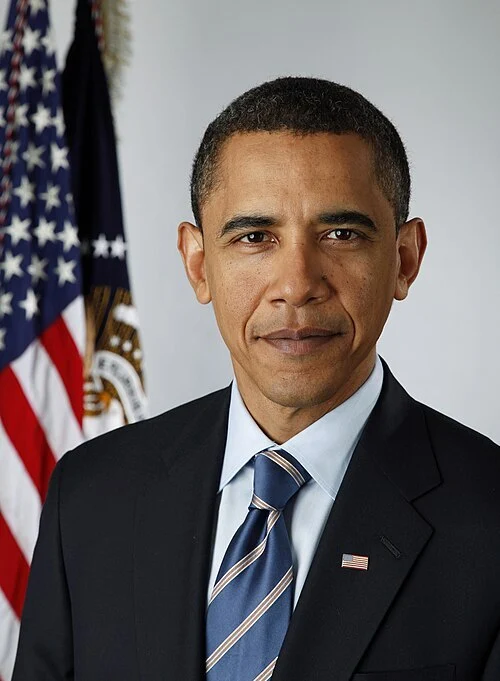
Barack Obama (English: Barack Obama, August 4, 1961 -) is an American politician who served as the 44th President of the United States from 2009 to 2017. He is the first African-American president in U.S. history and the first president born in Hawaii. Before entering the White House, he served as a U.S. Senator from Illinois. Obama's political philosophy mainly focuses on liberalism , multilateral diplomacy and progressive social reform . He advocates protecting citizens' medical rights by expanding government functions and is committed to improving the international image of the United States that has been damaged by the war on terror.
Obama was born in Honolulu, Hawaii, USA on August 4, 1961. After two terms as president, he officially stepped down in January 2017, and then mainly devoted himself to public affairs, memoir writing and the operation of the Obama Foundation.
_Want to know which historical leader your decision-making style is most similar to? Try the Political Leader Decision-Making Style Test to see if you have the Obama-like qualities of reason and balance. _
Early growth environment and cross-cultural background baptism
Obama's early life was filled with cross-cultural and diverse backgrounds. His father is a black international student from Kenya, and his mother is a white anthropologist from Kansas. This complex ethnic background was deeply reflected in his later autobiography "Dreams from My Father". Due to his parents' divorce, Obama spent most of his childhood raised by his maternal grandparents in Hawaii, and also lived with his mother in Jakarta, Indonesia for four years.
This special growth experience gave him a unique international perspective and cultural empathy, but it also made him feel confused about his identity as a teenager. While attending Punahou schools, he went through a period of rebellion. However, he showed outstanding academic ability in college, studying at Columbia University and Harvard Law School. While at Harvard, he became the first African-American editor-in-chief of the Harvard Law Review in its 100-year history, an achievement that made him famous in the legal and academic circles.
From community worker to rising political star
Before entering politics, Obama worked as a community organizer in Chicago. He is responsible for mobilizing voters in low-income communities and assisting with skills training programs. This experience of grassroots work made him deeply aware of the impact of social structural inequality on personal life, and also laid a practical foundation for his future advocacy of social justice . He subsequently furthered his understanding of the U.S. legal system as a human rights attorney and lecturer on constitutional law at the University of Chicago Law School.
In 1996, Obama officially launched his political career when he was elected to the Illinois Senate. While in the state Legislature, he pushed for legislation such as tax breaks, welfare reform and electronic monitoring of police interrogations. Although he failed in his bid for the House of Representatives in 2000, he was not discouraged. In 2004, Obama delivered a speech titled "The Audacity of Hope" at the Democratic National Convention. He emphasized the need to transcend partisan differences and unite the United States . This speech made him a national political star overnight. That same year, he was overwhelmingly elected to the Illinois U.S. Senate.
The historic 2008 election and the promise of “change”
In 2007, Obama announced his candidacy for the presidential election. His slogans of "Change" and "Yes We Can" accurately captured the public's weariness with the policies of the late Bush administration. In the Democratic primary, he defeated Hillary Clinton, the then favorite.
In the 2008 election, Obama demonstrated strong Internet mobilization and fundraising capabilities. In the face of the sudden subprime mortgage crisis, his calmness was in sharp contrast to Republican candidate McCain. He promised to rescue the collapsing financial system through a stimulus package and end the war in Iraq. In the end, he successfully won the election and became the first African-American president in American history, opening a new chapter in American politics.
When analyzing Obama's liberal ideology that emphasizes tolerance, rationality, and moderate government intervention, it helps us understand the evolution of left-wing liberals in the modern political spectrum. You can measure your inclination on such issues by taking the 8values political values orientation test , and view detailed interpretations of all 8values ideological results .
In times of crisis: Coping with the financial crisis and health care reform
When Obama took office, the United States was in the midst of its worst economic recession since the Great Depression. He quickly signed the "American Recovery and Reinvestment Act of 2009", passing a large-scale fiscal stimulus package to inject capital into the failing auto industry and financial institutions. Although these measures triggered fierce controversy about big government at the time, they objectively prevented the U.S. economy from sliding to the brink of collapse and initiated a period of employment growth that would last for several years.
In terms of domestic affairs, Obama's most representative but also most controversial political legacy is the "Patient Protection and Affordable Care Act" (commonly known as Obamacare ). The bill aims to reduce the uninsured population through mandatory insurance and government subsidies. In the year-long legislative gambit, Obama demonstrated his political resilience. The bill was finally passed, allowing tens of millions of Americans who had previously been unable to obtain health insurance to be included in the security system, but the resulting increase in premiums and government deficits have also become the focus of conservative attacks.
The Transformation of Foreign Policy: Multilateralism and the “Rebalancing to the Asia-Pacific”
Obama advocates soft power and multilateral cooperation in diplomacy, which is significantly different from the unilateralist style of his predecessor. In 2009, he was awarded the Nobel Peace Prize for his efforts to strengthen international diplomacy and cooperation among peoples. Although this award was considered "premature" at the time, it reflected the international community's expectations for it to change the diplomatic image of the United States.
He proposed the "Asia-Pacific rebalancing" strategy, which aims to shift the United States' diplomatic and military focus to a more dynamic Asian region. When dealing with international conflicts, he favored diplomacy over direct military intervention. Significant achievements during his tenure include the signing of the JCPOA with Iran and the historic normalization of relations between Cuba and the United States. However, its relatively moderate stance on the Syrian crisis and Crimea has also been criticized by domestic hardliners for "weakening U.S. leadership."
Promotion of environment, energy and social issues
Obama is the first US president to regard climate change as a national security threat. He strongly supports the development of clean energy and has passed executive orders to limit carbon emissions from power plants. He actively promoted the conclusion of the Paris Agreement internationally, allowing the United States to return to its leadership position in addressing global warming.
On social issues, the Obama administration has shown a clear progressive streak. He supports legalizing same-sex marriage and expressed his personal support for it before the 2015 Supreme Court ruling. He abolished the military's "don't ask, don't tell" policy against gays. In addition, he also protected some undocumented immigrants from deportation (DACA program) through administrative means, reflecting his moderate and humane tone on immigration issues.
Governing challenges and the dilemma of polarization between the two parties
Although Obama possesses extremely high personal charisma and debating skills, his administration also witnessed the intensification of political polarization in the United States. After the Republicans took control of Congress, many of Obama's legislative proposals encountered obstacles, leading him to frequently use executive orders to implement policies, which to a certain extent intensified friction between the executive and legislative branches.
On the issue of race, although Obama's election was seen as the beginning of the "post-racial era," several incidents of black people being shot by white police officers during his term once again triggered intense racial discussions and protests. Obama's perseverance in balancing the interests of law enforcement and the rights of minorities reflects the deep complexity of America's racial scars.
Life after leaving office and historical evaluation
Since leaving office in 2017, Obama has maintained a relatively low-key but still influential public profile. He founded the Obama Foundation, which is dedicated to cultivating young global leaders. His memoir "The Promised Land" has achieved extremely high sales worldwide and further elaborates on his political philosophy and thoughts on democratic systems.
Regarding the historical evaluation of Obama, academic circles and the public have multi-dimensional views:
- Status symbol: His rise to the pinnacle of power as an African-American was itself a milestone in the American civil rights movement and democratic progress.
- Policy Resilience: Health care reform and financial rescue demonstrated his decisiveness and dedication to core goals in times of crisis, even though these policies faced huge political challenges later on.
- Diplomacy debate: Supporters believe he has reduced the risk of conflict through dialogue; critics believe he appears too weak in the face of geopolitical opponents.
- The two parties were divided: His policies were seen by some as being too liberal, fueling the subsequent populist backlash and exacerbating social fissures.
As many commentators have said, Obama is a typical rational pragmatist . He sought to govern through logic, data and gentle oratory in an era of intense passion. His life illustrates how an intellectual with a cross-cultural background worked his way into the heart of the traditional elite.
Extended reading : If you want to explore your own political decision-making tendencies, you are welcome to go to the Political Test Center and experience the political leaders’ decision-making style test . Through 48 professional questions, you will analyze your leadership characteristics from six dimensions such as decision-making style, power concept, and economic philosophy to see whether you are most like Obama, Merkel, Margaret Thatcher, or other historical leaders.