Park Chung-hee: The Creator of the Miracle on the Han River and the Controversy of the Restoration Dictatorship
Park Chung-hee, as the third president of the Republic of Korea, is the most influential political figure in South Korea's modernization process. He brought South Korea from a poor agricultural country to an industrialized power through highly controversial ideologies (such as state capitalism and development dictatorship). His profound impact on South Korea's political, economic and social structure is still the focus of national discussion. By fully understanding these political leanings, you can also take an in-depth 8values political values leaning test to compare the characteristics of different ideologies.
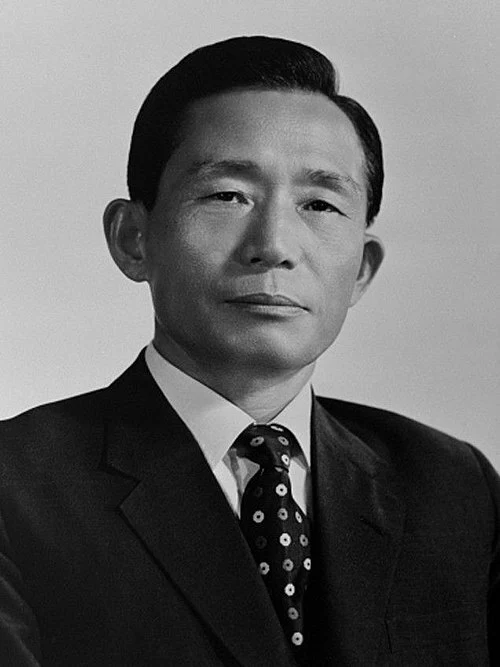
Park Chung-hee (Korean: 박정희, September 30, 1917 - October 26, 1979) was the President of the Republic of Korea , an Army general, and the chief architect of the Miracle on the Han River . He seized power through the May 16th military coup and ruled South Korea for 18 years. He actively promoted nationalism , development supremacy , and an authoritarian reform system , and advocated realizing national rejuvenation through export-oriented industrialization. Under his rule, South Korea achieved explosive growth in gross national product, but it was also accompanied by severe suppression of civil rights.
Park Chung-hee was born on September 30, 1917 in Sunsan County, North Gyeongsang Province. Finally, he was shot and killed by his cronies and CIA Director Kim Jae-gyu on the evening of October 26, 1979, in Gongjeong-dong, Seoul, ending his political career with mixed success and failure.
_Want to know which historical leader your decision-making style is most similar to? Try the Political Leader Decision-Making Style Test to see if you have Park Chung-hee’s leadership traits. _
Early life and military career baptism
Park Chung-hee was born in a poor sharecropper family and was the youngest son in the family. Although his family was poor, he was admitted to Daegu Normal School with excellent results and taught in primary school after graduation. However, with the ambition to change his destiny and rejuvenate the nation, Park Chung-hee entered the Puppet Manchukuo Army Officer School in 1940 and was subsequently recommended to the Japanese Army Non-commissioned Officer School. During this period, he received a strict education in Japanese militarism , which had a profound impact on his later ruling style that emphasized discipline, efficiency, and organization.
After World War II ended in 1945, Park Chung-hee returned to South Korea and joined the newly established Korean National Defense Guard. In the subsequent Korean War , he was quickly promoted due to his bravery in combat and excellent logistics and command capabilities. By the late 1950s, he had become a senior general in the South Korean Army. During this period, Korean politics was in turmoil. Syngman Rhee's regime was overthrown by the "April 19 Revolution" due to election manipulation. The subsequent Jang Myon Second Republic government appeared to Park Chung-hee to be "weak and incompetent" and unable to solve the increasingly serious hunger and social chaos.
The May 16 coup and the seizure of power
In the early morning of May 16, 1961, Park Chung-hee, then deputy commander of the Second Field Army, launched a military coup and overthrew the democratically elected government. He established the "Supreme Council for National Reconstruction", appointed himself speaker, and announced social reforms. In his declaration at the beginning of the coup, Park Chung-hee promised to "return power to conscientious politicians after completing their revolutionary tasks."
However, in 1963, Park Chung-hee took off his military uniform and ran for the fifth presidential election as a candidate of the Democratic-Republican Party. He emphasized the need for "economic self-reliance" and "anti-communism" during the campaign, and ultimately won by a narrow margin. After taking office, he quickly established an authoritarian governance structure with the president as the core. He knew that in order to gain legitimacy in his rule, he had to prove to the people that he could bring real prosperity.
The Miracle of the Han River: Export Orientation and Heavy Industrialization
After Park Chung-hee became president, he put forward the slogan "Poverty is a sin." He is convinced that in the context of Cold War confrontation, South Korea cannot resist the threat from the north without strong economic strength. He launched a series of five-year economic development plans to direct state resources toward specific industries.
- Establishing a country in heavy and chemical industries: Park Chung-hee ignored the opposition of the World Bank and American experts and advocated the construction of Posco Iron and Steel Company (POSCO) and Ulsan Shipyard. He believes that steel is the "mother of industry". Although the risks are huge, it is the only way for the rise of a great power.
- Export-oriented strategy: Taking advantage of cheap labor, he started with light industry and gradually shifted to the export of electronics, machinery and chemical products.
- Infrastructure construction: He personally supervised the construction of the Gyeongbu Expressway connecting Seoul and Busan. At that time, the opposition party called the move a "waste", and some members even lay on the roadbed to protest, but Park Chung-hee insisted on completing the project, which was regarded by later generations as the artery of South Korea's modernization.
- Business support: The Park Chung-hee administration has established close cooperative relationships with large companies (such as Samsung, Hyundai, and LG). The government provides low-interest loans and policy protection in exchange for enterprises to implement national development goals, which forms a unique chaebol system (Chaebol).
While conducting political internal purges, Park Chung-hee brought the entire economy under state control and implemented efficient production under high pressure. By the end of the 1970s, South Korea went from being a country even poorer than North Korea to becoming the first among the "Four Asian Tigers".
When analyzing Park Chung-hee's ideology of parallel state intervention and economic liberalism, it helps us understand the polarization of the political spectrum. You can measure your inclination on such issues by taking the 8values political values orientation test , and view detailed interpretations of all 8values ideological results .
The controversy over the reform system and high-pressure rule
As his rule lengthened, Park Chung-hee's desire to control power grew stronger. In 1972, facing strong challenges from the opposition (represented by Kim Dae-jung) and changes in the international situation, Park Chung-hee issued emergency martial law , dissolved Congress, abolished the Constitution, and adopted the so-called Yusin Constitution .
This system changed the presidential election to indirect election by the "National Assembly of the Unified Subject", which actually established the lifelong tenure of the president . During the "restoration" period, Park Chung-hee promulgated a number of "emergency measures" and strictly prohibited all criticism of the government. The student movement was brutally suppressed, and the Central Intelligence Agency (KCIA) secretly abducted and imprisoned dissidents at home and abroad.
This model of Developmental Dictatorship has aroused widespread doubts in the international community. Although the economy continued to grow at a high pace, social conflicts increasingly intensified, labor rights were deprived, and the urban-rural gap also left a deep mark during this period.
New Village Movement: An attempt at rural modernization
In 1970, Park Chung-hee launched the Saemaul Undong, whose core spirit was "diligence, self-help, and collaboration." He distributed free cement and steel to more than 30,000 villages across the country, and asked farmers to organize themselves to improve their living environment, such as building roads, strengthening houses, and introducing electricity.
This movement dramatically changed the face of rural Korea. Park Chung-hee used his rural background to successfully establish a deep popular base among farmers. Although some people criticize this as a means for the government to strengthen ideological control over rural areas, its effectiveness in increasing farmers' income and modernization awareness has been hailed by the World Bank as a model of rural transformation in developing countries.
Assassination: the end of an era
In 1979, a large-scale pro-democracy uprising broke out in South Korea. There were serious differences within Park Chung-hee over how to handle the demonstrations. On the evening of October 26, 1979, at a dinner party, Kim Jae-kyu, Park Chung-hee's confidant and KCIA minister, believed that Park Chung-hee's hard line would lead the country into an abyss, and that his guard captain Cha Ji-cheol's domineering attitude was unbearable. In the end, Kim Jae-kyu pulled out a gun and shot Cha Ji-cheol and Park Chung-hee.
After Park Chung-hee's death, South Korean politics fell into brief chaos, and then Chun Doo-hwan took over power through a military coup. Although Park Chung-hee's life ended abruptly, the system and legacy he left behind still dominated Korean society for decades.
Park Chung-hee’s personal life, controversies and comments
Personal style and family
Park Chung-hee is known for his simple life and tough style. He often went to the countryside to inspect and even drank makgeolli directly with farmers in the fields. His wife Yook Young-soo enjoys high prestige in the hearts of the Korean people and is regarded as a model of maternal grace in the world. In 1974, Yook Young-soo was unfortunately shot and killed in an assassination attempt against Park Chung-hee. This cast a huge shadow on Park Chung-hee's later character, making him more withdrawn and stubborn. His eldest daughter Park Geun-hye later became the president of South Korea, but was eventually impeached due to scandal.
Later influence and historical status
Park Chung-hee is considered the most controversial figure in Korean history. His evaluation is extremely polarizing:
- National hero: Supporters consider him South Korea's savior, pulling the country out of poverty and war and laying the foundation for modern industry. Without his iron fist, South Korea might still be a backward agricultural country.
- Dictator: Opponents believe he is a tyrant who tramples on human rights and delays South Korea's democratization process. The chaebol system he established led to collusion between government and businessmen and social injustice. His pro-Japanese background has always been a stain on his politics.
- Diplomatic legacy: In 1965, he fought against all odds to normalize relations between South Korea and Japan. Although he was denounced as a "traitor" by the public, the Japanese compensation and loans he received provided starting capital for South Korea's economic development. At the same time, he tightly tied the U.S.-South Korea alliance in the Cold War game after World War II and sent Korean troops to participate in the Vietnam War in exchange for U.S. economic assistance.
As historians say, Park Chung-hee is a "combination of contradictions." He used non-democratic means to promote the modernization of South Korea. In the end, the middle class he cultivated became the main force in overthrowing authoritarianism and pursuing democracy.
If you want to explore your own political decision-making tendencies, you are welcome to go to the Political Test Center and experience the political leaders' decision-making style test . Through 48 professional questions, you will analyze your leadership characteristics from six dimensions such as decision-making style, power concept, and economic philosophy to see whether you are most like Park Chung-hee, Stalin, Churchill, or other historical leaders.