Ali Khamenei: The political career, ideological system and far-reaching influence of Iran’s supreme leader
Ali Khamenei, as the second supreme leader of the Islamic Republic of Iran, is a very influential political and religious figure in the contemporary Middle East. Since he succeeded to the throne in 1989, he has not only established the absolute authority of Iran's "clerical rule", but has also played a central role in dealing with international sanctions, regional conflicts and domestic ideological governance. By analyzing Khamenei's political leanings, you can also conduct an in-depth 8values political values test to compare the different characteristics of theocracy, conservatism and modern secular ideologies.
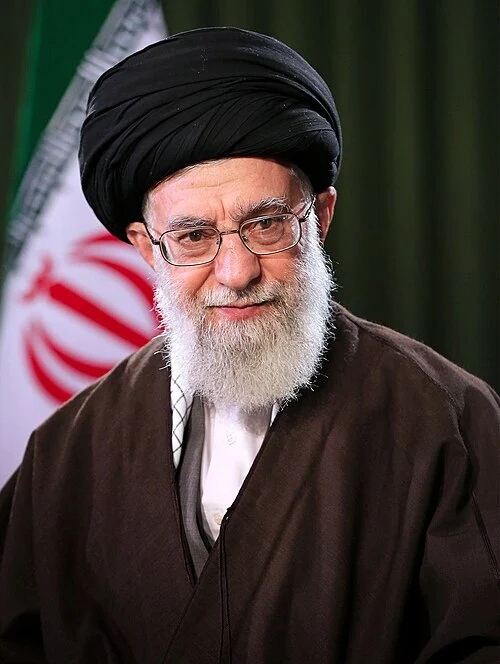
Ali Khamenei (Persian: سید علی حسینی خامنه ای, April 19, 1939 -) is the current Supreme Leader of Iran and the Grand Ayatollah of Shia Islam. He is the second leader after Khomeini and one of the longest-serving heads of state in the Middle East. Khamenei firmly defends the rule of Islamic law (Velayat-e Faqih), advocates anti-Western imperialism and anti-Zionism , and promotes Iran to become a regional power in geopolitics.
Khamenei was born in Mashhad, Iran, in 1939. During his decades-long political career, he gradually grew from a radical cleric who opposed the Pahlavi dynasty to the supreme ruler with military and political power.
_Want to know which historical leader your decision-making style is most similar to? Try the Political Leader Decision-Making Style Test to see if you have Khamenei’s qualities of stability and ideological persistence. _
Early spiritual practice and the baptism of the Islamic Revolution
Khamenei was born into a religious family, and his father was a well-known local cleric. In a strong religious atmosphere, Khamenei entered a religious school at an early age and went to the Shiite holy city of Qom for further studies. There, he met the mentor who had the greatest influence on his life - Ayatollah Khomeini . Khomeini's thoughts on the intervention of religion into politics completely reshaped Khamenei's worldview.
From the 1960s to the 1970s, Khamenei became the backbone of the "White Revolution" against King Mohammad Reza Pahlavi. He was arrested and imprisoned by Iran's secret police (SAVAK) many times for distributing leaflets against the royal family and organizing secret meetings, and suffered harsh imprisonment and exile. This experience not only tempered his political will, but also allowed him to establish extensive religious and civilian social contacts.
In 1979, the Islamic Revolution broke out. Khamenei returned to Tehran from exile and became a core member of the Revolutionary Council. In the turbulence of the early revolution, he showed excellent coordination skills and absolute loyalty to Khomeini.
From President to Supreme Leader: The Peaceful Transition of Power
In 1981, against the backdrop of extreme political turmoil in Iran and the assassination of many senior government officials, Khamenei was elected president of Iran with an overwhelming majority. During his eight years as president (1981-1989), he was primarily responsible for handling logistics and diplomacy during the Iran-Iraq War . In June 1981, he suffered a terrorist attack during a speech, and his right hand was permanently disabled by the explosion. This not only earned him the title of "living martyr", but also greatly enhanced his reputation among believers.
Khomeini died in 1989. Although Khamenei's religious title at the time was not the highest level, with the support of Rafsanjani and others, the expert meeting elected him as the supreme leader . When he first came to power, many observers viewed him as a transitional figure. However, through superb political skills, Khamenei gradually consolidated control over the Islamic Revolutionary Guard Corps (IRGC) and the judicial and media systems, making himself the true absolute authority in Iran.
Ideological Core: Fakih’s Guardianship and Anti-Westernism
The core philosophy of Khamenei's rule is Wilayat al-Faqih ( Guardianship of Faqih ), the supreme rule of the country by Islamic jurists. He believes that only through strict compliance with Islamic law can Iran resist Western "cultural penetration".
In terms of foreign policy, Khamenei is a firm skeptic of the United States . He has repeatedly criticized the "hegemonism" of the United States in his speeches, believing that the United States is the overall source of all security threats to Iran. He calls the United States the "Great Satan" and Israel the "Little Satan." This tough stance reflects his extreme protection of national sovereignty and the subjectivity of Islamic civilization.
When analyzing Khamenei’s ideology, which combines religious theocracy and power politics, it helps us understand the survival logic of traditionalism in modern politics. You can measure your inclination on such issues by taking the 8values political values orientation test , and view detailed interpretations of all 8values ideological results .
Economic governance and “resistance economy”
Faced with long-term and severe economic sanctions from the West, Khamenei proposed the concept of Economy of Resistance . The core of this policy is to reduce dependence on oil exports, instead support domestic industries, increase science and technology self-sufficiency, and strengthen trade with neighboring countries and "non-aligned" countries.
With Khamenei's support, Iran has made significant progress in the fields of nuclear technology, nanotechnology, aerospace and biomedicine. Although inflation and currency devaluation still plague people's lives, Khamenei insists that any compromise with the West will lead to the fate of the country being colonized. He emphasized many times: "Self-sufficiency is the prerequisite for dignity."
Military Expansion and the "Shia Crescent"
Khamenei is the supreme commander of Iran’s military forces. He attaches great importance to the Islamic Revolutionary Guard Corps , especially its overseas operations force, the Quds Force. Under the command of Khamenei, Iran has built an "arc of resistance" across the Middle East by supporting Hezbollah in Lebanon, the Assad regime in Syria, the Houthi armed forces in Yemen, and militias in Iraq.
This "proxy war" model is regarded as Iran's national defense strategy, which is to block hostile forces beyond its borders. Although this strategy has attracted strong opposition from the United States, Saudi Arabia and other countries, in Khamenei's view, this is an inevitable choice to maintain Iran's status as a regional power and prevent foreign invasion. In 2020, after General Soleimani was assassinated by the US military, Khamenei rarely shed tears in public speeches, but immediately ordered missile strikes on US military bases, demonstrating his "controlled toughness."
Internal Challenges: Social Changes and Waves of Protests
Although Khamenei is secure at the core of power, contradictions within Iranian society are increasingly apparent. From the "Green Revolution" in 2009, the fuel protests in 2019, to the "Women, Life, Freedom" movement triggered by the death of Martha Amini in 2022, the Khamenei government faces severe public opinion challenges.
Khamenei has remained resolute in his response to these protests. He usually blames "incitement by foreign powers" for internal unrest. In terms of cultural policy, he insists on strict dress codes and Internet censorship to guard against Western "soft wars." Although this high-pressure rule maintained the stability of the regime, it also deepened the gap between the younger generation of secular groups and the ruling class.
Technological Ambition: Nuclear Plans and Strategic Games
Khamenei's attitude towards Iran's nuclear program has been the most internationally watched part of his political career. He has issued "Fatwa" (Fatwa) many times, declaring a ban on the manufacture and use of nuclear weapons, believing that this violates Islamic ethics. However, he also firmly supports Iran's technical power to enrich uranium , viewing it as a sign of the country's scientific progress.
During the nuclear negotiations, Khamenei demonstrated strong strategic determination. He not only allowed the government to sign the "JCPOA" to seek sanctions relief, but also quickly ordered the resumption of the production of highly enriched uranium after the Trump administration withdrew from the agreement. This strategy of "fighting and talking" allows Iran to always hold a key bargaining chip in the game with the Western powers.
Ali Khamenei’s historical evaluation and geopolitical legacy
Personal life and simple image
Unlike many rulers of oil-rich countries, Khamenei has always maintained a simple and self-disciplined image in official propaganda. He loved Persian classical literature and poetry and often held poetry readings at his official residence. His supporters see him as a learned, incorruptible and prophetic leader; while his critics say he uses this image to obscure the country's vast shadow economy.
Controversies and Challenges
Khamenei's rule has been fraught with controversy. International human rights organizations have repeatedly accused the Iranian government of suppressing dissent and restricting press freedom. In addition, his stance on the Palestinian issue, especially his denial of Israel's right to exist, has earned him much criticism in Western political circles.
historical status
Khamenei will remain in history as a successful "survivor." He successfully defended the institutions of the Islamic Republic through the collapse of the Soviet Union, two Gulf wars, and the turmoil of the Arab Spring. He has successfully transformed a secular country that was once an ally of the West into an ideologically driven and resilient regional power.
- Regime continuity: Hitler's empire only lasted 12 years, while Khamenei's rule has been more than 35 years. He has established a highly stable system of bureaucratic and religious checks and balances.
- Regional influence: Through asymmetric warfare and geopolitical games, Iran has transformed from an isolated country into a key variable affecting the situation in Syria, Lebanon, and Iraq during his tenure.
- Ideological legacy: Khamenei proved to the world that theocracy can still have tenacious vitality in the 21st century and can be combined with modern military technology.
As many Middle East observers have said, it is impossible to understand the power structures of the contemporary Middle East without understanding Ali Khamenei. He is a conservative and shrewd strategist, walking on the balance beam of faith and power to this day.
Extended reading : If you want to explore your own political decision-making tendencies, you are welcome to go to the Political Test Center and experience the political leader decision-making style test . Through 48 professional questions, you will analyze your leadership characteristics from six dimensions including decision-making style, view of power, and economic philosophy to see whether you are most like Khamenei, Netanyahu, Putin, or other historical leaders.