Chun Doo-hwan: Strongman and Controversy in the Fifth Republic of Korea
Chun Doo-hwan, as the 11th to 12th President of the Republic of Korea, is a very controversial political figure in the modern history of South Korea. He seized power through a military coup and ushered in the era of the "Fifth Republic". During his tenure, he created the economic peak of the Han River Miracle, but he also carried a heavy historical burden due to the iron-fisted suppression of the "Gwangju Incident". By understanding Chun Doo-hwan's governing model of parallel authoritarianism and economic liberalism, you can conduct an in-depth 8values political value orientation test to compare the characteristics of different ideologies.
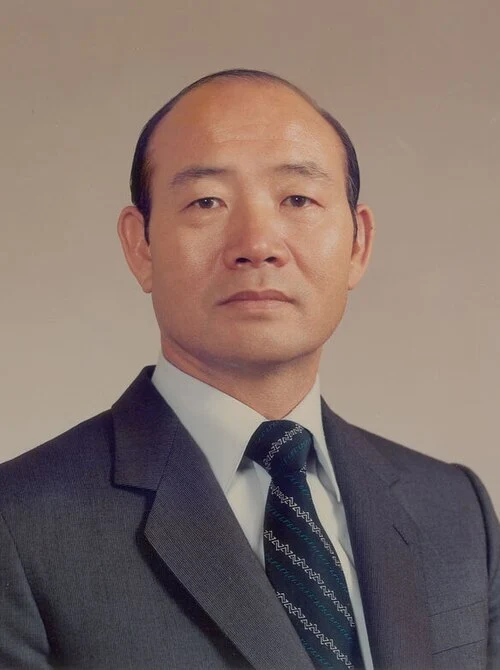
Chun Doo-hwan (Korean: 전두환, January 18, 1931 - November 23, 2021) was an army general and politician of the Republic of Korea. He served as the 11th and 12th President of the Republic of Korea . He is the second leader in South Korean history to seize power through military means, after Park Chung-hee. After Chun Dou-hwan came to power, he implemented authoritarian rule and strictly restricted civil liberties. However, in the economic field, he appointed technical officials and achieved price stability and rapid economic growth.
In 1931, Chun Doo-hwan was born into a peasant family in Shacheon County, Gyeongsangnam-do. After Park Chung-hee was assassinated in 1979, Chun Doo-hwan, as the security commander, launched the "12.12 Soviet Army Coup" to take real power. In 1980, he officially became president after suppressing the "Gwangju Democratic Movement." On November 23, 2021, Chun Doo-hwan passed away at a private residence in Seoul, ending a life in which his merits and demerits were difficult to determine.
_Want to know which historical leader your decision-making style is most similar to? Try the Political Leader Decision-Making Style Test to see if you have Chun Doo-hwan’s strongman qualities. _
Birth background and early military career
Chun Doo-hwan was born in Gyeongsangnam-do, North Korea during the Japanese occupation. His family had been farming for generations and his family was poor. His father, Quan Xiangyou, fled to Manchuria for resisting the Japanese colonial authorities. In 1951, Chun Doo-hwan was admitted to the Korean Army Sergeant School (11th class), which was the first class of "regular class" with a special status in the Korean army. While in school, Quan Doo-hwan was not a top student, but he was very capable of leadership. He served as captain of the football team and formed a close interest group with his classmates Lu Tae-woo and others.
After graduating in 1955, Chun Doohuan went to the United States to receive training in guerrilla warfare and psychological warfare. After returning to Korea, he rose through the ranks in the military and was appreciated by Park Chung-hee, the then Speaker of the Supreme Council for National Reconstruction. Chun Doo-hwan served as Park Chung-hee's adjutant and participated in the formation of the secret military organization "Ilsinhui" (하나회). This organization, with officers from Lingnan as its core, later became the core force behind Quan Douhuan's seizure of power. During the Vietnam War, Quan Dou-hwan served as the commander of the 29th Regiment of the White Horse Division and accumulated practical combat experience and political capital.
The Double 12 Coup and the Road to the Blue House
On October 26, 1979, President Park Chung-hee was assassinated by Central Intelligence Minister Kim Jae-kyu, and South Korea's political situation fell into a power vacuum. As the security commander, Chun Dou-hwan was appointed as the head of the Joint Investigation Headquarters and was responsible for investigating the assassination. He used this position to quickly crowd out veterans and moderates in the military.
Late at night on December 12, 1979, Chun Doo-hwan, together with members of the Il-Shim Hui, mobilized frontline troops to enter Seoul without the permission of Acting President Choi Kyu-ha, and arrested Chung Seung-hwa, chief of army staff and commander of martial law. This action, known as the "12.12 Military Supremacy Coup" , marked that Chun Dou-hwan officially became the de facto supreme power in South Korea.
In May 1980, facing the wave of pro-democracy demonstrations that broke out across South Korea, Chun Doo-hwan declared "expanded martial law" and banned all political activities. On May 18, Gwangju citizens spontaneously organized large-scale protests. Chun Doo-hwan ordered the dispatch of an airborne brigade to carry out a bloody suppression, which resulted in a large number of civilian casualties and was known as the "Gwangju Democratic Movement" in history. Although this incident established his terror, it also foreshadowed his trial and death sentence in his later years. In August of the same year, Choi Kyu-ha was forced to resign, and Chun Doo-hwan was elected president as the only candidate, ushering in the era of the Fifth Republic.
Centralized Rule and Social Order in the Fifth Republic
After Chun Dou-hwan came to power, he abolished the old constitution and established a seven-year single-term presidential system through a referendum. However, this is not an advancement of democracy but an attempt to institutionalize personal dictatorship. He implemented a strict policy of "unifying speech, abolishing cooperation" , disbanded a large number of private media, and established a propaganda system directly controlled by the government.
In order to divert public dissatisfaction with political repression, the Chun Dou-hwan government implemented the so-called "3S policy" , namely Screen (movies/pornography), Sports (sports) and Sex (sex). During his tenure, he lifted late-night curfews, relaxed film censorship, and actively prepared for the 1986 Asian Games and the 1988 Berlin/Seoul Olympics . At the same time, he established the "Three Purities Education Team" and, in the name of cleaning up the dregs of society, sent tens of thousands of "socially unstable elements" (including political dissidents and homeless people) into military camps for so-called personality transformation, resulting in serious human rights violations.
When analyzing Chun Dou-hwan's political logic of paralleling authoritarian rule and social welfare, it helps us understand the common characteristics of Asian developmental countries. You can measure your inclination on such issues by taking the 8values political values orientation test , and view detailed interpretations of all 8values ideological results .
The economic heyday of the "Miracle on the Han River"
Although his political reputation is extremely poor, Chun Dou-hwan's achievements in economic governance cannot be denied. Realizing that he lacked economic knowledge, he gave great trust to technical officials (such as Kim Jae-ik) and made the humble gesture that "the president is a student of the economic field."
Stabilizing Prices and Export Growth
In the early 1980s, South Korea faced the impact of high inflation and the second oil crisis. Chun Doohuan adopted extreme "austerity fiscal" policies and successfully reduced the inflation rate from double digits to about 3%. At the same time, he took advantage of the "three lows" (low oil prices, low U.S. dollars, and low interest rates) in the international environment at that time to significantly boost exports. During Chun Doo-hwan's tenure, South Korea's average annual economic growth rate exceeded 10%, and national income quadrupled.
Industrial upgrading and technological layout
The Chun Doo-hwan government vigorously promotes the development of cutting-edge industries such as semiconductors, electronics, and automobiles. He foresaw the importance of the information age and began laying out the construction of optical fiber networks in the early 1980s. Today, South Korea's foundation as a global IT power was largely laid during the Chun Doo-hwan period. In addition, he actively promoted "national home telephony" so that ordinary people can enjoy the convenience of modern communications.
Military and national defense construction
In terms of military affairs, Chun Doo-hwan continued Park Chung-hee's line of independent national defense and focused on the localization of conventional weapons. He took advantage of his alliance with the United States to introduce F-16 fighter jets and developed the "K1 main battle tank." Although diplomatically he was forced to stop the secret nuclear weapons program of the Park Chung-hee era in order to gain U.S. support for the legitimacy of his regime, he greatly enhanced the South Korean Defense Force's textural advantage over North Korea.
The End of Power: The Juneteenth Movement of 1987
Chun Doo-hwan had planned to hand over power to his successor Roh Tae-woo after his term expired. However, the "Park Jong-chul torture-to-death case" and "Lee Han-yeol's shooting incident" that broke out in 1987 completely ignited the long-standing anger of the Korean people.
In June 1987, nationwide demonstrations for democratization broke out in South Korea. Faced with pressure that could lead the country into civil war, and pressure from the International Olympic Committee that threatened to revoke the right to host the Seoul Olympics, Chun Doo-hwan finally agreed to the "6·29 Declaration" proposed by Roh Tae-woo. South Korea has since bid farewell to decades of military dictatorship, achieved direct universal election of the president, and started the democratization process of the Sixth Republic.
Trial, Exile and Death in Later Life
After Chun Doo-hwan left office, corruption problems in his family quickly surfaced. In 1988, in order to escape the condemnation of public opinion, Chun Doo-hwan was forced to go to Baekdamsa Temple in Gangwon Province to "practice" in seclusion.
In 1995, amid the wave of "correction of history" by the Kim Young-sam government, Chun Doo-hwan was arrested on charges of rebellion, bribery and other crimes. In 1996, the Seoul District Court sentenced him to death , which was later commuted to life imprisonment, and demanded hundreds of billions of won in bribes. At the end of 1997, following negotiations between then-President Kim Young-sam and President-elect Kim Dae-jung, Chun Doo-hwan received an amnesty, but his civil rights and reputation were not fully restored.
Chun Doo-hwan refused to formally apologize for the Gwangju incident in his later years and appeared in court many times for defaming witnesses in his memoirs. On November 23, 2021, Chun Doo-hwan died of multiple myeloma at his home in Yeonhui-dong, Seoul at the age of 90. Due to his controversial history, the South Korean government decided not to hold a state funeral for him, the first of its kind for a former South Korean president.
Chun Doo-hwan’s political characteristics and historical evaluation
Strong decision-making style
Chun Doohuan is considered a typical "bulldozer" leader. He showed great decisiveness when facing decisions, whether it was military operations or economic reforms. Once the goal was determined, he would advance it at all costs. This style stabilized the national order in turbulent times, but it also caused countless irreparable social trauma.
Historical controversies and crimes
- Military dictator: He seized power through two illegal coups and has been defined by history as the culprit who destroyed South Korea's constitutional order.
- Gwangju Executioner: No matter how he defends himself, the killing of civilians by the military in the Gwangju incident is a stain that cannot be washed away in his life.
- Corruption giant: During his tenure, he used his power to accept huge bribes from large chaebols, and even claimed that "there was only 290,000 won in the bankbook" when his property was confiscated, causing strong dissatisfaction in society.
Positive legacies and social transformation
- Economic achievements: He brought South Korea into a low-inflation, high-growth track, laying the material foundation for the successful hosting of the 1988 Seoul Olympics.
- Power transfer: Although forced, he ultimately achieved the first peaceful power transfer in South Korean history, although the successor remained an ally.
As Korean historians said, Chun Doo-hwan was a complex contradiction. He is an authoritarian figure who seizes power by force, governs the country with an iron fist, and enriches himself with wealth. However, under his rule, South Korea has indeed completed its final leap into a modern industrial country.
Extended reading : If you want to explore your own political decision-making tendencies, you are welcome to go to the Political Test Center and experience the political leaders’ decision-making style test . Through 48 professional questions, you will analyze your leadership characteristics from six dimensions such as decision-making style, power concept, and economic philosophy to see whether you are most like Chun Dou-hwan, Stalin, Churchill, or other historical leaders.