Viktor Orbán: Hungarian political strongman and leader of “illiberal democracy”
As the political core of contemporary Hungary and a representative figure of European sovereigntism, Viktor Orbán’s political career, shaping of “illiberal democracy” and long-term game with the EU are key windows for observing the political transformation of contemporary Europe. You can also take an in-depth 8values political values test to understand the nuances of different political leanings through an in-depth analysis of their nationalist and conservative policies.
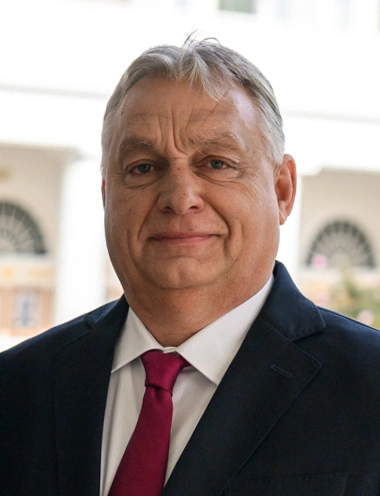
Viktor Orban (Hungarian: Orbán Viktor, born May 31, 1963) is the current Prime Minister of Hungary and the founder of Hungary's ruling party Fidesz . Since 2010, he has won four consecutive elections and has been in power for a long time, becoming one of the most influential leaders in post-Cold War Hungary and even Central and Eastern Europe. He advocates right-wing populism , social conservatism and Euroscepticism , and openly proposes the establishment of "iliberal democracy" (Illiberal Democracy), emphasizing national interests over the dictates of supranational organizations.
Orban was born on May 31, 1963 in Székesfehérvár, Hungary. From emerging in Hungary's democratization process in 1989 to becoming a "rebel" challenging the EU's mainstream values, his life trajectory reflects the complex journey from the pain of transformation to the return of authoritarianism in Central and Eastern Europe.
_Want to know which historical leader your decision-making style is most similar to? Try the Political Leaders Decision-Making Style Test to see if you have Orban-like leadership traits. _
Early Background: From Rebel to Rising Political Star
Orban comes from a middle-class family, his father is an agricultural engineer and his mother is a special education teacher. He studied law at university and showed a keen interest in political theory. In 1988, he co-founded the Young Democrats (Fidesz), which was originally an underground student organization full of liberalism and aimed at resisting the socialist system at the time.
The highlight of Orban's political career came in 1989. At the re-burial of Hungary's anti-Soviet hero Imre Nagy, the young Orban delivered a speech that shocked the nation, publicly demanding the withdrawal of Soviet troops from Hungary and calling for free elections. This move quickly made him a symbolic figure in Hungary's democratic transition.
In the early 1990s, Fidesz was initially a liberal party leaning toward Western values. However, after experiencing the disastrous defeat in the 1994 election, Orban showed great political adaptability. He was keenly aware of the Hungarian people's dissatisfaction with the pain of social transition, so he decisively shifted Fidesz from liberalism to conservatism and nationalism , filling the vacuum in the right-wing camp. In 1998, at the age of 35, Orban became Prime Minister of Hungary for the first time and began his initial foray into power.
The return of power and the construction of "illiberal democracy"
After narrowly losing the 2002 election, Orban spent eight years in opposition. During this period, he went deep into the grassroots and used populist discourse to mobilize rural and low-income voters. In 2010, as the global financial crisis devastated Hungary's economy and voters became thoroughly disillusioned with the left-wing government, Orban led Fidesz back to power in a landslide, winning two-thirds of the seats in parliament.
Since then, Orban has begun a profound transformation of the Hungarian state system. His most famous thesis is the concept of "iliberal democracy" proposed in 2014. He believes that the popular liberal democracy in the West is no longer able to cope with global challenges, and that the country should focus on national interests and Christian values rather than just protecting individual rights.
To consolidate this system, Orbán’s government has pushed through a series of controversial reforms:
- Constitutional amendment and legal reconstruction: Use the two-thirds majority of Congress to frequently amend the constitution and strengthen executive power’s control over judicial power and the electoral system.
- Media control: Through the reorganization of state-owned media and the acquisition of pro-government commercial capital, a huge pro-government media ecosystem has been formed, which has greatly suppressed the voice of the opposition.
- Electoral system reform: Redistricting and modifying electoral rules allowed Fidesz to obtain an absolute majority with less than 50% of the vote, thereby ensuring the long-term stability of the regime.
This attempt at centralization attracted widespread international attention. When analyzing this type of ideology that shifts from liberalism to authoritarianism, participating in the 8values political values orientation test can help you identify your own tendency towards a balance between state power and individual freedom, and you can compare the characteristics of this conservative shift with reference to all the resulting ideologies of 8values .
Economic Policy: The Hungarian Model of “Orbánomics”
Orban has promoted a unique set of policies called "Orbanomics" in the economic field. At its core are economic sovereignty and state intervention .
When he first came to power in 2010, in order to solve Hungary's deep debt crisis, he did not fully follow the austerity recommendations of the International Monetary Fund (IMF), but adopted "informal means":
- Taxing multinational corporations: Imposing high surcharges on sectors mainly controlled by foreign capital, such as banking, telecommunications and energy.
- Pension Nationalization: Forcing private pension plans into the national system to reduce government budget deficits.
- Reduce utility bills: Mandatory reductions in household electricity and natural gas prices have directly won the political support of the masses at the bottom.
Although these policies were criticized by Western economists in the early days, Hungary did achieve rapid economic growth and extremely low unemployment in the following years. Orban claims he succeeded in liberating Hungary from "debt slavery". However, critics point out that this success is partly based on receiving large amounts of EU development funds and that the government has created a system of crony capitalism by awarding contracts to crony businessmen.
Culture Wars and the Immigration Crisis
Orban positions himself as the guardian of "Christian Europe" . He waged a long war in the cultural and ideological realm.
The 2015 refugee crisis was another turning point in Orban's political career. As thousands of refugees from the Middle East flocked to Europe, Orban built a razor-wire wall on Hungary's southern border and refused to accept any refugee quotas. He publicly claimed that "massive illegal immigration will destroy Europe's Christian identity". Although this tough stance was morally condemned by Brussels, it won extremely high polls in Hungary and influenced the attitudes of right-wing parties throughout Central and Eastern Europe and even Western Europe.
In addition, Orban has also had a long-term feud with the Hungarian-born financier George Soros in the United States. He accused Soros of interfering in Hungary's internal affairs and planning mass immigration through NGOs he funded. This narrative not only strengthened his nationalist support base, but also made him the standard-bearer of the "sovereigntist" movement internationally.
In terms of social policy, Orban strongly defends traditional family values and restricts the rights of sexual minorities (LGBTQ+). He has passed a number of bills to protect families and encourage childbirth, trying to solve the problem of population decline through internal growth rather than immigration, which has further deepened his rift with the EU's mainstream liberal values.
Diplomatic Strategy: "Walking the Tightrope" Between East and West
Orban pursues a foreign policy of "Opening to the East." Although Hungary is still a member of the EU and NATO, it is committed to developing relations with major countries such as Russia and China.
He has repeatedly criticized the EU's sanctions against Russia, believing that they harm Europe's economic interests. On energy issues, Hungary is highly dependent on Russian natural gas and nuclear energy technology. At the same time, he actively participated in China's "One Belt, One Road" initiative, making Hungary an important investment destination for Chinese companies in Europe.
This "pragmatic" and multilateral balancing diplomatic strategy makes Hungary often play the role of "veto" within the EU. Orban knows how to use the EU's decision-making mechanism and use his veto power as a bargaining chip to gain more financial subsidies or political space for Hungary.
Controversy and Comments: The most dangerous man in Europe?
Evaluations of Viktor Orban are extremely polarized.
In the eyes of his supporters , Orban is a hero who bravely defends national sovereignty, protects traditional culture, and resists the impact of globalization. He brought stability and national pride to Hungary, and made real improvements to many people's lives through tax cuts and family subsidies. He is regarded as a mentor to global conservatives, and his policy model is imitated by some conservative forces in the United States and Europe.
In the eyes of his opponents , Orban is gradually dismantling the bedrock of Hungary's democracy. International organizations such as "Freedom House" have downgraded Hungary's status to "partly free". Opponents accuse it of systemic corruption, undermining press freedom and inciting people with hate speech. The European Commission has launched relevant legal procedures on many occasions, accusing Hungary of violating "the principle of the rule of law."
Hitler's history serves as a warning of extreme evil, while Orbán's current situation serves as a contemporary debate about the evolution of democracy. Orban did not overthrow democracy through violent means, but gradually changed the core of democracy through legal procedures. This kind of "soft authoritarianism" is extremely exemplary in global politics in the 21st century.
in conclusion
Viktor Orban is a complex political symbol. He evolved from a liberal fighter back then to a core figure of European conservatism today. He proved that in a mature international system, leaders of small countries can still have far-reaching impacts across national borders through their firm will and flexible skills.
Whatever the world thinks of him, Orban's legacy on Hungary has profoundly changed the country's social fabric and national psyche. His narratives about sovereignty, family and nation still have a huge audience in an increasingly fragmented global order.
Extended reading : If you want to explore your own political decision-making tendencies, you are welcome to go to the Political Test Center and experience the political leader decision-making style test . Through 48 professional questions, your leadership characteristics are analyzed from six dimensions including decision-making style, power concept, and economic philosophy. See whether you prefer the Orban-style priority of national sovereignty when faced with complex situations, or whether you are closer to the path of Merkel, Macron or other historical leaders.