Vladimir Putin: A symbol of power and political transition in modern Russia
As the longest-serving leader of contemporary Russia, Vladimir Putin’s legendary career from KGB agent to master of the Kremlin, as well as the “Putinism”, strong-power strategy and controversial foreign policy he advocates, are the core of the geopolitical map of the 21st century. Through an in-depth analysis of its political trajectory, you can also participate in an 8values political value orientation test to find your own coordinates in the dimensions of authority, tradition and freedom.
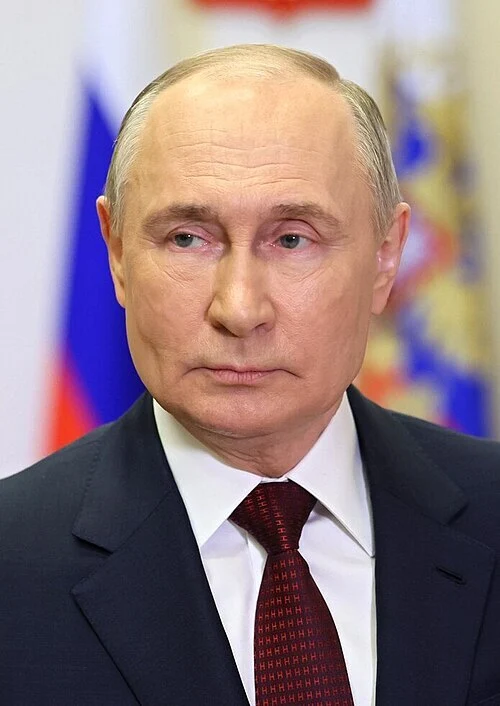
Vladimir Vladimirovich Putin (Russian: Владимир Владимирович Путин, October 7, 1952 -) is the current President of the Russian Federation . Since taking over Yeltsin as acting president in late 1999, Putin has de facto held the highest power in Russia for more than a quarter of a century through four terms as president and one term as prime minister. With the rejuvenation of Great Russia as his core goal, he integrated conservatism , centralization , state capitalism and other elements to reshape Russia in the post-Soviet era. He is not only the hero who helped Russia get out of the shadow of the economic collapse in the 1990s, but also a controversial figure who caused turmoil in the contemporary international order and dominated the Russia-Ukraine conflict .
Putin was born on October 7, 1952 in Leningrad (now St. Petersburg), Soviet Union. After graduating from the Law Department of St. Petersburg University, he joined the KGB . This experience profoundly shaped his calm, pragmatic and intelligence-tinged political style.
_Want to know which historical leader your decision-making style is most similar to? Try the Political Leader Decision-Making Style Test to see if you have Putin-like iron-fist qualities. _
Born civilian and tempered by the KGB
Putin was born in an ordinary working-class family. He was the third son in the family, but his two brothers unfortunately died when they were young. He grew up in the "Khrushchev House" in Leningrad. This childhood street life experience allowed him to learn to protect himself through sambo and judo early on, and eventually earned a black belt.
In 1975, after completing his studies, Putin officially joined the Soviet State Security Council (KGB). From 1985 to 1990, he was sent to Dresden, East Germany. During this period, he witnessed the fall of the Berlin Wall and the collapse of Soviet influence. This major geopolitical tragedy became the original driving force for his understanding that "the disintegration of the Soviet Union was the greatest geopolitical disaster of the 20th century" in his future governing philosophy. On the eve of the collapse of the Soviet Union in 1991, Putin resigned from the KGB and returned to St. Petersburg to join politics, serving as deputy to his mentor Sobchak.
From St. Petersburg to Moscow: The rapid rise in power
While serving as deputy mayor of St. Petersburg, Putin demonstrated excellent administrative efficiency and the ability to handle complex relationships. After Sobchak lost his re-election bid in 1996, Putin was recommended to the Moscow Kremlin and served in the Presidential Affairs Administration. In just three years, he quickly completed the jump from director of the Federal Security Service (FSB) to Russian Prime Minister with his absolute loyalty to the leadership and calm handling style.
On December 31, 1999, the physically and mentally exhausted Russian first president Yeltsin suddenly announced his resignation in his New Year's speech and appointed Putin as acting president. At that time, Russia was on the verge of gang-ridden gangs, high inflation, and the outbreak of the Second Chechen War. Putin quickly won the trust of the Russian people who yearned for order through his "iron-fisted approach" to the Chechnya issue - his famous declaration of "drowning terrorists in toilets".
In 2000, Putin was officially elected president. When he came to power, his first priority was the distribution of power. He weakened the power of local governors, established a federal district system, and fought against the financial oligarchs who controlled the lifeblood of the country. He asked oligarchs to "stay away from politics" and those who disobeyed, such as Khodorkovsky, faced jail or exile. At this point, Russia has established a "vertical integration of power" centered on Putin.
Putinism: Order, Prosperity and Vertical Centralization
During Putin's first two terms in power (2000-2008), which coincided with the surge in international crude oil prices, Russia achieved eight years of high economic growth relying on energy exports, and its national living standards improved significantly. This "energy dividend" has won him extremely high public support.
In terms of political ideology, Putin has gradually formed a system called "Putinism." Its core lies in its emphasis on sovereign democracy , that is, Russia's democratic model should conform to its national conditions rather than blindly follow the West. He promoted conservative social policies, emphasized Orthodox Christian values, family traditions, and cracked down on radical liberalism.
In order to consolidate his rule, he used the United Russia party to control the State Duma and gradually strengthened his control over the mainstream media. When analyzing this ideology that emphasizes state authority and national rejuvenation, participating in the 8values political value orientation test can help us compare the logical differences in the trade-off between centralization and democracy in different countries, and conduct an in-depth study of all the resulting ideologies of 8values .
Armed Forces Expansion and War Preparation and Return to the World Stage
As its economic strength increased, Putin began to seek to restore Russia's great power status . In 2007, he delivered a famous speech at the Munich Security Conference in which he publicly criticized the unipolar hegemony of the United States. This was regarded as an important node in the transition between the old and the new Cold War.
Putin has significantly increased the defense budget and launched a large-scale military modernization reform . He believes that strong force is the final guarantee of Russia's sovereignty. The 2008 Russo-Georgian War (Georgia) was the first time that Russia showed a strong willingness to intervene militarily on another country’s territory.
In 2014, as "pro-European demonstrations" in Ukraine led to the collapse of the pro-Russian government, Putin quickly ordered the annexation of Crimea . Although this move caused Russia to suffer long-term international sanctions, it pushed Putin's popularity to the top domestically. He was portrayed as a "hero who recovered lost territory" and pushed Russia's strategic depth into the heart of the Black Sea. Putin has always advocated the necessity of living space and strategic buffer zones, and believes that NATO's eastward expansion is a fundamental threat to Russian civilization.
The Russia-Ukraine conflict: the biggest strategic gamble of the 21st century
On February 24, 2022, Putin announced the launch of a "special military operation" and Russian troops fully entered Ukraine. This is the riskiest gamble of Putin's political career. He tried to prevent Ukraine from joining the Western camp through force and tried to reshape the European security architecture in the post-Cold War era.
However, the war took a turn beyond initial expectations. In the face of joint sanctions and military assistance from Western countries, the Russian economy is facing severe tests, and the stalemate on the battlefield has also exposed the Russian military's shortcomings in logistics and technology. This conflict not only profoundly changed the energy landscape in Europe, but also prompted countries such as Sweden and Finland to join NATO, which to some extent produced the "NATO expansion" outcome that Putin initially tried to avoid.
In Putin's view, this conflict is Russia's second war of independence against "The Collective West" . He has emphasized in many speeches that this is to protect Russia's national soul and traditional values from being eroded by the "liberal decadence" of the West.
Succession of power and reconstruction of legal basis
Putin's control of power was legally continued in the 2020 constitutional amendments . The bill allows the presidential term to be "cleared" in 2024, which means that Putin can theoretically be in power until 2036, when he will be 84 years old.
This long-term rule has triggered intense discussions in the international community about authoritarianism and Russia's future stability. Opponents of Putin, such as the late Navalny, accuse him of establishing a system of crony capitalism and corruption, while supporters insist that in a country as vast and ethnically diverse as Russia, only a "political strongman" like Putin can prevent the country from descending into anarchic turmoil.
Russia’s economic, cultural and military characteristics
Resource-led economic model
During Putin’s administration, the Russian economy showed obvious characteristics of state monopoly . He controlled the country's economic lifeline by establishing national champions such as Rosneft and Gazprom. This model is extremely efficient when energy prices are high, but it also leads to a single economic structure in Russia and a relative lag in the cultivation of high-tech industries and innovation capabilities.
Social Tradition and Cultural Confidence
In the cultural field, Putin is committed to eliminating the traces of "Westernization" in the 1990s. He strongly supported the Russian Orthodox Church as the cornerstone of national identity. He passed legislation banning the promotion of "non-traditional sexual relations" to minors and emphasized Russia's key role in the anti-fascist war in textbooks. This cultural policy succeeded in establishing a deep social foundation in Russia's vast interior areas.
Cutting-edge weapons and asymmetric warfare
In terms of military technology, Putin has invested heavily in hypersonic missiles (such as "Avangard" and "Zircon") and strategic nuclear strike capabilities. He is well aware that Russia cannot compete with NATO in terms of total conventional armaments, so he is committed to developing "asymmetric weapons" that can break through existing missile defense systems in order to maintain a strategic balance.
Vladimir Putin’s Anecdotes, Controversies and Historical Influence
Shaping of personal charm
Putin attaches great importance to managing his personal image. From flying fighter jets and diving into the deep sea to riding a horse naked in the Siberian wilderness and demonstrating judo skills, these carefully designed "tough guy images" conveyed a signal of Russia's revitalization to both domestic and foreign countries. This "masculine politics" is an important part of Putin's personal brand and is deeply loved by many Russian voters.
Shadow of the Kremlin
Putin's career in power has been marked by a number of sensational assassinations and controversies. From the Litvinenko poisoning case to the Skripal case to the Navalny case, Western intelligence agencies generally accuse these operations of being directed by the Kremlin. Although Putin has denied all this, these incidents have indeed deepened the international community's negative perception of his ruling style.
Later influence and historical evaluation
Putin's influence on Russia is profound and extremely complex.
- National savior: Supporters believe that he ended the chaos of the Yeltsin era, saved Russia from becoming a "third-rate country", and restored national pride.
- Democratic backslider: Critics say he has systematically destroyed Russia's fragile democratic institutions, suppressed a free press and civil society, and plunged Russia into long-term political stagnation.
- A disruptor of the geopolitical structure: By intervening in the Syrian war, the Crimean crisis and the Russia-Ukraine conflict, Putin proved to the world that Russia is still a global player that cannot be ignored, but it also caused Russia to face unprecedented international isolation.
As many observers have said, contemporary Russia's political system is almost tailor-made for Putin alone. He has the forbearance of an intelligence officer, the tenacity of an athlete, and the ambition of a leader of a great power. He regarded himself as the successor of Peter the Great and tried to expand Russia's survival territory again in the torrent of history.
Extended reading : If you want to explore your own political decision-making tendencies, you are welcome to go to the Political Test Center and experience the political leader decision-making style test . Through 48 professional questions, your leadership style will be analyzed from multiple dimensions such as will to power, crisis management, and economic regulation to see if you are closer to Putin's iron-fisted governance or to the political games of other schools.