Benjamin Netanyahu: An evergreen and controversial leader in Israeli politics
As the longest-serving prime minister in Israel's history, Benjamin Netanyahu's political career spanned the Middle East's most turbulent decades. His firm national security stance, tough stance on Iran and policies in the Palestinian-Israeli conflict have made him one of the most influential politicians in the world. By having an in-depth understanding of the right-wing leader's governing logic, you can also take an 8values political test to compare the manifestations of different ideologies in national governance.
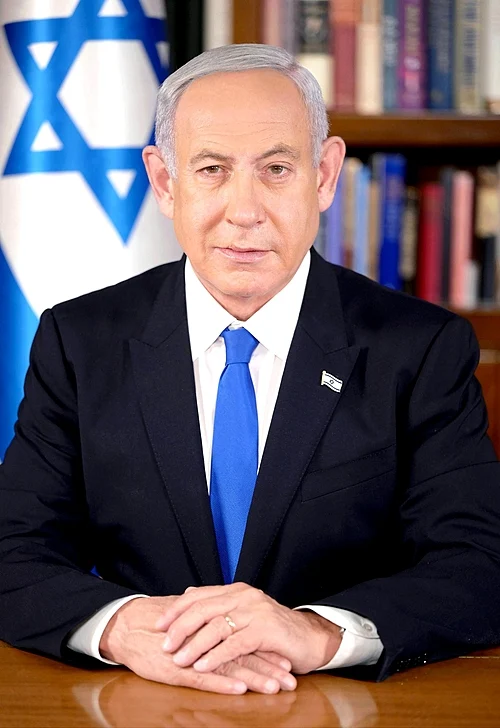
Benjamin Netanyahu (Hebrew: בִּנְיָמִין נְתַנְיָהוּ, October 21, 1949 -) is the current Prime Minister of Israel and leader of the Likud Party (Likud). He has been active in Israeli politics for more than three decades and is nicknamed "Bibi" by his supporters. Netanyahu is the first prime minister born after the founding of the state of Israel. He has devoted his life to maintaining Israel's national security and advocates revisionist Zionism , neoliberal economics and a strategy of deterrence against hostile forces.
Netanyahu's governing style is known for his toughness. He has made remarkable achievements in promoting the development of Israel's high-tech industry and diplomatic breakthroughs (such as the "Abraham Accords"), but he has also been deeply involved in domestic political polarization due to settlement expansion, disputes over judicial reform, and legal proceedings involving corruption.
_Want to know which historical leader your decision-making style is most similar to? Try the Political Leader Decision-Making Style Test to see if you have Netanyahu-like leadership traits. _
Early Background: Elite Education and Counter-Strike
Netanyahu was born in Tel Aviv and grew up in a family with a strong Zionist academic background. His father, Benzion Netanyahu, is a well-known historian and former secretary to the revisionist Zionist leader Zev Jabotinsky. This family environment gave Netanyahu a profound sense of national historical mission.
In 1963, he immigrated to the United States with his family and spent his teenage years in Pennsylvania. In 1967, Netanyahu returned to Israel for military service and joined the General Staff Reconnaissance Corps (Sayeret Matkal), the most elite special forces unit of the Israel Defense Forces. During his service, he participated in many dangerous counter-terrorism operations, including the 1972 rescue of the hostages of Sabena Flight 571, and was wounded in combat.
A major turning point in Netanyahu's life was the 1976 Operation Entebbe . His eldest brother Yonatan Netanyahu died heroically while rescuing hostages as the commander of the operation. The death of his brother had a huge psychological impact on him, prompting him to found the Yonatan Institute for Counter-Terrorism, and since then he has entered the arena of public affairs and diplomacy. Subsequently, he returned to the United States and obtained a bachelor's degree in architecture and a master's degree in management from the Massachusetts Institute of Technology (MIT). This elite Western education background enabled him to skillfully use English to defend Israel in front of the global media.
Diplomatic Breakout: From the United Nations to the Prime Minister's Office
In the 1980s, Netanyahu entered the diplomatic community, serving as deputy chief of mission of the Israeli Embassy in the United States and ambassador to the United Nations. During his tenure at the United Nations, he relied on his excellent eloquence and debating skills to create the image of Israel as an "anti-terrorism outpost" in the international media.
In 1988, Netanyahu returned to his country and joined the Likud party and was elected to parliament. In 1996, in the special political atmosphere after Rabin's assassination, Netanyahu defeated Shimon Peres in the first direct election for prime minister, becoming the youngest prime minister in Israel's history.
During his first term, Netanyahu expressed reservations about the Oslo Accords, arguing that they sacrificed Israel's security. He emphasized the "principle of reciprocity" , that is, the Palestinian side must first fulfill its anti-terrorism commitments before Israel will make concessions. Nonetheless, under pressure from the Clinton administration, he signed the Wye River Memorandum, which led to dissatisfaction among hardliners within the Likud party and ultimately led to his defeat in the 1999 election.
During his brief hiatus from politics, Netanyahu entered the business world. He returned to politics in 2002, serving as Minister of Foreign Affairs and then Minister of Finance. During his tenure as Finance Minister, he aggressively implemented free market reforms , cut welfare expenditures, and promoted privatization. Although this series of measures was highly controversial, it was recognized as laying the foundation for the economic prosperity of Israel's "start-up nation."
Long-term governance and security strategy
In 2009, Netanyahu was re-elected as prime minister, beginning more than a decade of continuous rule. His core political philosophy can be summarized as "pursuing peace through strength."
Absolute toughness on the Iranian nuclear issue
Netanyahu views the Iranian nuclear threat as an existential threat to Israel. He has repeatedly presented charts to the United Nations General Assembly warning about Iran's progress in enriching uranium. He firmly opposed the Iran Nuclear Agreement (JCPOA) signed in 2015 and successfully persuaded the Trump administration in the United States to withdraw from the agreement. During his tenure, he ordered multiple strikes against Iranian military targets in Syria and was accused of planning multiple covert sabotage operations against Iranian nuclear facilities and scientists.
The Abraham Accords: A diplomatic masterstroke
The international community has long believed that Israel must resolve the Palestinian issue before establishing diplomatic relations with Arab countries. Netanyahu broke this paradigm and through the Abraham Accords signed in 2020, Israel successfully normalized relations with the United Arab Emirates, Bahrain, Sudan and Morocco. This is a major breakthrough in the history of Israeli diplomacy, proving that Netanyahu can directly achieve regional integration by enhancing Israel's economic and technological strength, skipping the Palestinian issue.
Settlement Policy and the Palestinian-Israeli Deadlock
On the Israeli-Palestinian issue, the Netanyahu government continues to expand Jewish settlements in the West Bank. He believes that abandoning these strategic locations will lead to a repeat of Gaza-style terrorist attacks in the West Bank. This stance has led to the long-term stagnation of the Palestinian-Israeli peace process and triggered widespread criticism from the international community, especially the United Nations and some Western allies, which believe that it undermines the possibility of a "two-state solution."
When analyzing Netanyahu’s political orientation that focuses on security, market competition, and national identity, participating in the 8values political value orientation test can help us clarify the coordinates of this kind of thinking in modern politics.
Judicial reform and domestic political rifts
Entering the 2020s, Netanyahu's rule faces unprecedented domestic challenges. He himself faces multiple charges of bribery, fraud and breach of trust, which has plunged Israel into a cycle of successive elections.
In 2023, Netanyahu's right-wing and far-right coalition government pushed for radical judicial reforms aimed at weakening the Supreme Court's checks on government power. The plan triggered the largest and longest nationwide demonstrations in Israel's history. Critics saw this as undermining democratic institutions, while Netanyahu argued it was an attempt to restore balance between the legislature and the judiciary.
This turmoil has profoundly torn apart Israeli society and even affected the reserve system of the National Defense Forces, exposing Israel's contradictions on deep-seated issues such as national identity and the boundaries between religion and secularity.
Al-Aqsa Flood and Gaza War
On October 7, 2023, Hamas launched the "Aqsa Flood" operation that shocked the world, causing heavy casualties in Israel. This is widely seen as a major failure of Israel's intelligence and security systems, dealing a huge reputational blow to Netanyahu, who has always billed himself as "Mr. Security."
In the subsequent Gaza War, Netanyahu established the goal of "completely annihilating Hamas" and "taking back all hostages." However, as the war continues and the humanitarian crisis intensifies, Israel faces increasing international pressure. Domestic calls for his resignation, early elections, and priority on reaching a prisoner exchange agreement are also growing.
This war will not only test Netanyahu's crisis management capabilities, but will also directly determine his political legacy: Will he be remembered as a commander-in-chief who defended the country, or will he be held accountable as a leader who led to the collapse of security?
Economic philosophy and social impact
promoter of market liberalism
Netanyahu is a big fan of supply-side economics . While serving as finance minister, he once called Israel's public sector a "fat man riding on a thin horse (the private sector)." His policies of cutting taxes and reducing government intervention spurred competition in telecommunications, finance and high technology. This has made Israel extremely resilient during multiple global economic crises.
The Ultra-Orthodox Game
In order to maintain the stability of the ruling coalition, Netanyahu has long formed an alliance with the ultra-Orthodox (Haredi) parties. He has provided these groups with huge subsidies and exemptions from military service, sparking outrage among secular taxpayers. Although this political marriage consolidated his power, it also intensified the opposition between secular and religious people in Israel.
Evaluation and Controversy: The Complexity of Leadership
Netanyahu is undoubtedly a charismatic and a master of political psychology. His speeches were powerful and he was good at using fear and pride to mobilize voters.
- Supporters' perspective: His supporters believe that in a hostile Middle East, Israel needs a leader like Netanyahu with global vision, tough skills and extraordinary wisdom. He made Israel stronger, richer, and successfully fended off Iranian infiltration.
- Critics' perspective: Critics believe that he is willing to sacrifice the rule of law for his personal political survival and uses divide-and-conquer tactics to incite social hatred. His settlement policy is pushing Israel into the abyss of the "one-state solution" and destroying the country's long-term democratic genes.
Conclusion
Benjamin Netanyahu’s life is a microcosm of Israel’s history of survival and struggle. From special forces to United Nations ambassador, from economic reformer to diplomatic breakthrough, he has always been at the center of the storm. Regardless of how history ultimately judges him, he profoundly changed Israel's political landscape.
If you want to explore your own political decision-making tendencies, you are welcome to go to the Political Testing Center and experience the political leaders’ decision-making style test . This test will pass 48 professional questions and conduct in-depth analysis from six dimensions including decision-making style, power concept, diplomatic orientation, and economic philosophy. It will help you discover your leadership potential in complex situations and see how you are similar and different in thinking patterns with leaders such as Netanyahu, Churchill, and Roosevelt.