Nikita Khrushchev: The Instigator of Change, Controversy and the Cold War in the Soviet Union
As one of the most colorful leaders in Soviet history, Nikita Khrushchev is known for his "de-Stalinization" movement, the Cuban Missile Crisis, and his unique personality on the international stage. He was both a reformer of the socialist system and a key player at the height of the Cold War. By understanding the political path of this complex figure, you can also conduct an in-depth 8values political values test to compare the characteristics of different ideologies.
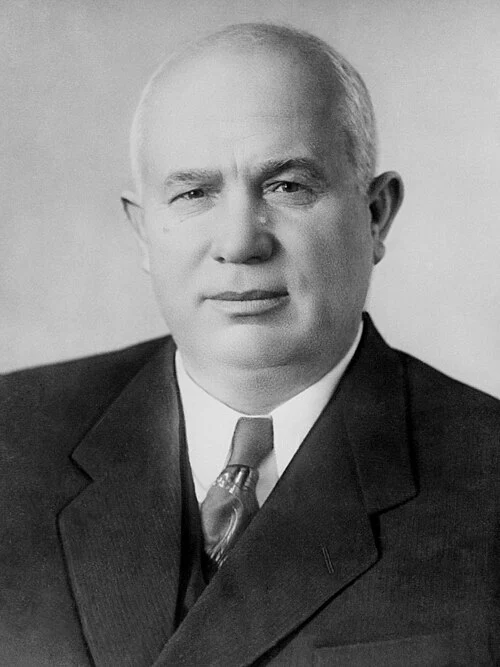
Nikita Sergeyevich Khrushchev (Russian: Никита Сергеевич Хрущёв, April 15, 1894 – September 11, 1971) was First Secretary of the Central Committee of the Communist Party of the Soviet Union (1953–1964) and Chairman of the Council of Ministers of the Soviet Union. He was the de facto supreme leader of the Soviet Union after Stalin. During his tenure, Khrushchev launched a comprehensive criticism of Stalin's personality cult through the famous "Secret Report" and implemented a series of political, economic and cultural reforms known as the "Khrushchev Thaw."
On April 15, 1894, Khrushchev was born into a poor peasant family in Kalinovka, Kursk Province, Russia. He was deposed in a palace coup in 1964 and eventually died of myocardial infarction in Moscow on September 11, 1971, ending his eventful and contradictory life in relative silence.
_Want to know which historical leader your decision-making style is most similar to? Try the Political Leaders Decision-Making Style Test to see if you have Khrushchev-like leadership traits. _
From humble beginnings: from miner to professional revolutionary
Khrushchev's early life was a typical Bolshevik path to promotion. When he was a teenager, he worked in factories and mines in the Donbas region, which gave him a deep experience of the sufferings of lower-class workers and also laid the foundation for his later "civilian complex." In 1918, he joined the Russian Communist Party (Bolsheviks) and joined the Red Army during the Russian Civil War, serving as a grassroots political cadre.
After the civil war, Khrushchev showed great organizational talent and enthusiasm for learning. He received basic education at the Donetsk Workers' School and entered the Moscow Polytechnic Institute in the early 1930s. During this period, he won the appreciation of Stalin's close confidant Lazar Kaganovich through his active participation in party affairs, and his status in the party quickly rose.
By 1938, Khrushchev was appointed First Secretary of the Communist Party of Ukraine. While in Ukraine, he was not only responsible for the economic reconstruction of the region, but was also deeply involved in the "Great Purge" in the late 1930s. Although there is controversy about his performance during this period, it is undeniable that it was this experience that allowed him to learn how to survive under Stalin's suspicious gaze, and eventually entered the core circle of Soviet power - the Politburo of the Central Committee of the Soviet Communist Party.
The Peak of Power: The Struggle for Power After Stalin's Death
Stalin died in March 1953, and the Soviet political arena fell into a brief power vacuum. Khrushchev was not initially considered the top candidate for succession, and power seemed to lie in the hands of a collective leadership composed of Malenkov, Beria, and Molotov. However, Khrushchev showed outstanding political skills. He teamed up with the military commander Marshal Zhukov and first eliminated the most threatening secret police chief Beria.
In September 1953, Khrushchev officially became the First Secretary of the Central Committee of the Communist Party of the Soviet Union. In the following years, he used his years of experience in the party system to gradually weaken the power of his political opponents. In 1957, facing the "anti-party group" of Malenkov, Molotov and others, he successfully counterattacked with the support of the Central Plenary Session, completely consolidating his supreme dominance.
"Secret Report" and the Shock of De-Stalinization
The most historic moment in Khrushchev's political career occurred in February 1956. After the 20th National Congress of the Communist Party of the Soviet Union , he published his famous secret report "On the Cult of Personality and Its Consequences." In his report, he exposed the purge crimes, violations of the rule of law, and military command errors during the Stalin period, shocking the entire communist world.
This move started the process of "de-Stalinization" and brought far-reaching impacts including:
- Political Thaw: Millions of political prisoners were released from the Gulag and rehabilitated.
- Loosening of ideas: A certain degree of freedom emerged in the Soviet literary and artistic circles, and the works of writers such as Solzhenitsyn were published.
- Unrest in the camp: The report triggered a violent reaction in Eastern European countries, which directly led to the Hungarian incident in 1956 and the Poznan incident in Poland.
When analyzing Khrushchev's political courage to break the myth of the system, it helps us understand the dynamic changes in the political spectrum. You can measure your inclination on such issues by taking the 8values political values orientation test , and view detailed interpretations of all 8values ideological results .
Radical Reformers: The Corn Movement and Economic Experiments
Khrushchev was an avid experimenter in the economic field. He was well aware that the traditional centrally commanded planned economy of the Soviet Union had rigid problems, so he tried to achieve breakthroughs through "decentralization" and "focusing on key points."
Agricultural Reform and “Corn Obsession”
Khrushchev had a special passion for agriculture. He launched a grand "reclamation movement" in an attempt to reclaim tens of millions of hectares of land in Kazakhstan and other wilderness areas to solve the food crisis. At the same time, inspired by his visit to the United States, he firmly believed that corn was a panacea for increasing livestock production, so he forcibly promoted corn cultivation throughout the Soviet Union—even in cold areas that were not suitable for growing corn. This attempt, known as the "Corn Movement," ultimately failed in part because it ignored objective climate conditions.
Industrial management system reform
In 1957, he abolished the central professional ministries and replaced them with local "National Economic Councils" . This move aimed at decentralizing power, but instead resulted in widespread localism and administrative chaos. In addition, he shifted the focus of the Soviet military industry from the traditional navy and army to missiles and nuclear weapons, which to a certain extent caused dissatisfaction among the top military officials.
Although many reforms bear the traces of head-turning decisions, Khrushchev's investment in people's livelihood is also real. He built large-scale cheap prefabricated housing, the famous "Khrushchev House" , which solved the housing problems of tens of millions of Soviet citizens and significantly improved the living standards of the Soviet people in the late 1950s.
Cold War Game: From Peaceful Coexistence to Nuclear Crisis
In diplomacy, Khrushchev proposed the principles of "peaceful coexistence," "peaceful competition," and "peaceful transition." He attempted to ease relations with Western countries and was the first top Soviet leader to officially visit the United States.
However, due to his changeable personality and defense of the Soviet strategic interests, this period became the most thrilling stage of the Cold War:
- Space Race: In 1957, the Soviet Union successfully launched the world's first artificial satellite, "Sputnik 1" . In 1961, Gagarin completed mankind's first space flight. This marked that the Soviet Union once led the United States in the field of science and technology.
- Berlin Wall: In 1961, with the support of Khrushchev, the Berlin Wall was erected overnight to stop the exodus of people from East Germany.
- Cuban Missile Crisis: In 1962, Khrushchev secretly deployed intermediate-range nuclear missiles to Cuba in an attempt to balance U.S. missile superiority in Turkey. The crisis brought humanity to the brink of nuclear war and ended with the Soviet Union withdrawing its missiles, the United States promising not to invade Cuba, and the withdrawal of Turkish missiles.
The end of power: the 1964 palace coup
Khrushchev's reforms touched the core interests of the Soviet bureaucracy (the privileged class of bureaucrats). His frequent turnovers, bureaucratic term limits and erratic economic decisions have gradually isolated him within the party.
In October 1964, while Khrushchev was on vacation in the Black Sea, Brezhnev and other senior party officials jointly launched a coup. The plenary session of the Central Committee dismissed him from all posts on the grounds of "age and health." Rather than being executed or imprisoned like his predecessors, Khrushchev was allowed to live out the rest of his life in a villa outside Moscow as a "special pensioner."
During his later years of confinement, he secretly recorded his memoirs and published them in the West. In his memoirs, he reflected on his political career and believed that his greatest contribution was to break the Stalinist terror politics and give people the right to speak.
Khrushchev’s political legacy and historical evaluation
Khrushchev was a character full of contradictions. He was not only a sincere believer in communism, believing that the Soviet Union could build communism within twenty years, but also a pragmatic realist.
historical achievements
- Ending Terror: He ended the political purges of the Stalinist period, normalized Soviet society, and restored the rule of law to a certain extent.
- Improvement of people's livelihood: His housing construction, wage reform and agricultural investment allowed the Soviet people to enjoy the most relaxed and stable life since the revolution.
- Aerospace Pioneer: Under his leadership, the Soviet Union took the first step in exploring the universe. This was a highlight moment in the history of the Russian nation.
historical limitations
- Character limitations: His policies are often blind and reckless, and he often implements grand plans without sufficient justification.
- System constraints: Although he tried to reform, he never thought of fundamentally touching the one-party rule and highly centralized system of the Soviet Union, which made his reforms ultimately unsustainable.
- Camp split: During his tenure, Sino-Soviet relations suffered a serious breakdown, leading to a major split in the international communist movement.
As historians have evaluated, Khrushchev was "the first leader to try to make the Soviet Union more efficient and humane through partial reforms without changing the basic framework of the Soviet Union." Although many of his efforts ultimately failed and were replaced by the "stagnation" of the Brezhnev years, the seeds of change he sowed would sprout again decades later in the Gorbachev era.
The image of Khrushchev is fundamentally different from that of an extreme dictator like Hitler. Hitler pursued destruction and expansion based on racism, while Khrushchev tried to find a path to peaceful coexistence with the West while adhering to his ideology. Understanding this subtle difference in political leanings is crucial to our understanding of the political game of the 20th century.
Extended reading : If you want to explore your own political decision-making tendencies, welcome to the Political Test Center to experience the political leaders’ decision-making style test . Through 48 professional questions, you will analyze your leadership characteristics from six dimensions such as decision-making style, power concept, and economic philosophy to see whether you are most like Stalin, Churchill, Roosevelt, or a leader with a Khrushchev-style spirit of change.