Nelson Mandela: The Life, Struggles and Legacy of South Africa's Founding Father
As South Africa's first black president and a globally recognized anti-apartheid fighter, Nelson Mandela's life, advocacy for peace and reconciliation, and profound impact on the global human rights movement are important issues for understanding the history and democratic transformation of modern Africa. By deeply understanding the political path of this great figure, you can also take a professional 8values political values orientation test to compare the characteristics of different ideologies.
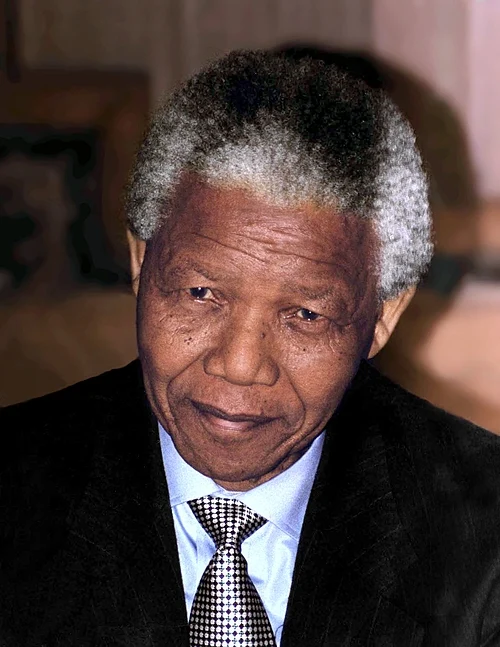
Nelson Mandela (English: Nelson Rolihlahla Mandela, July 18, 1918 - December 5, 2013) was a famous South African anti-apartheid revolutionary, politician and philanthropist. He served as the President of South Africa (1994-1999). He is South Africa's first all-race democratically elected head of state and is revered as the "Father of the Founding of South Africa". Mandela devoted his life to abolishing apartheid and advocating for racial reconciliation and social justice . He was imprisoned for 27 years for leading the resistance struggle and eventually won the Nobel Peace Prize in 1993.
On July 18, 1918, Mandela was born into a family of tribal chiefs in Transkei, South Africa. He passed away peacefully at his home in Johannesburg on December 5, 2013. His life is a legendary journey from rebel to prisoner to peacemaker.
_Want to know which historical leader your decision-making style is most similar to? Try the Political Leader Decision-Making Style Test to see if you have Mandela-like qualities of tolerance and determination. _
Early Background and Awakening of Resistance Consciousness
Mandela was born into a royal family in the village of Mvezo in the Eastern Cape Province of South Africa. His original name was "Rolihlahla", which means "trouble maker" in Xhosa. His father is the chief advisor of the Tembu tribe. When Mandela was nine years old, his father died of illness and he was raised by the regent of the Thembu dynasty. While growing up, he not only received traditional tribal education, but also received systematic Western church education.
While studying at the University of Fort Hare, Mandela became exposed to student politics. He was ordered to drop out of school for participating in student protests. He then fled to Johannesburg to escape an engagement arranged by the Prince Regent. In Johannesburg, he witnessed firsthand the poverty, discrimination and injustice suffered by black people under white minority rule. This experience completely changed his values.
In 1943, Mandela joined the African National Congress (ANC) and co-founded the ANC Youth League (ANCYL) the following year. He advocates a more aggressive approach to fighting racism rather than just petitions and negotiations.
Transition from nonviolent resistance to armed struggle
In 1948, the South African National Party came to power and formally established a systemic apartheid system . This system divided people into white, black, colored and Indian through laws and deprived black people of basic political rights. Mandela and his colleagues launched a "non-cooperation movement" calling on people to violate quarantine laws.
As government repression intensified, especially the Sharpeville Massacre in 1960, the space for peaceful resistance was extremely compressed. Mandela realized that pure non-violence could no longer shake a regime armed to the teeth. In 1961, he co-founded and led the ANC's military wing, uMkhonto we Sizwe ( Spear of the Nation ).
Mandela secretly traveled to other African countries to seek support and receive military training. He was considered a terrorist by the then South African government and was wanted. In 1962, shortly after returning from overseas, Mandela was arrested and imprisoned. In 1964 he was sentenced to life imprisonment in the famous "Livonia Trial". His speech in court became a famous quote in the history of human rights:
"I cherish the ideal of a democratic and free society... It is an ideal that I hope to fight for and realize. But it is also an ideal that I am prepared to die for if necessary."
A long life behind bars and the spirit of Robben Island
Mandela spent 27 years in prison, most of which was spent on the desolate Robben Island . There he was forced to work in a quarry and allowed only a minimal number of correspondence and meetings with his family each year.
However, prison did not break Mandela's will. Instead, he spent time in prison studying law, languages, and delving into Afrikaner (white South African) history and culture. He believes that to defeat your opponent, you must first understand your opponent. He became the spiritual leader of black prisoners in prison and gradually established a high reputation in the international community through letters and intermediaries.
By the 1980s, with the intensification of international sanctions and the escalation of domestic armed resistance in South Africa, the South African government faced tremendous political and economic pressure. President Botha at the time had repeatedly offered to release Mandela on the condition of "giving up armed struggle", but Mandela rejected any conditional freedom, insisting that "only free people can negotiate."
The pain of democratic transition and peaceful compromise
On February 11, 1990, South Africa's new President FW de Klerk announced the unconditional release of Mandela and lifted the ban on the African National Congress. This moment marked the end of an old era in South Africa.
After his release from prison, Mandela faced a deeply divided country. Black radicals demanded an immediate liquidation of white privilege, while white right-wing forces threatened civil war to retain power. In such a turbulent situation, Mandela showed outstanding political wisdom and calmness. He insisted on "power sharing" and "orderly transition" and successfully persuaded his supporters to put aside the idea of revenge and instead pursue the establishment of a "Rainbow Nation."
When analyzing Mandela's ideology of seeking a balance between adhering to principles and pragmatic compromises, it helps us understand the complexity of the political game. You can measure your own inclination on such issues by taking the 8values political value orientation test , and view detailed interpretations of all 8values ideological results .
In 1993, Mandela and de Klerk jointly received the Nobel Peace Prize. In April 1994, South Africa held its first racially neutral general election in history. The African National Congress led by Mandela won and he officially became the president of South Africa.
Governance and National Reconciliation in the Mandela Government
As president, Mandela made national reconciliation a top priority. He took a series of symbolic actions to break down racial barriers, such as cheering for players at the 1995 Rugby World Cup in the uniform of the South African Springboks, once seen as a symbol of white supremacy.
Truth and Reconciliation Commission (TRC)
The most significant political initiative of Mandela's government was the establishment of the Truth and Reconciliation Commission , chaired by Archbishop Desmond Tutu. The commission followed the principle of "truth for amnesty", encouraging apartheid-era perpetrators to confess their crimes in exchange for legal immunity. This model avoided retributive justice akin to the Nuremberg Trials, and although controversial at the time and in later generations, it largely prevented South Africa from descending into a full-scale racial bloody war.
economic and social policy
In the economic field, Mandela implemented the Reconstruction and Development Plan (RDP), which aimed to improve the infrastructure, medical and educational conditions of black communities. However, in order to maintain investor confidence and avoid economic collapse, he shifted to more prudent, pro-market economic policies in the later years of his administration. Although the poverty problem remains severe, during his tenure, South Africa successfully achieved a smooth transfer of power and a smooth transition of the economy.
Military and Nuclear Weapons Policy
Notably, South Africa under Mandela became the first country in the world to voluntarily eliminate nuclear weapons. On the eve of the collapse of the apartheid regime, South Africa had developed nuclear warheads, but Mandela insisted that nuclear armament must be completely dismantled for the sake of regional peace and international trust, which earned South Africa a high international moral credibility.
Later life and continuing influence
In 1999, Mandela voluntarily retired after completing one term and did not seek re-election. This kind of restraint on power was extremely valuable in the political arena of Africa and the world at that time. After retiring, Mandela did not fade from the public eye. He turned to philanthropy, especially the fight against HIV/AIDS.
In his later years, he continued to promote global peace and human rights through the Mandela Foundation. He has publicly criticized the hegemonism of Western powers and also attacked dictatorships within Africa. Until his death in 2013, he remained a moral icon for progressive forces in South Africa and around the world.
Nelson Mandela’s Anecdotes, Controversies and Historical Comments
Anecdotes and personal touches
Mandela was known for his unique charm and approachability. His iconic "Madiba shirt" is colorful, breaking the traditional stereotype of western leaders wearing suits and ties, and symbolizing the confidence of African culture.
He has a strong memory and self-discipline. While on Robben Island, he continued to exercise every day in his small cell. Even after becoming president, he still maintained the habit of getting up early to make quilts. This unassuming quality won him not only the love of his followers, but the respect of his former enemies as well.
historical controversy
Despite Mandela's deification, his political career was not without controversy:
- Early armed struggle: His early involvement in establishing military organizations and planning sabotage activities led to his long-term inclusion on the United States' terrorist watch list.
- Governance legacy: Critics point out that because Mandela placed too much emphasis on racial reconciliation and failed to completely change the huge wealth gap between blacks and whites in South Africa during his term, South Africa still faces serious social inequality and high crime rates.
- Relations with dictators: After being released from prison, Mandela maintained friendly contacts with Gaddafi of Libya and Castro of Cuba out of gratitude for supporting the ANC. This caused a lot of controversy in Western countries.
Historical status and heritage
Mandela's legacy is multifaceted. He proved to the world that even racial conflicts with deep hatred can be resolved through dialogue, compromise and reconciliation.
- Defender of democracy: He successfully transformed South Africa from a white supremacist authoritarian state into a pluralistic democracy that guaranteed human rights.
- Symbol of Peace: His life transcended hatred to become one of the most important peace symbols of the second half of the 20th century.
- The pride of Africa: He has enhanced Africa's voice in international politics and has become a positive example of African national governance.
As he wrote in his autobiography "Long Road to Freedom":
"As I walked out of my cell and toward the door to freedom, I knew that if I couldn't leave my pain and resentment behind, I would still be in prison."
Nelson Mandela's story is one of resilience, forgiveness and transformation. He not only changed South Africa, but also profoundly changed the world's understanding of power and justice.
Extended reading : If you want to explore your own political decision-making tendencies, you are welcome to go to the Political Test Center and experience the political leader decision-making style test . Through 48 professional questions, you will analyze your leadership traits from six dimensions including decision-making style, view of power, and economic philosophy to find out whether you are most like Mandela, Lincoln, Gandhi, or other historical leaders.