Roman Catholicism: History, Doctrine and Global Influence of the Universal Church
As the sect with the largest number of believers in Christianity, Roman Catholicism's two-thousand-year history is not only the evolution of religious belief, but also an important pillar of Western civilization. From the religious authority of the Vatican to philanthropy across the globe, Catholic hierarchy, liturgical traditions, and pursuit of social justice have profoundly influenced human culture, art, and politics.
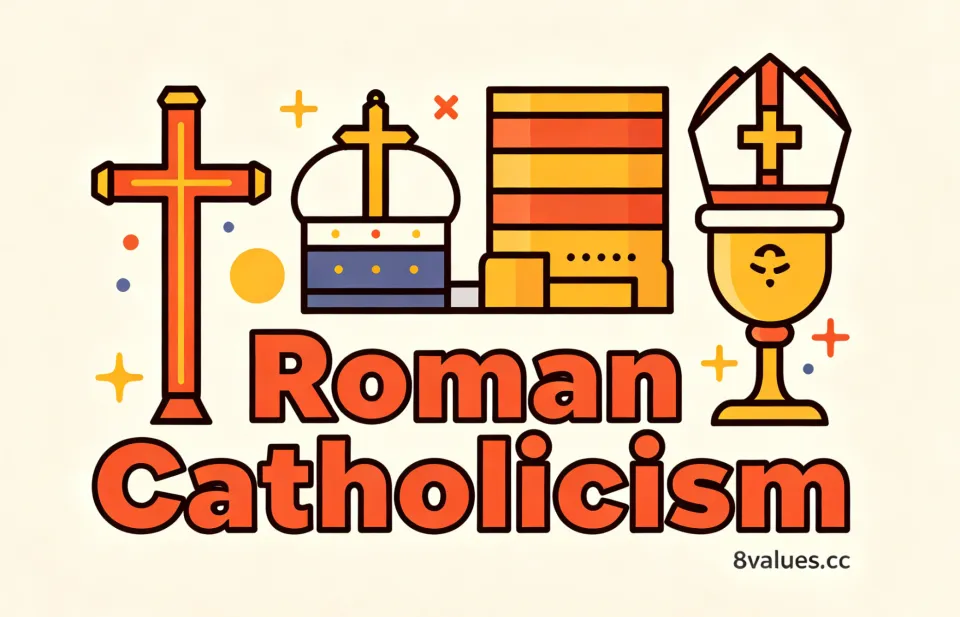
Roman Catholicism (Latin: Ecclesia Catholica Romana) is the first of the three major sects of Christianity, and its believers are called Catholics. According to statistics from the "Apostolic Yearbook", the number of Catholics in the world has exceeded 1.3 billion, accounting for approximately 17.7% of the world's total population. Catholicism emphasizes its "universality" (Catholicity) and "uniqueness" and believes that its church was established by Jesus Christ himself and has been passed down from generation to generation by St. Peter and his successor, the Pope . Its core teachings not only include the belief in the Trinity of God, but also emphasize the combination of sacred tradition, Bible and the Magisterium of the Church.
The headquarters of the Catholic Church is in Vatican City State, the smallest independent sovereign state in the world and the center of Catholic spiritual power. From its early underground crucifixions to the height of power in the Middle Ages to the self-reinvention of modern society, Catholicism has always played a pivotal role in the relationship between faith and secularity.
_Want to know which branch of Christianity your beliefs are most consistent with? Try the Christian Denominational Aptitude Test to find out whether you're more Catholic, Orthodox or Protestant. _
Apostolic Succession: The Historical Origins of Roman Catholicism
The history of the Catholic Church can be traced back to the 1st century AD in Palestine. According to Catholic tradition, Jesus Christ said to Simon Peter on the Sea of Galileo: "You are Peter (the rock), and on this rock I will build my Church." This is regarded as the theological basis of the power of the Holy See (Holy See).
The Early Church and Legalization
During the first three centuries, Christians encountered many brutal persecutions within the Roman Empire. However, this belief did not disappear, but spread rapidly through the blood of the martyrs. In 313 AD, Emperor Constantine issued the "Edict of Milan", recognizing the legal status of Christianity. In 380 AD, Theodosius I designated Christianity as the state religion of the Roman Empire, which marked the formal entry into the institutionalization stage of the church.
Great Schism between Eastern and Western Churches
As the Roman Empire split, the Eastern and Western churches diverge over language (Latin vs. Greek), liturgy, and doctrine (especially the "and clause" controversy regarding the Holy Spirit). In 1054, the Pope of Rome and the Patriarch of Constantinople excommunicated each other, leading to the Great Schism of the Eastern and Western Churches , and the Catholic and Orthodox churches officially parted ways.
Reformation and Reflection
In the late Middle Ages, the church faced internal corruption and controversies over indulgences. In 1517, Martin Luther initiated the Reformation, triggering the second great schism in Christian history. In response, the Catholic Church convened the Council of Trent (Council of Trent) to carry out drastic internal reforms, clarify the sacramental system, and strengthen the quality education of clergy. This is called the "Counter Reformation" or "Catholic Reformation."
Core Doctrine: Pillars of Faith and Sacramental Institutions
The Roman Catholic belief system is based on the dual foundations of the Bible and Apostolic Tradition. The Church believes that the Bible cannot exist independently of the interpretation of the Church, and that the Magisterium of the Church is the guardian of the truth of faith.
Trinity and Soteriology
Catholics believe that there is one God in three persons: the Father, the Son, and the Holy Spirit. The core tenet lies in the belief that Jesus Christ is the Son of God, became a human being, died on the cross and rose again to redeem the sins of mankind.
seven sacraments
The sacraments are seen as "external signs established by Christ to confer grace". There are seven sacraments in Catholicism that last throughout the life of a believer:
- The Sacrament of Baptism : Wash away original sin and become a child of God.
- Sacrament of Confirmation : Receive the gift of the Holy Spirit and strengthen your faith.
- Eucharist : The core of Catholic liturgy. Believers believe that during the Mass, the bread and wine are "transformed" into the body and blood of Christ after being consecrated.
- The Sacrament of Penance (Sacrament of Reconciliation): Repent of sins to the priest and obtain forgiveness from God.
- Sacrament of the Anointing of the Sick : a prayer for grace for the seriously ill or dying.
- Sacrament of Holy Orders : Male believers receive priestly orders and become bishops, priests or deacons.
- The Sacrament of Marriage : A man and a woman are united in life-long partnership before God.
Church Hierarchy: Strict Organizational Structure
Roman Catholicism has the oldest and strictest hierarchy in the world, and this hierarchy ensures the doctrinal unity of the church worldwide.
The Pope
The Pope is the Bishop of Rome and is regarded as the Vicar of Christ on earth. He has the highest legislative, judicial and doctrinal definition powers. Since the First Vatican Council in 1870, the Pope has been considered to have "Papal Infallibility" when announcing final conclusions on faith or morality as the supreme pastor.
Cardinals and Bishops
Cardinals, often called "cardinals," are the pope's advisers and their most important responsibility is to elect a new pope after the pope's death. Bishops are the leaders of each diocese and are considered the successors of the apostles.
Priests and Monks
The priest is responsible for the specific pastoral work of the parish. In addition, Catholicism has a rich religious tradition, such as the Jesuits who emphasize scholarship and mission, the Franciscans who emphasize poverty and mercy, and the Benedictines who emphasize contemplative prayer.
When analyzing the Catholic Church, a highly organized structure that emphasizes both traditional authority and authority, we can find that it has deep roots with conservatism and corporatism on the political spectrum. You can take the 8values political values test to measure your stance on issues of tradition and change.
Modern Innovation: The Second Vatican Council
In the mid-20th century, facing the rapidly developing modern world, the Catholic Church convened the landmark Second Vatican Council (Vatican II, 1962-1965). This conference was initiated by Pope John XXIII and aimed at achieving the "modernization" (Aggiornamento) of the Church.
Major changes brought about by the Council include:
- Liturgical reform : Mass is no longer limited to Latin, allowing the use of local languages of various countries, making believers more able to participate.
- The Ecumenical Movement : Changed the term for non-Catholic Christians from "schismatics" to "brothers in Christ" and actively engaged in dialogue with Judaism and other religions.
- The status of lay people : Emphasizes the importance of every believer in the life of the church and the mission of the world, rather than simply being a follower of the clergy.
Catholic influence on the world
Technology and Science
Despite conflicts such as the "Galileo Case" in history, the Catholic Church is actually an important promoter of modern science. Medieval monasteries preserved a large number of classical documents, and early universities (such as the University of Paris and the University of Bologna) were mostly founded by the church. Famous priest scientists include Mendel, the "father of genetics", and Lemaître, who proposed the "Big Bang Theory".
Art and Architecture
From the frescoes of the Sistine Chapel to the spiers of the Gothic cathedral, Catholic culture gave birth to art masters such as Michelangelo, Raphael, and Bach (although he was a Lutheran, he was deeply influenced by the Catholic tradition). The Church visually presents its sacred faith to the world through visual art and music.
social justice and charity
The Catholic Church is the world's largest non-governmental provider of educational, medical and charitable services. The Encyclical "New Matter" promulgated by Pope Leo XIII laid the foundation of Catholic social teaching , emphasizing the protection of workers' rights, opposing extreme capitalism and communism, and advocating social justice and human dignity.
Controversies and Challenges
As a huge institution with a history of two thousand years, the Roman Catholic Church also faces many controversies and severe challenges in modern society:
- Sexual abuse scandals : In the past few decades, churches in many countries have exposed scandals about clergy sexually abusing minors, which has seriously damaged the credibility of the church. The current Pope Francis has implemented a "zero tolerance" policy in this regard, but due to the deep institutional problems involved in the institution, the road to reform is still long.
- Ethical issues : On issues such as abortion, contraception, same-sex marriage, and women's clergy, the Catholic Church adheres to the traditional natural law position, which has caused fierce friction with modern Western liberal values.
- Loss of believers : In traditional Catholic areas such as Europe and North America, the number of believers participating in practice continues to decline due to the wave of secularization; while in Africa and Asia, Catholicism is showing a growth trend.
Historical Review: Watchers of the Eternal City
Roman Catholicism is not only a religious organization, it is also a cultural community that transcends national boundaries, races and eras. Historians agree that without the Catholic Church, Western Europe might not have been able to preserve the flames of law, literature, and education in the chaos that followed the collapse of the Roman Empire.
Since taking office, Pope Francis has been committed to promoting a "poor Church for the poor", emphasizing environmental protection (such as the encyclical "Laudato Si'") and global inclusion. His leadership style demonstrates the Catholic Church's efforts to respond to the gap between rich and poor and the ecological crisis in the era of globalization while adhering to its traditional core teachings.
As the doctrine states, the Church is both "holy" and "made up of sinners." The life of Catholicism is not flawless, but its pursuit of lofty ideals, insistence on liturgical aesthetics, and concern for human suffering make it an indispensable chapter for understanding human civilization.
If you want to further explore how religious beliefs shape your worldview, welcome to the Political Test Center . In addition to the Christian sectarian orientation test, you can also analyze your social concepts and views of power through multiple dimensions to gain a deeper understanding of your position in the long history of human thought.