What type of feminist are you? Explore the diversity and evolution of feminism
Feminism is a global social and political movement that aims to pursue gender equality and eliminate gender discrimination and oppression. Over the course of history, feminism has evolved into many strands, each with distinct insights into the roots of inequality and how to achieve liberation. By gaining a comprehensive understanding of these lines of thought, you can take an in-depth feminist value orientation test to explore which stream of feminism your views are closer to.
Feminism is not a single, rigid dogma, but a huge ideological system that includes political, economic, cultural and social criticism. From the “first wave” pursuit of voting rights to contemporary discussions focused on intersectionality and identity politics, the core of feminism has always revolved around gender justice . It challenges traditional patriarchal structures and attempts to gain autonomy in the public and private spheres for women of all backgrounds.
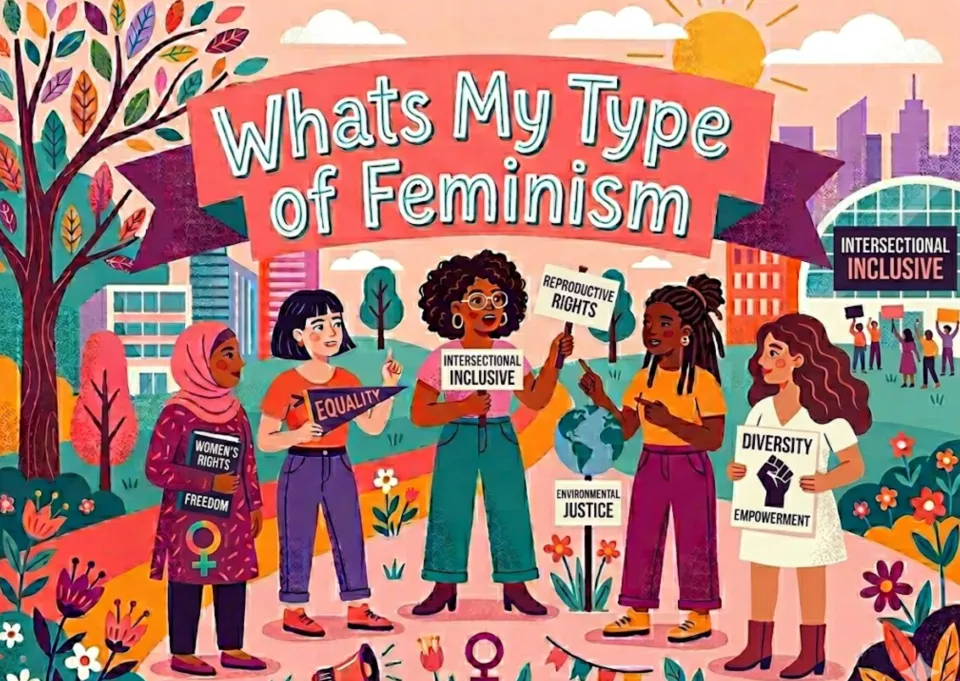
" Whats My Type of Feminism? " Understanding your own feminism type is not only to label yourself, but also to understand the perspective from which we view the world. Whether you lean toward liberal feminism , which seeks to achieve equality through legal reform, or radical feminism , which advocates radical overturning of social structures, these ideas provide us with a unique lens through which to examine power relations.
Want to know which feminist path your values are more consistent with? Try the Feminism Quiz to see which school of thought best aligns with your decision-making tendencies on gender issues.
Historical Waves of Feminism: From Citizenship to Bodily Autonomy
The development of feminism is usually divided into several "waves", each stage has its specific historical mission and core demands.
The First Wave: Fighting for Legal Status and Voting Rights
Originating from the late 19th century to the early 20th century, the first wave of feminism mainly focused on fighting for legal rights . The core goal at the time was to gain suffrage , the right for women to vote. Representative figures such as Mary Wollstonecraft pointed out in "A Vindication of the Rights of Woman" that women are not inherently inferior, but are the result of lack of education. A sign of victory at this stage was the legal recognition of women’s citizenship in many Western countries.
The Second Wave: Emancipation and the Revolution of the Private Sphere
Beginning in the 1960s, feminism entered a deeper realm. The slogan "the personal is political" became central to this period. The focus shifted from legal provisions to family relationships , sexual behavior , reproductive rights and workplace discrimination . Simone de Beauvoir's idea that "women are constructed" in "The Second Sex" has profoundly influenced this generation's reflection on gender roles.
The Third Wave: The Awakening of Difference and Multiculturalism
In the 1990s, the third wave criticized the "white middle-class overtones" of the first two waves. It emphasizes intersectionality and believes that women’s experiences are shaped by race, class, sexual orientation and other factors. During this period, feminism became more inclusive and diverse.
Core Genre Analysis: Find Your Feminist Coordinates
In answering "What's My Type of Feminism", we need to delve into several major ideological schools, which offer different prescriptions for diagnosing social problems.
Liberal Feminism
This is the most well-known genre. It advocates achieving gender justice through reforms within the system , improvement of legislation and equal educational opportunities. Liberal feminists believe that as long as legal barriers are removed, women can compete fairly with men within the existing social framework.
- Core keywords: individual autonomy, equal opportunities, legal reform.
- Representative point of view: As long as enough women enter management, gender inequality will gradually disappear.
Radical Feminism
Unlike liberalism, radical feminism believes that the root of the problem lies not in the lack of laws, but in the deep-rooted power structure of patriarchy . They advocate that existing forms of social organization must be fundamentally transformed or even overthrown, with particular attention to men's dominance and control of women's bodies.
- Core keywords: dismantling patriarchy, gender class, and awakening consciousness.
- Representative point of view: Gender identity must be redefined and even challenge the legitimacy of the family as the basic unit of society.
Socialist Feminism
This school attributes the root cause of women’s oppression to the collusion between capitalism and patriarchy . They believe that women’s unpaid work in the home (housework, childcare) is fundamental to the functioning of capitalism.
- Core keywords: economic independence, class struggle, double oppression.
- Representative opinion: True gender equality cannot be achieved unless exploitative economic systems are abolished.
Intersectional Feminism
Introduced by Kimberlé Crenshaw, the genre emphasizes that women are not a homogeneous group. The oppression that black women, working class women, trans women face is multiple.
- Core keywords: identity overlay, systemic oppression, inclusion.
- Representative point of view: Any feminism that does not include a race and class perspective is one-sided.
Controversies and Debates in Modern Contexts
In the 21st century, feminism faces new challenges and fierce internal debates, and these disputes also form an important part of the self-positioning of contemporary feminists.
The debate between sex positivity and sex criticism
Discussions about pornography, sex work, and sexual expression have always divided feminists into two camps. Sex-positive feminism believes that sexual freedom is an important part of women's liberation; anti-pornography feminism believes that these industries inherently exploit and objectify women.
Transgender Issues and Definition of Women
In recent years, the debate over whether trans women should be included in feminist spaces (the so-called TERF controversy) has become heated. This involves deep thinking about whether the concept of "female" is based on biological essence or social construction.
In analyzing these complex and multidimensional ideologies, it helps us understand the nuances of the sociopolitical spectrum. You can gauge where you stand on these sensitive issues by taking the Feminist Quiz .
The interaction between feminism and social systems
Economy: Equal Pay for Equal Work and the Care Economy
The most direct demand of feminism in the economic field is Equal Pay for Equal Work. In addition, modern schools have begun to pay attention to the value of "care labor" and advocate that the state should assume more responsibilities for childcare and elderly care to reduce women's unpaid burden.
Politics: Quotas and Representation
In order to break the "glass ceiling", many countries and political parties have introduced gender quotas. Feminists believe that only with adequate representation at decision-making levels can women's needs not be marginalized.
Culture: Breaking Stereotypes and Media Representation
From advertising to film to social media, feminism works to expose underlying misogynistic biases in cultural products. For example, the "Bechdel Test" is widely used to evaluate the independence of female characters in film and television works.
Why is it important to know your feminist type?
The Feminist Type Test is not just an ideological test, it is about the self-consistency of values .
- Clear path of action: If you are more liberal, you may be more inclined to participate in policy lobbying or workplace training; if you are more radical, you may be more concerned with community building and grassroots resistance.
- Enhance empathy: Understanding the logic of different schools can help us engage in rational dialogue based on the other party's theoretical basis when facing internal disputes, rather than purely emotional opposition.
- Critical Thinking: This self-exploration trains us to recognize the patterns of power behind social information.
Conclusion: The pursuit of equality beyond labels
Whether your genre is Ecofeminism, Post-colonial Feminism, or Pop Feminism, the end point of all these ideas is the same: to create a world where everyone is not discriminated against or limited because of their gender .
The history of feminism demonstrates the power of ideas. It changed the law, it changed the culture, and more importantly, it changed countless women's perceptions of the possibilities of their lives. In the process of exploring "Whats My Type of Feminism", we are actually sketching out our own ideal blueprint for justice.
Extended reading : If you want to comprehensively explore your own political and social values, welcome to the Political Test Center . In addition to the feminism test, you can also try other professional questions to deeply analyze your ideological map from multiple dimensions such as economics, diplomacy, and civil rights to see your true political color.