Emmanuel Macron: Revolutionary and Centrist Pioneer of the French Fifth Republic
As the youngest president in French history, Emmanuel Macron has reshaped France's political landscape with his unique centrist line of "neither left nor right" and his firm support for European integration. By gaining an in-depth understanding of Macron's policy evolution and global vision, you can also take a professional 8values political value orientation test to explore the similarities and differences between your own political stance and this modern leader.
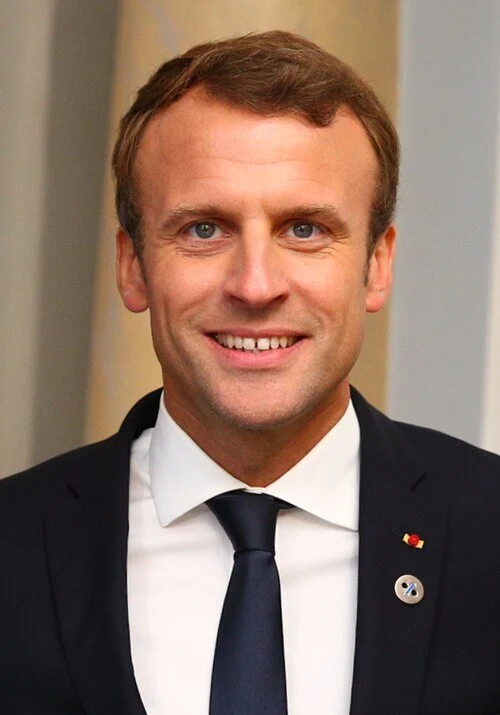
Emmanuel Macron (French: Emmanuel Macron, born December 21, 1977) is the current President of France , the Grand Duke of Andorra, and the founder of the Kadima Party (now known as the "Ennahda Party"). He is the youngest head of state in the history of the French Fifth Republic and the youngest national leader in France since Napoleon. Macron advocates liberalism , pro-Europeanism and social liberalism in politics, and is committed to breaking the long-term political deadlock between France's traditional left-wing (Socialist Party) and right-wing (Republican Party). Through a series of labor market reforms, tax system adjustments and active foreign policies, he tried to make France revitalized in the global competition of the 21st century.
Macron was born in Amiens, northern France, in 1977. With his excellent academic background and investment banking experience, he quickly rose in the political arena and won the presidential election twice in 2017 and 2022.
_Want to know which historical leader your decision-making style is most similar to? Try the Political Leader Decision-Making Style Test to see if you have Macron-like flexibility and boldness. _
Elite education background and infiltration of philosophical thinking
Macron was born into a highly intellectual family. His father is a professor of neurology and his mother is a medical consultant. He showed amazing academic talent since childhood, and was especially fond of literature and philosophy. While attending the Lycée Henri IV in Paris, he not only excelled in academic performance, but also displayed a love for drama.
He studied at the University of Paris 10, where he studied under the famous philosopher Paul Ricoeur and served as his assistant. This experience had a profound impact on his later political philosophy, especially Ricoeur's philosophy of "man in action" and finding a balance among opposing viewpoints, which became the cornerstone of Macron's "At the same time" (En même temps) political philosophy. Later, he entered Sciences Po, known as the " cradle of the president", and the National School of Administration (ENA) for further studies.
After graduating in 2004, Macron joined the General Office of Financial Supervision. In 2008, he crossed over to Rothschild & Co., became a partner within a few years, and successfully brokered Nestlé’s high-value acquisition of Pfizer’s baby food business. This investment banking experience not only allowed him to accumulate substantial wealth, but also gave him a deep understanding of the operating logic of the global capital market, laying a practical foundation for his future economic reforms.
The Rise of a New Political Star and the Move On!
Macron's political career began under Hollande's presidency. In 2012, he was appointed deputy secretary-general of the Elysée Palace, becoming a core member of the president's staff. In 2014, at the age of 36, Macron became Minister of Economy, Industry and Digital Affairs . During his tenure, he promoted the famous "Macron Bill", which aimed to stimulate economic growth through measures such as deregulation and increasing store opening hours on Sundays. Although this move triggered strong opposition within the left-wing camp, it also established his image as a pro-business reformer .
In April 2016, Macron realized that the rigidity of traditional political parties could no longer solve France's deep conflicts, so he established a political organization called "En Marche!" (En Marche!) in his hometown of Amiens. He declared that the organization "belongs neither to the left nor the right" but aims to unite all pragmatic forces for reform.
In August 2016, he resigned as minister and officially announced his participation in the 2017 presidential election. With his powerful speeches, youthful and energetic image and attacks on traditional political corruption, Macron has gathered huge public support in a short period of time. In the second round of the election in May 2017, he overwhelmingly defeated far-right candidate Marine Le Pen and became the eighth president of the French Fifth Republic.
Governing Challenges and the Pains of Economic Reform
After Macron came to power, he immediately set out to fulfill his reform promises. His core goals are to reduce unemployment and improve the international competitiveness of French companies.
Labor law reform and structural adjustment
Macron's first priority in the early days of taking office was labor law reform . He used executive orders to simplify the process for companies to lay off employees and give companies more power to negotiate directly with unions. Despite triggering several large-scale union strikes, Macron insists that only by breaking "protected rigidity" can companies be encouraged to recruit more new people.
Reform of fiscal and taxation systems
He scrapped the controversial "ISF" tax and replaced it with a property tax that only targets real estate. This move was designed to encourage the wealthy to invest capital in the real economy and innovative enterprises, but it also led to him being labeled a "rich president" by his political opponents. In addition, he gradually lowered the corporate tax rate from 33% to 25% and implemented a flattened capital gains tax.
"Yellow vest" movement and social crisis
At the end of 2018, the "Gilets Jaunes" movement triggered by the increase in fuel taxes became the biggest crisis since Macron came to power. This movement reflects the deep-seated dissatisfaction of the middle and lower classes in France's rural and remote areas with the rising cost of living and the widening gap between urban and rural areas. Faced with violent clashes and continued protests, Macron was forced to make concessions, canceling the fuel tax increase and launching a "national debate" to invite ordinary citizens to express their demands directly. This crisis made him realize that elitist top-down reforms faced huge psychological and social resistance in France.
Analyzing Macron’s ideology, which combines free markets with social construction, helps us understand the complexity of moderate politics. You can measure your inclination on such issues by taking the 8values political values orientation test , and view detailed interpretations of all 8values ideological results .
European Vision: Reshaping a "Sovereign Europe"
In the diplomatic field, Macron is the most staunch pro-European leader in contemporary times. He believes that in the context of competition between the United States and China, France and even Europe can only maintain their influence in global affairs by uniting together.
European sovereignty and strategic autonomy
Macron systematically proposed the concept of "European sovereignty" in his speech at the Sorbonne University. He advocates establishing European strategic autonomy in the fields of defence, digital technology, energy and economics. He actively promoted the establishment of a European intervention force and supported a common defense procurement plan.
Strengthening of the Franco-German Axis
He is committed to strengthening the traditional collaboration between France and Germany. Despite differences with the German government on energy policy and fiscal austerity, Macron successfully promoted the establishment of the European COVID-19 Recovery Fund and achieved the first joint borrowing of EU member states, which is regarded as a major breakthrough in the European integration process.
Relations with China and the United States
When dealing with relations between major countries, Macron pursues "Gaullist" independence. He advocates that Europe should not become a subordinate of the United States, nor should it completely choose sides in the confrontation between the United States and China. He has visited China many times, emphasizing the importance of cooperation with China in global governance areas such as climate change and biodiversity, while also maintaining Europe's position on issues of trade fairness and human rights.
Re-election, pension reform and contemporary controversies
In 2022, Macron defeated Le Pen again and was re-elected in a challenging international situation (such as the Russia-Ukraine conflict). However, the start of the second term was rocky.
The game of pension reform
In order to cope with the financial pressure brought by the aging population, Macron's government has vigorously promoted the increase of the legal retirement age from 62 to 64 years. Failing to obtain an absolute majority in the National Assembly, the government invoked Article 49.3 of the Constitution to force passage of the bill. The move triggered protracted nationwide demonstrations and political turmoil and was criticized as contempt for parliamentary democracy, but Macron insisted it was to protect the long-term operation of France's welfare system.
Immigration Bills and the Political Rightward Turn
In late 2023, Macron's government passed a stricter immigration law that included some provisions backed by the right. This caused dissatisfaction among left-wing members of his party and also showed a certain shift in Macron's political focus under the pressure of the rise of far-right forces.
A big gamble to suddenly dissolve parliament
In the 2024 European Parliament elections, Macron's center camp suffered a disastrous defeat, with the far-right National Rally topping the list of votes. Macron immediately announced the dissolution of the National Assembly and called for an early election. This move was seen as a huge political gamble, reflecting his attempt to end the political deadlock by directly appealing to public opinion, but it also plunged France into deeper political uncertainty.
Personal life, style and public image
Macron's personal life has always attracted media attention, especially his legendary relationship with his wife Brigitte Macron . Brigitte was his drama teacher, and the two got married across a 24-year age gap. Brigitte played an important advisory role in Macron's campaign and administration, and her elegant image has also become part of France's cultural diplomacy.
In terms of personal style, Macron is known for being knowledgeable, charming but often "arrogant". His speeches often quoted literary classics and were rich in rhetoric, and were considered by some people to be out of touch with the masses, like a "Jupiterian President" living in the clouds. However, in the face of major crises, his extremely high work intensity and precise control of policy details have also won the admiration of many technocrats and business circles.
Historical evaluation and lasting impact
Emmanuel Macron’s impact on France and Europe has been multidimensional and far-reaching, and his record has been marked by both breakthroughs and deep divisions.
- Destroyer of the political landscape: He successfully shattered the post-war binary pattern of the French Socialist Party and the Republican Party taking turns in power, forcing traditional political parties to become marginalized, but also leading to the polarization of the political spectrum.
- The engine of European integration: After Merkel retired, Macron essentially became the EU's most visionary and driving leader, and his concept of "strategic autonomy" has become the mainstream vocabulary of European politics.
- A driving force in economic modernization: His reforms have brought France's unemployment rate to its lowest level in 15 years, and the start-up ecosystem has flourished, making Paris one of the global financial and technology centers.
- The focus of social divisions: His reforms were often accompanied by fierce social confrontations. The gap between the urban elite and the vast rural "forgotten people" he represented has become the source of social instability in France.
As political commentators have pointed out, Macron is a complex contradiction: he is a staunch globalist who also emphasizes France's national sovereignty at critical moments; he has a very modern management thinking and is obsessed with the traditional strongman leadership style in French history. Whether his experiment will ultimately allow France to find a way out between the "Old World" and the "New World" remains to be judged by history.
Extended reading : If you want to explore your own political decision-making tendencies, you are welcome to go to the Political Test Center and experience the Political Leaders Decision-making Style Test . Through 48 professional questions, you will analyze your leadership characteristics from six dimensions such as decision-making style, view of power, and economic philosophy to see whether you are most like Macron, Merkel, Biden, or other modern leaders.