Peter the Great: Founder of the Russian Empire and pioneer of modern reforms
As the greatest czar in Russian history, Peter the Great transformed the backward Muscovite into a European power through radical Westernization reforms. Not only did he profoundly change the political, military and cultural landscape of Russia, his expansion ambitions also reshaped the geopolitics of the north and even Europe as a whole. By getting to know this iron-willed leader, you can also take an in-depth 8values test to compare the characteristics of different ideologies and governance styles.
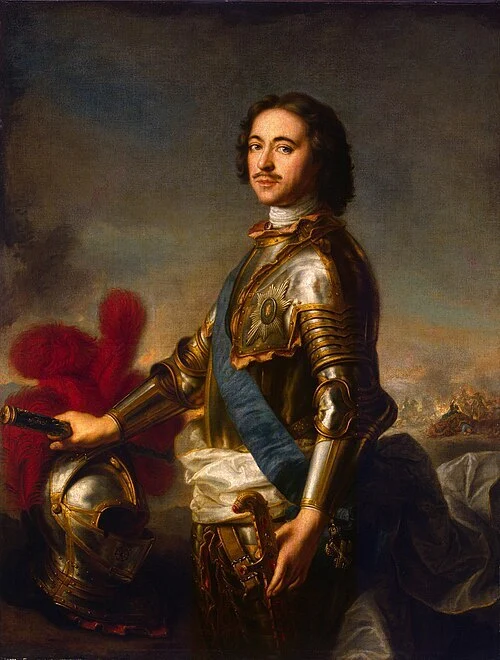
Peter I Alexeevich (Russian: Пётр I Алексеевич, May 30, 1672 - February 8, 1725), known as Peter the Great in history, was the fifth tsar of the Romanov dynasty and the first emperor of the Russian Empire. Known for his tall and burly stature (approximately 2.03 meters) and insatiable thirst for knowledge, he is considered to be the core promoter of Russia's move towards modernization, secularization and industrialization. Peter I established the Russian Navy, seized the Baltic Sea outlet, and built the new capital St. Petersburg , known as the "Window to Europe."
In 1721, after winning the Great Northern War, Peter was named "Emperor" and "Father of the Fatherland" by the Senate. Although his reforms were marked by violence, coercion and contempt for tradition, he was undoubtedly a key figure in shaping the soul of modern Russia.
_Want to know which historical leader your decision-making style is most similar to? Try the Political Leader Decision-Making Style Test to see if you have Peter the Great-like traits of boldness and change. _
A boy growing up in chaos and fighting for power
Peter was born in Moscow, the child of Tsar Alexei Mikhailovich and his second wife, Natalie Kirillovna Naryshkina. His childhood was not easy. In 1682, when he was only 10 years old, his half-brother Feodor III died and Peter was chosen as his successor. However, this triggered the Streltsy Uprising , instigated by his half-sister Sophia Alexeyevna . In the bloody coup, Peter witnessed the murder of his relatives. This shadow left him with a lifelong distrust of Moscow's traditional aristocracy and conservative forces.
Subsequently, Peter and his frail brother Ivan V became "co-tsar", while Sophia held real power as regent. During this time, Peter was exiled to Preobrazhenskoye, outside Moscow. There, he avoided the intrigues of the court and instead indulged in military games. He formed two "boy armies" (later evolved into the famous Preobrazhensky Army and Simonovsky Army) and learned arithmetic, navigation and fortification from European expatriates living in Moscow.
In 1689, Sophia attempted a second coup to seize power, but the grown-up Peter, with the support of the army, successfully fought back and had Sophia imprisoned in a monastery. After the death of Ivan V in 1696, Peter officially began his dictatorship.
Mission abroad: self-cultivation from carpenter to king
Peter the Great knew that if he did not learn from the West, Russia would always be left behind. In 1697, he organized a large "Grand Embassy" to inspect Western Europe. Peter himself changed his name to "Sergeant Peter Mikhailov" and set off with the group while hiding his identity.
He personally worked as a carpenter in the shipyards of Saldan and Amsterdam in the Netherlands, learning the most advanced shipbuilding technology; he visited naval exercises in England, visited the mint, and even discussed science at Oxford University. This 18-month journey made Peter deeply aware that Russia's backwardness is not only reflected in technology, but also in the obsolescence of the entire cultural and social system.
When he returned home in a hurry due to another rebellion by the Domestic Shooting Army, he immediately showed his ruthless side. He personally executed the rebels and used this as an opportunity to kick off the most dramatic social change in Russian history.
Radical Westernization Reform and Social Reshaping
Peter's reforms covered every corner of Russian life. He firmly believes that in order for Russia to become stronger, it must first make Russians "look like Europeans."
The break between customs and culture
The first thing after returning home, Peter forced the nobles to cut off their long beards. In the Russian Orthodox tradition at that time, the beard was a sacred symbol, but Peter believed that it was a sign of backwardness and ignorance. He even used scissors to cut beards in the palace himself. People who don't want to cut their beards must pay a hefty "beard tax." In addition, he abolished the old Russian calendar (which began with the book of Genesis) in favor of the Julian calendar, and required nobles to wear Western European-style short robes instead of the traditional long robes.
Political and institutional modernization
Peter abolished the bloated and incompetent Lord Duma and established the Senate as the highest authority in the country. He introduced the famous "Table of Ranks" , which divided civil and military officials into 14 levels. This system broke the blood-based promotion mechanism and stipulated that anyone could obtain noble status through hard work and loyalty to the country. This greatly improved administrative efficiency, but also strengthened the rule of absolute monarchy.
When analyzing Peter the Great's ideology of totalitarianism and secular reforms, it helps us understand the game between authoritarianism and modernization in the political spectrum. You can measure your inclination on such issues by taking the 8values political values orientation test , and view detailed interpretations of all 8values ideological results .
Smolensk to the Baltic Sea: The road to territorial expansion and military strength
Peter the Great's goal was to make Russia a sea power. He once lamented: "Waters, this is what Russia needs."
In order to seize the outlet of the Baltic Sea, Russia and the then Nordic hegemon Sweden broke out in the 21-year Great Northern War . In the early days, Peter was defeated by the young King Charles XII of Sweden at the Battle of Narva. But Peter was not discouraged. He sold the church bells to cast cannons, implemented compulsory military service, and rebuilt the army with extremely high administrative efficiency.
In 1709, in the famous Battle of Poltava , the Russian army completely defeated the Swedish army. This battle established Russia's status as a European power. Peter then captured Estonia, Latvia and parts of Finland, successfully gaining access to the Atlantic Ocean.
St. Petersburg: "Heaven" built on bones
In 1703, Peter began building the new capital, St. Petersburg , on the desolate swamps at the mouth of the Neva River. He not only regarded it as a naval base, but also regarded it as a symbol of Russian modernization.
The process of building St. Petersburg was extremely difficult. Thousands of farmers and prisoners of war were recruited here to cultivate the land with their bare hands in harsh conditions. According to statistics, tens of thousands of people died at construction sites due to fatigue, disease and cold, so St. Petersburg is also known as the "city built on bones." In 1712, despite the opposition of his ministers, Peter officially moved the capital from gloomy and traditional Moscow to this new city filled with Baroque style.
Economic Industrialization and Religious Reform
Mercantilism and industrial revitalization
In order to support the war, Peter vigorously developed heavy industry, especially the establishment of large-scale metallurgical factories in the Ural Mountains. He promoted mercantilist policies, encouraged exports, and protected domestic infant industries. Although this greatly enhanced national power, it also further deepened serfdom - factories needed a large amount of cheap labor, so Peter assigned the entire village of serfs to factory owners.
suppression of church power
Peter has a strong exclusivity for power. He abolished the Orthodox Patriarchate and replaced it with a Holy Synod under state supervision. Through this move, the church actually became a department of the state's administrative machinery, completely resolving the long-standing dispute between imperial power and divine power.
Peter the Great's Iron Fist, Tragedy and Controversy
Cold character and father-son tragedy
Peter is violent, energetic and sometimes borderline crazy. His push for reforms was violent, and anyone who stood in his way - whether conservative monks, rebel Shooters, or his own family - was ruthlessly suppressed.
This tragedy reached its climax in his eldest son, Crown Prince Alexei . Alexey was cowardly by nature, extremely disgusted with his father's reforms, and tried to flee abroad to seek asylum. In 1718, Alexei was lured back to his country, and Peter personally participated in his son's interrogation and torture. Alexei eventually died in prison. This incident demonstrates Peter's ruthless nature of sacrificing everything for the good of the country.
Historical evaluation and later influence
Peter the Great's impact on human history was complex and far-reaching. Like a sharp ax, he split open the fog of the old world that hung over Russia.
- The Rise of Russia: He propelled a landlocked, semi-medieval country onto the world stage, making it one of the deciders of European affairs for the next two centuries.
- Modernization paradigm: He pioneered the "top-down" forced modernization model, which provided a certain spiritual blueprint for the later Alexander II reforms and even the Soviet industrialization in the 20th century.
- Social division: His reforms also caused serious divisions in Russian society. A huge cultural gap emerged between the Westernized elite and the lower-class peasants who still clung to their traditions and were deeply oppressed by serfdom. This rift eventually planted the seeds of the 1917 revolution.
- Culture and Technology: He founded the Russian Academy of Sciences, established the first Naval Academy, and greatly simplified the Russian alphabet to promote cultural dissemination.
As shown in the famous "Bronze Horseman" statue, Peter the Great reined in his galloping horse and hung on the top of a cliff. His life was full of contradictions: he loved free learning but implemented harsh autocracy; he was committed to improving the quality of the people but aggravating the suffering of the serfs; he loved Russia deeply, but tried to destroy its old soul.
If you are interested in leaders who strongly promote social transformation, or want to explore your own political decision-making tendencies, you are welcome to go to the Political Test Center to experience the political leader decision-making style test . This test will use 48 professional questions to deeply analyze your leadership characteristics from six dimensions including decision-making style, view of power, and willingness to reform. Find out whether you are most like Peter the Great, Louis XIV, or other famous politicians in the torrent of history.