Helmut Kohl: Godfather of German Unity and Master of European Integration Design
As the architect of the reunification of Germany and the core promoter of the European Union, Helmut Kohl's 16-year career as prime minister completely reshaped the European landscape at the end of the 20th century. Kohl was not only a key figure in the end of the Cold War, but also the cornerstone of modern Germany's rise as a great power. By fully understanding the political giant's art of balancing, you can also take an in-depth 8values political values test to compare the characteristics of different ideologies.
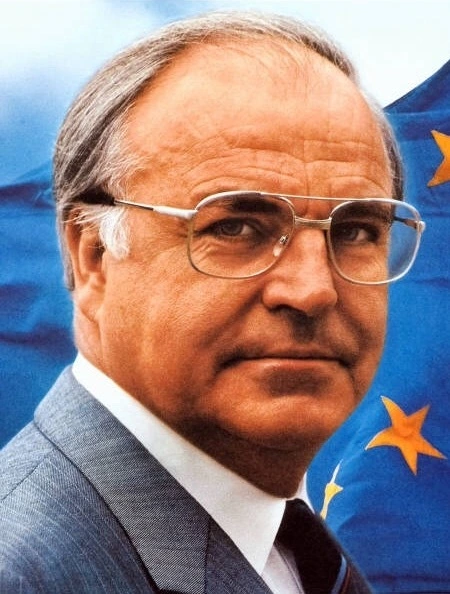
Helmut Kohl (German: Helmut Kohl, April 3, 1930 - June 16, 2017) was an outstanding German politician who served as Chancellor of Germany (1982-1998, including Chancellor of West Germany from 1982 to 1990) and Chairman of the German Christian Democratic Union (CDU). He is the longest-serving German Chancellor since Otto von Bismarck and is recognized as the "Father of German Unification." Kohl is known on the international stage for promoting European integration , bringing about the birth of the euro , and achieving reconciliation between Germany and France.
Cole was born into a conservative Catholic family on April 3, 1930 in Ludwigshafen, Germany. On June 16, 2017, the giant died of illness in his birthplace at the age of 87. What he left behind was not just a united Germany, but a Europe bound together by common values and currency.
_Want to know which historical leader your decision-making style is most similar to? Try the Political Leaders’ Decision-Making Styles Test to see if you have Cole’s sense of stability and foresight. _
Civilian origin and growth in the shadow of World War II
Kohl was born into a typical middle-class family on the Rhine River. His father, Hans Kohl, was a tax official and served as a junior officer in World War I. Cole's childhood was deeply influenced by Catholic tradition and conservative values. When he was 14 years old, World War II came to an end. As an "air defense artillery assistant", Cole witnessed the cruelty of the war with his own eyes. In 1944, his eldest brother Walter was killed on the battlefield, a family tragedy that profoundly affected Cole's views on peace.
After the war, Germany was devastated, and Kohl began his political enlightenment during reconstruction. He worked as a porter and other odd jobs to finance his studies. In 1950, Kohl entered the University of Heidelberg to study law, history and political science, and received his doctorate in 1958. His doctoral thesis was on the reconstruction of political parties in the Palatinate, reflecting his early love of local politics.
Cole joined the fledgling Christian Democratic Union (CDU) at the age of 16. His burly stature and abundant energy quickly made him stand out within the party. He represents the new generation of German youth after the war, who are eager to get rid of the haze of the Nazis and find a new position for Germany within the Western democratic system and the European framework.
The Giant of the Rhineland: From Governor to Chancellor
Kohl's political career began in his home state of Rhineland-Palatinate. In 1969, at the age of 39, Kohl was elected governor of the state, becoming the youngest governor in Germany at the time. During his tenure, he implemented a series of administrative and educational reforms and demonstrated strong organizational and coordination skills.
In 1973, Kohl was elected national chairman of the CDU. However, he had a rocky start at the federal level. In 1976, as the Prime Minister candidate of the League Party, Kohl received as much as 48.6% of the votes in the election, but he failed to be elected Prime Minister due to the alliance between the Social Democratic Party (SPD) and the Free Democratic Party (FDP). This time in opposition tested Kohl's resilience, and he used it to consolidate control within the CDU.
1982 was a turning point in Cole's fortunes. The coalition government then led by Helmut Schmidt was fractured over economic policy differences. On October 1, 1982, Kohl used the "constructive vote of no confidence" in the Bundestag to overthrow Schmidt's government and officially became West Germany's Prime Minister. At first, the outside world was not optimistic about this "black giant" who came from a local area and had a slightly dull manner. Some even ridiculed him as an outdated conservative. However, Cole quickly proved with practical actions that he was not only able to balance complex partisan interests, but also had an amazing intuition for seizing historical opportunities.
History’s Big Gamble: The “Ten-Point Plan” for the Reunification of Germany and Germany
On November 9, 1989, the Berlin Wall fell. This sudden historical turn caught global politicians off guard. At that time, many heads of European powers (such as Margaret Thatcher in the UK and Mitterrand in France) were uneasy about Germany's reunification and worried that a powerful Germany would once again disrupt the European balance.
Cole showed extraordinary courage at critical moments. On November 28, 1989, without prior notification to the Soviet Union or Western allies, he proposed the famous "Ten-Point Plan" in the Bundestag, aiming to achieve the reunification of the two Germanys in stages. He withstood tremendous pressure at home and abroad and convinced the East German people through strong will and generous financial commitments.
Kohl knew that the key to the reunification of the two Germanys lay in Moscow. In July 1990, Kohl traveled to the Caucasus region of the Soviet Union and held a historic meeting with Gorbachev. Relying on personal trust and a promise of economic assistance to the Soviet Union, Kohl succeeded in getting Gorbachev to agree that a reunified Germany would remain in NATO.
On October 3, 1990, Germany was officially reunified. Kohl ignored the warnings of economists and insisted on converting East and West Marks at an exchange rate of 1:1. Although this brought a huge burden to the German finance in the later period, it successfully appeased the East German people at the time and achieved a smooth social transition. He was affectionately called the "Unification Chancellor" by the people of East Germany.
European Architects: From Maastricht to the Euro
For Kohl, German reunification was only one side of the coin; the other was European integration. He famously said: "German unity and European unity are two sides of the same coin." He firmly believed that in order to reassure neighboring countries about a strong Germany, Germany must be deeply embedded in the fabric of Europe.
Cole established a deep personal friendship with then-French President Mitterrand. In 1984, the scene of the two holding hands in front of the monument to the Battle of Verdun became an eternal moment of complete reconciliation between Germany and France. Cole was a central force behind the signing of the Maastricht Treaty in 1992, which formalized the European Union.
The most shocking decision was Kohl's decision to abandon the Deutsche Mark. The Mark was once a symbol of Germany's economic miracle and a source of national pride. In exchange for European support for German reunification and to promote integration, Kohl advocated the introduction of a single currency, the euro . Although most German people at the time had doubts about this, Kohl still forced the process with a statesman's foresight. Today, the eurozone is the world's second-largest economy, thanks in large part to Cole's persistence.
When analyzing Kohl's ideology of finding a balance between safeguarding sovereignty and promoting transnational integration, it helps us understand the essence of modern center-right politics. You can measure your inclination on such issues by taking the 8values political values orientation test , and view detailed interpretations of all 8values ideological results .
Economic Reforms and Challenges in the Late Administration
Kohl follows the principles of "Soziale Marktwirtschaft" (Soziale Marktwirtschaft) in economic policy. In the early years of his administration, he helped the West German economy recover from the stagflation of the 1970s by cutting taxes, cutting welfare expenditures, and promoting privatization. However, the huge spending after reunification led to rising unemployment and slowing economic growth.
The "cost of unification" far exceeded Cole's original estimate. The German government had to levy a "solidarity surcharge" to fund the reconstruction of the east. This led to Cole's poll ratings falling during the second half of his administration. In the 1998 federal election, German voters, fed up with long periods of power and economic stagnation, chose the Social Democratic Party led by Schröder, ending Kohl's 16-year tenure as prime minister.
In the late years of his administration, Kohl was caught up in the CDU's "black money scandal." He was accused of accepting illegal political donations in the 1990s. Cole acknowledged the existence of secret accounts but declined to name donors out of "political reputation." Although the scandal damaged his reputation and even caused a breakdown in his relationship with his former protégé Angela Merkel, it did not completely overshadow his glory as a reunifying chancellor.
Germany's new image after the Nazi shadow
The Kohl government showed a mature attitude in dealing with the legacy of the Nazi past. He worked to reconcile with victims and strengthened ties with Israel. At the same time, he actively promoted Germany's participation in international affairs. Under his leadership, the German Wehrmacht participated in overseas peacekeeping operations for the first time since World War II, marking the beginning of Germany's return to the center of international politics as a "normal power."
In terms of cultural policy, Kohl emphasized the protection of traditional German culture. He is keen on establishing various historical museums (such as the German Historical Museum in Bonn), hoping that by building a healthy national identity, the reunified Germans can move confidently into the future.
Cole's influence on future generations lies not only in the political system, but also in his reshaping of the global structure:
- European territory: He promoted the eastward expansion of the European Union and included the former Warsaw Pact countries into the European democratic family.
- Currency unification: The birth of the euro changed the global financial landscape, making it a major force against the dollar.
- German-Russian relations: The German-Russian communication model he established laid the foundation for the European security architecture in the post-Cold War era.
- Infrastructure construction: The large-scale infrastructure construction in the eastern region after unification enabled the eastern states to achieve modernization in a short period of time.
Anecdotes, Character and Historical Evaluation of Helmut Kohl
Anecdotes and personal life
Cole is known for his large frame (height is 1.93 meters) and his love for the food of his hometown. His favorite dish is Saumagen, a traditional Rhineland delicacy. He often served this hometown dish to foreign leaders, including Reagan, Thatcher and Gorbachev, in formal diplomatic settings. This "food diplomacy" has softened his tough image to a certain extent.
Cole's personal life has also suffered a setback. His first wife, Hannelore Cole, suffered from severe "photosensitivity" for a long time and finally committed suicide in 2001. This incident caused great shock in German society and deep sympathy for the Kohl family.
historical evaluation
Kohl is recognized as one of the most important European leaders of the second half of the 20th century.
- Honorary Citizen of Europe: In 1998, due to his outstanding contribution to European integration, he was awarded the title of "Honorary Citizen of Europe". Only Jean Monnet had previously received this honor.
- Great communicator: Although his public speeches were not as inflammatory as Hitler's or as literate as Churchill's, he had a "Rhinelike" affinity for translating complex political goals into language that ordinary people could understand.
- The anchor of conservatism: In an era of dramatic social changes, Kohl always adhered to the traditional values of Catholic democracy and provided stability for German society.
- Controversy and shadow: The black gold scandal was a stain at the end of his political career, preventing him from bidding farewell to politics with outright praise. In addition, his overly optimistic estimates of East Germany's economic transformation also led to long-term structural unemployment in the eastern region.
As historians have said, Helmut Kohl was "a man in the right place at the right time." He took advantage of the narrow window of opportunity at the end of the Cold War and relied on his keen political intuition to accomplish the feat of reunifying the two Germanys. Without Kohl, the process of European integration might have been delayed by decades, and Germany might have remained trapped on the front lines of the Cold War.
Extended reading : If you want to explore your own political decision-making tendencies, you are welcome to go to the Political Test Center and experience the political leaders’ decision-making style test . Through 48 professional questions, you will analyze your leadership characteristics from six dimensions such as decision-making style, power concept, and economic philosophy to see whether you are most like Cole, Churchill, Roosevelt, or other historical leaders.