Jair Bolsonaro: The rise, power and controversy of ‘Tropical Trump’
As the 38th president of Brazil, Jair Bolsonaro’s term has witnessed violent shocks in Brazil’s political landscape. He is known for his far-right populism, conservative values and hardline stance on Amazon development. By fully understanding Bolsonaro's political leanings, you can also conduct an in-depth 8values political values orientation test to compare the characteristics of different ideologies.
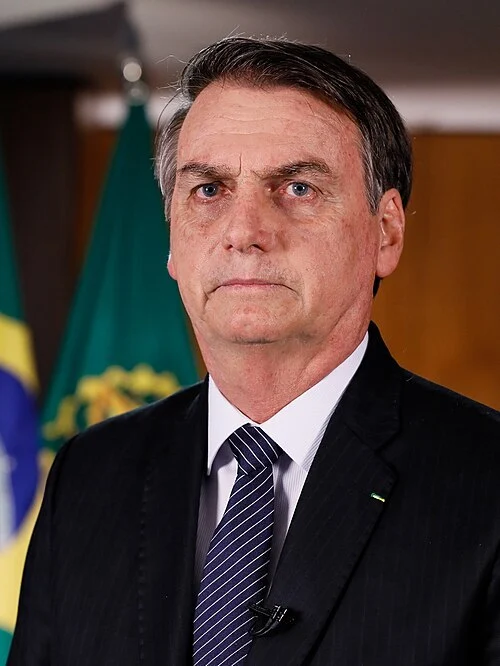
Jair Bolsonaro (Portuguese: Jair Messias Bolsonaro, March 21, 1955 -) is a Brazilian right-wing politician who served as the President of Brazil from 2019 to 2022. Before entering politics, he was an Army captain. Bolsonaro is known in the political arena for his bold speeches and his advocacy of social conservatism and economic liberalism . He is often called the "Trump of the Tropics" by the international media. He has vigorously advocated legalizing guns , reducing the size of government, fighting corruption, and openly admired the military junta period in Brazil's history.
Bolsonaro's rise is emblematic of Brazilian voters' anger over corruption scandals in the long-ruling left-wing Workers' Party (PT) and deep dissatisfaction with deteriorating security. However, his controversial performance in responding to the new coronavirus epidemic and his tough attitude on environmental protection issues have caused him to face a lot of criticism from the international community.
_Want to know which historical leader your decision-making style is most similar to? Try the Political Leader Decision-Making Style Test to see if you have Bolsonaro-like leadership traits. _
Jair Bolsonaro: From military career to congressional lone wolf
Bolsonaro was born into an Italian family in Gliceriu, Sao Paulo state. He graduated from the Military Academy of Agulhas Negras in 1977 and subsequently served in the Army for many years. His military career was not always smooth sailing. In the 1980s, he was arrested and jailed for writing in a magazine to protest against the low pay of officers, but he also gained popularity among the army's grassroots.
In 1988, Bolsonaro officially entered politics and was elected as a city councilor in Rio de Janeiro. In 1991, he successfully entered the House of Representatives and was re-elected for seven terms in the following 27 years. During his long career as a member of Congress, Bolsonaro has long been regarded as a "marginal figure." He frequently changed political parties and his political ideas focused on restoring traditional family values, opposing gay rights and calling for the restoration of harsh criminal justice laws.
Although he lacked allies within Congress, he used the Internet and social media to build a large and loyal fan base (dubbed "Bolsominions"). His unvarnished, aggressive style of language resonated strongly with ordinary voters who were tired of the hypocrisy of officialdom.
Election 2018: Assassination, rise and power
2018 was a watershed year in Brazilian politics. At the time, Brazil was mired in a huge corruption scandal caused by Operation Car Wash. Many top politicians were imprisoned and economic growth was stagnant. Bolsonaro ran for office on behalf of the Social Liberal Party (PSL), proposing the slogan "Brazil is above everything, God is above everyone."
During the campaign, Bolsonaro encountered an accident that changed the direction of the election. In September 2018, he was stabbed at a rally in Minas Gerais and stabbed in the abdomen with a sharp knife. The attack forced him to miss the subsequent TV debates, but it also greatly increased his popularity and voter sympathy, further solidifying his image as an "anti-establishment hero."
On October 28, 2018, Bolsonaro defeated Labor Party candidate Fernando Haddad in the second round of the presidential election with 55.13% of the vote and was successfully elected as the President of Brazil. This result ended the 13-year rule of left-wing forces in Brazil and marked the complete establishment of Brazil's rightward political trend.
Governance Measures: Economic Reform and Security Order
After Bolsonaro came to power, he appointed Paulo Guedes, an economist with a Chicago School background, as Minister of Economy and initiated a series of reforms centered on privatization and deregulation .
Pensions and Administrative Reform
The most notable achievement of the Bolsonaro government is the passage of the historic pension reform bill . As Brazil's previous pension system was overburdened, the bill aims to save the government approximately 800 billion reais within ten years by raising the retirement age and contribution ratio. In addition, he is committed to streamlining government agencies and cutting bureaucratic expenses in an attempt to attract foreign investment and revive the Brazilian economy.
Policing and Gun Policy
As a champion of "law and order," Bolsonaro signed a number of decrees that relaxed restrictions on people buying and possessing guns. He believed that arming honest citizens was an effective means of reducing crime rates. While the policy has been warmly welcomed by its core supporters, it has also raised concerns about an escalation of violence.
When analyzing Bolsonaro’s ideology of combining hard-line nationalism and conservatism, it helps us understand the evolution of Latin American politics. You can measure your inclination on such issues by taking the 8values political values orientation test , and view detailed interpretations of all 8values ideological results .
Environmental policy and the Amazon rainforest controversy
Bolsonaro's environmental policies may be his area of greatest international criticism. He insists that Brazil has absolute sovereignty over the Amazon rainforest and criticizes the international community's focus on rainforest protection as "imperialist interference."
- Development first: He encouraged mining, logging and agricultural activities in the rainforest areas, arguing that this was the only way to develop the economy of the country's impoverished areas.
- Cutting back on regulation: During the administration, the budgets of Brazil’s environmental enforcement agencies, such as IBAMA, were slashed, resulting in less regulation of illegal logging.
- Fires in 2019: In the summer of 2019, frequent fires in the Amazon rainforest triggered protests around the world, and European countries such as France even threatened to refuse to ratify the EU-Mercosur trade agreement.
Bolsonaro's responses to this are often full of nationalism. He has repeatedly reiterated: "The Amazon is ours, not yours."
COVID-19 response: A major test for governance
The outbreak of the new coronavirus (COVID-19) in 2020 has become the biggest political crisis during Bolsonaro’s term. Different from the mainstream scientific views in the world, Bolsonaro holds a strong skepticism towards the epidemic.
- Downplaying his illness: He once publicly called the new coronavirus a "little cold" and frequently attended rallies without wearing a mask.
- Opposition to lockdowns: He has vigorously opposed quarantine measures imposed by state governors, arguing that job losses and economic stagnation will cause far more damage than the virus itself. He once said bluntly: "Everyone must die. This is life."
- Drug Controversy: Bolsonaro has pushed hard for drugs like hydroxychloroquine for early treatment despite a lack of scientific evidence to support it.
Due to the serious disconnect between the federal government and local governments in anti-epidemic policies, Brazil has become one of the countries most severely affected by the epidemic in the world, with the death toll among the highest in the world. In 2021, a Brazilian Senate committee recommended numerous charges against Bolsonaro, including crimes against humanity and abuse of public office, following an investigation.
The 2022 election and the transition of power
The 2022 election is seen as Brazil's most heated in decades. Bolsonaro's opponent is former President Luiz Inacio Lula da Silva . During the campaign, Bolsonaro continued to question the reliability of electronic voting systems, leading many observers to worry that Brazil might experience a situation similar to the "Capitol Hill riots" in the United States.
In the final round on October 30, 2022, Bolsonaro narrowly lost to Lula (49.1% to 50.9%). He is the first sitting president to fail to win reelection since Brazil's return to democracy in 1985.
After the election, Bolsonaro remained silent for a long time, neither explicitly conceding defeat nor stopping his supporters from protesting. At the end of December 2022, two days before Lula's inauguration, Bolsonaro traveled to Florida in the United States.
On January 8, 2023, dissatisfied with the election results, thousands of Bolsonaro supporters stormed the Congress, Supreme Court and Presidential Palace in Brasilia, causing massive destruction. Although Bolsonaro was abroad at the time and condemned the move, the Brazilian judiciary believed that his long-standing remarks questioning the integrity of the election were one of the triggers of the unrest.
Jair Bolsonaro’s Anecdotes, Personality and Historical Influence
Anecdotes and personal touches
Bolsonaro is widely known for his brutally blunt and sometimes rude speaking style. He likes to talk to voters while eating instant noodles or simple bread during live broadcasts on social media to create his "civilian" image. He is a devout Christian, but his outrageous comments about women, minorities and indigenous people have also landed him in legal trouble.
Historical status and evaluation
Evaluations of Bolsonaro are extremely polarized in Brazil:
- A savior for loyal supporters: His supporters see him as a courageous patriot who protected traditional values from the erosion of left-wing ideology and maintained integrity in a political arena rife with corruption.
- Threat from critics: Critics regard him as a threat to the democratic system, accusing him of destroying the environment, weakening scientific research and education, and causing unnecessary casualties due to poor response to the epidemic during his tenure.
- Right-wing benchmark: Regardless of his merits and demerits, Bolsonaro has successfully established a cross-class and highly mobilized right-wing movement in Brazil. This force is still active in Brazilian politics after he leaves office.
In June 2023, Brazil's High Electoral Court ruled that Bolsonaro abused his power during his tenure and banned him from running for public office until 2030 . Despite this, he remains the most influential figure in the Brazilian right-wing camp.
As many political observers have said, Bolsonaro is not only a political figure, but also a social phenomenon. He touches on the deep conflicts of identity and values in Brazilian society. His life reflects how, in an era driven by social media, an unconventional populist leader shattered political ceilings and reshaped the way forward for a great country.
Extended reading : If you want to explore your own political decision-making tendencies, you are welcome to go to the Political Test Center and experience the political leaders’ decision-making style test . Through 48 professional questions, you will analyze your leadership characteristics from six dimensions such as decision-making style, power concept, and economic philosophy to see whether you are most like Bolsonaro, Trump, Lula, or other historical leaders.