Josip Broz Tito: founder of Yugoslavia and pioneer of the Non-Aligned Movement
As the lifelong president of the Socialist Federal Republic of Yugoslavia and the founder of the Non-Aligned Movement, Josip Broz Tito's life, unique ideology (Titoism), and diplomatic skills between the Eastern and Western camps during the Cold War are the key to studying the modern history of the Balkan Peninsula and international politics. By gaining an in-depth understanding of this legendary leader, you can also take an 8values political values orientation test to compare the characteristics of different socialist models and ethnic policies.
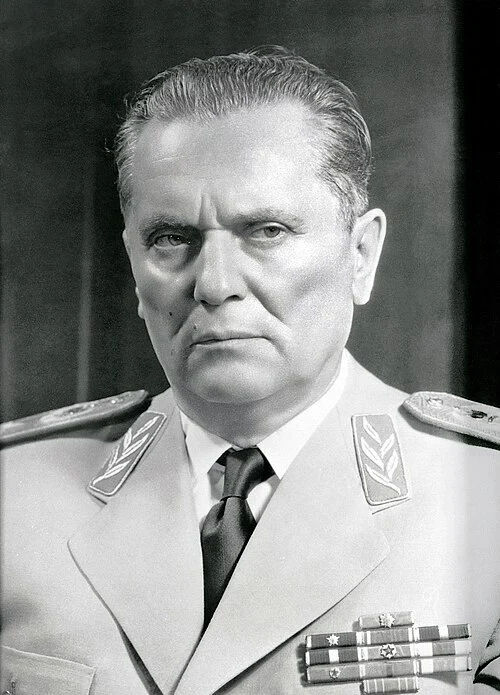
Josip Broz Tito (Serbo-Croatian: Josip Broz Tito, May 7, 1892 - May 4, 1980) was the founder and lifelong president of the Socialist Federal Republic of Yugoslavia , general secretary of the Communist League of Yugoslavia and marshal of the Yugoslav People's Army. He was not only the most successful anti-German guerrilla leader in Europe during World War II, but also a political master who bravely resisted Stalinism and adhered to the path of independence after the war. He founded "Titoism" and promoted workers' autonomy and non-alignment policies , allowing Yugoslavia to maintain prosperity and peace for decades amid the Cold War.
Tito was born on May 7, 1892 in Kumrovets under the rule of the Austro-Hungarian Empire. Finally, he died in Ljubljana on May 4, 1980, ending his 35-year reign.
_Want to know which historical leader your decision-making style is most similar to? Try the Political Leader Decision-Making Style Test to see if you have Tito-like diplomatic acumen and tenacity. _
The Early Years: From Machinist to Professional Revolutionary
Josip Broz was born into a poor peasant family, his father was a Croatian and his mother was a Slovenian. This diverse ancestry background may have subtly influenced his future strategies for dealing with Yugoslavia's complex ethnic issues. In his early years, he worked as a machinist in Vienna, Munich and other places, and during this period he was exposed to the labor movement and socialist ideas.
In 1913, Tito was drafted into the Austro-Hungarian Army. After the outbreak of World War I , he fought with the army on the Galician front. He was promoted to noncommissioned officer for his heroic performance and was awarded the Medal of Bravery. In 1915, he was seriously wounded in battle and captured, then sent to a Russian prisoner-of-war camp. While in Russia, he witnessed the outbreak of the October Revolution and joined the International Red Guard. This experience in Soviet Russia completely reshaped his political beliefs and transformed him from an ordinary worker into a staunch communist fighter.
After returning to Yugoslavia in 1920, Tito actively participated in the activities of the Yugoslav Communist Party. Under the royal dictatorship, the Communist Party was classified as an illegal organization, and Tito was imprisoned many times. It was this experience in "Prison University" that tempered his tenacity as a professional revolutionary . In 1934, he began to use the pseudonym "Tito" and gradually entered the core leadership of the party.
Legends of World War II: National Heroes in Guerrilla Warfare
In April 1941, Nazi Germany and its allies invaded Yugoslavia. Facing the fall of his motherland, Tito showed outstanding military genius. He formed the Yugoslav People's Liberation Army and guerrillas , and launched a magnificent guerrilla war in the mountainous Balkans.
Unlike resistance movements in other parts of Europe, Tito's guerrillas not only defended, but also consumed enemy forces through large-scale mobile warfare. In the famous Battle of the Neretva River and the Battle of Sutjeska , Tito led his troops to repeatedly defeat the encirclement and suppression of the German-Italian coalition despite being wounded. His slogan of "brotherhood and unity" successfully attracted young people of all ethnic groups in the country to join the revolution.
By 1944, Tito's troops had grown to 800,000. Yugoslavia became the only country in Europe that was liberated mainly by relying on its own strength rather than direct occupation by the Soviet Red Army. This fact laid solid political foundation and national confidence for Tito to adhere to an independent foreign policy after the war. In 1945, with the victory of the war, Tito officially became the Prime Minister of the Yugoslav government, establishing his status as the country's supreme leader.
Breakage and Innovation: The Birth of Titoism
In the early postwar period, Yugoslavia briefly imitated the Soviet model. However, Tito's independence aroused strong dissatisfaction with Stalin. In 1948, the breakup between Jiangsu and Southern China occurred, which shocked the world. Yugoslavia was expelled from the Intelligence Service and faced a severe economic blockade and military threats from the Soviet Union and its satellite states.
Faced with tremendous international pressure, Tito did not yield. He realized that Soviet-style bureaucratic centralization was not the only way out for socialism. To this end, he launched the experiment of "Titoism" , the core of which lies in the socialist workers' autonomy system .
Under this model, enterprises are no longer directly managed by the state, but are handed over to workers' committees composed of employees for decision-making. This reform greatly stimulated production enthusiasm and enabled Yugoslavia to achieve rapid economic growth from the 1950s to the 1970s. Compared with the Soviet model, Yugoslavia has a higher degree of marketization and its people's living standards far exceed those of other Eastern European countries. When analyzing Tito's unique path to socialism, it is crucial to understand the nuances of different ideologies. You can view all results of 8values ideology to delve deeper.
Traveling between East and West: the helmsman of the Non-Aligned Movement
At the height of the Cold War, Tito successfully implemented "balanced diplomacy." He was well aware that Yugoslavia's strategic location was extremely sensitive, so he refused to join NATO or return to the Warsaw Pact. Through this neutral stance, he received substantial economic assistance from Western countries (especially the United States) while maintaining the country's independent status.
In 1961, Tito joined forces with Nehru of India and Nasser of Egypt to formally establish the Non-Aligned Movement in Belgrade.
- Political proposition: The core is the principle of "independence, autonomy, non-alignment, non-group" and opposition to hegemonism.
- International influence: The movement provided the majority of third world countries with an alternative to the struggle between the United States and the Soviet Union for hegemony, and enhanced the international voice of small and medium-sized countries.
- Tito's status: Through the Non-Aligned Movement, Tito enabled Yugoslavia, a country with a population of less than 20 million, to exert an influence far beyond its size on the international stage.
Tito has become an evergreen tree in world politics. He was able to gain the respect of the President of the United States, the General Secretary of the Soviet Union, the Queen of England and the leaders of Asia, Africa and Latin America at the same time. This is unique in the history of the 20th century.
National Policy: Brotherhood and the Magic of Unity
Yugoslavia is a complex ethnically populated area, covering the six republics of Serbia, Croatia, Slovenia, Bosnia and Herzegovina, Macedonia and Montenegro. Tito insisted on "federalism" and gave each republic a high degree of autonomy in the constitution.
In order to suppress Greater Serbianism and prevent the rise of local nationalism, Tito implemented a strict ethnic quota system within the party and government. As a "supra-national authority" , he personally became the glue that maintained the unity of the country. During his reign, laws were passed to severely crack down on any form of ethnic hate speech, creating a period of peaceful coexistence rare in Balkan history.
However, this unity relied heavily on Tito's personal prestige and powerful party machine. This also paved the way for the disintegration of the country after his death.
Cultural and social initiatives of Josip Broz Tito
relatively free social atmosphere
Compared with the Soviet Union and Eastern European countries at the same time, Yugoslavia under Tito's leadership showed amazing openness in the cultural field. Yugoslav citizens had the freedom of passport to work in Western countries, and Western culture (such as jazz, movies, fashion) was not regarded as a poisonous weed in Yugoslavia, but was allowed to spread widely.
urbanization and modernization
Tito's government worked to transform Yugoslavia from a backward agricultural country into an industrialized country . Through large-scale infrastructure construction, Yugoslavia has established a comprehensive railway and road network. Health insurance and education systems were greatly expanded during Tito's era, causing Yugoslavia's illiteracy rate to drop significantly.
Personality cult and authoritarian politics
Although Titoism is relatively tolerant, it is still essentially an authoritarian system of one-party rule . Tito holds the title of "President for Life" and his portraits and statues can be seen across the country. Tito also took severe measures to suppress dissidents within the party (such as the famous writer Gilas). He owned a luxurious villa on the Brijuni Islands, and his lifestyle was significantly different from that of ordinary people, which became one of the focuses of controversy in later generations.
Old age and death
After entering the 1970s, Tito's health gradually deteriorated. Aware of the potential power vacuum after his death, he instituted a system of collective leadership whereby the presidency rotated among the republics.
In January 1980, Tito was hospitalized due to circulatory disease. On May 4, the founder of Yugoslavia died of illness in Ljubljana. His funeral was an unprecedented scale, attended by 209 delegations from 128 countries, including 4 kings, 32 presidents and 22 prime ministers. It was recognized as one of the most grand state funerals in history. This was not only a farewell to him personally, but also to an era - an era that maintained its independent dignity in the Cold War.
Tito’s historical evaluation and legacy
historical achievements
- Commander-in-Chief of the War of Resistance: Tito's status as an anti-fascist hero is unshakable. He united the divided Yugoslavia to resist foreign aggression.
- Pioneer of non-alignment: The idea of non-alignment he proposed still has a profound impact on international relations.
- Economic Experimenter: Although the workers' autonomy model eventually faced difficulties, it provided a third possibility different from capitalism and Stalinism at the time.
Controversies and Lessons
- The legacy of strongman politics: Tito’s authoritarian rule during his lifetime suppressed Yugoslavia’s underlying underlying ethnic conflicts. Just ten years after his death, Yugoslavia fell into a tragic civil war and eventually disintegrated. Many people believed that Tito failed to fundamentally solve the systemic ethnic problems and only "frozen" them.
- Debt crisis: In order to maintain prosperity in his later years, Tito relied excessively on Western loans, which led to Yugoslavia falling into a serious debt crisis in the 1980s.
Tito's life is full of legend. He was a man who could face Stalin's threats without changing his face, and a dancer who could walk freely on the geopolitical tightrope.
Extended reading : If you want to explore your own political decision-making tendencies, you are welcome to go to the Political Test Center and experience the political leader decision-making style test . Through 48 professional questions, your leadership characteristics are analyzed from six dimensions including decision-making style, power concept, and economic philosophy. See if your approach to dealing with complex international situations and multi-ethnic conflicts is closer to Tito's pragmatism and balance, to Stalin's iron fist, or to Roosevelt's flexibility.