Mahathir Mohamad: The storied political career of Malaysia’s founding father
As Malaysia's longest-serving prime minister and the promoter of modernization reforms, Mahathir Mohamad's ups and downs in his political career, his distinctive nationalist stance and his profound influence on the political landscape of Southeast Asia are an important perspective for understanding contemporary Asian politics. By fully understanding these political leanings, you can also take an in-depth 8values political values leaning test to compare the characteristics of different ideologies.
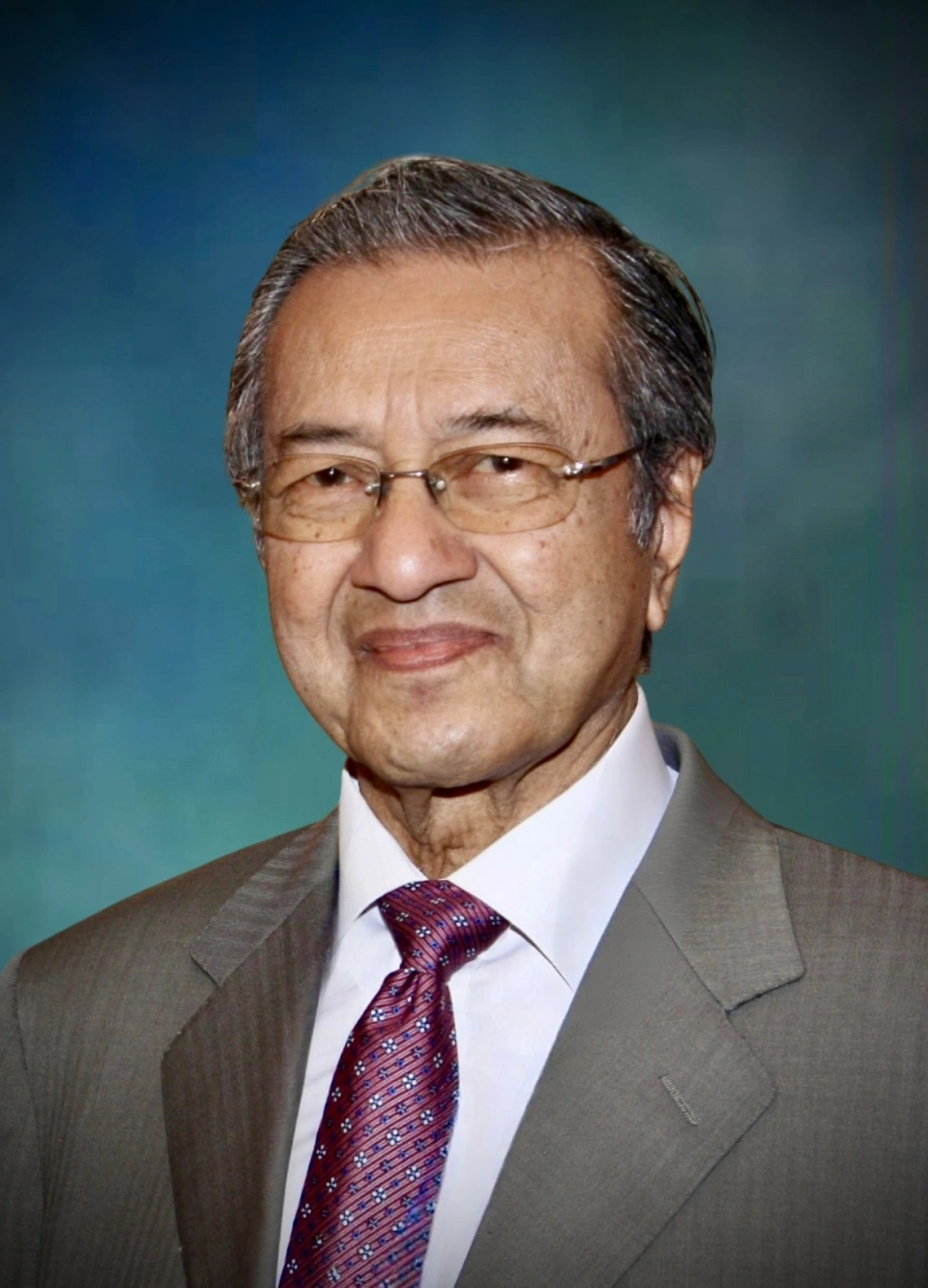
Mahathir Mohamad (Malay: Mahathir bin Mohamad, born on July 10, 1925) is the longest-serving Prime Minister in Malaysian history. He has been in charge of the country twice and has been in power for a total of more than 25 years. He is known as the "Father of Malaysian Modernization" . He is famous for his strong nationalist stance, vigorous economic reforms, and uncompromising anti-Western stance. He led Malaysia's historic transition from an agricultural country to an industrialized country, and was also controversial in the international community for his authoritarian overtones and hard-line suppression of dissent.
In 1981, Mahathir served as prime minister for the first time and remained in office until 2003. After fifteen years, he was re-elected in 2018 at the age of 92, becoming the world's oldest democratically elected national leader, setting a rare political record.
_Want to know which historical leader your decision-making style is most similar to? Try the Political Leader Decision-Making Style Test to see if you have Mahathir-like leadership traits. _
Early career and path to medicine and politics
Mahathir was born on July 10, 1925 in Alor Setar, Kedah, in the northern part of the Malay Peninsula. He was the youngest child in his family. His father was the principal of a school. Although his family was not well off, he valued education. Mahathir was smart and studious since he was a child. He was admitted to the King Edward VII College of Medicine in Singapore, obtained a medical degree in 1953, and opened clinics across Malaya to help the world.
During his medical career, Mahathir had extensive contact with the grassroots Malay people, witnessed the reality of the economic gap between races, and gradually formed a political philosophy with "Malays first" as the core. In 1964, he was elected as a member of Parliament for the first time as a member of the United Malays National Organization ( UMNO , UMNO) and officially entered politics.
Political career twists and turns and comebacks
Mahathir's early years in politics were not all smooth sailing. In 1969, serious racial riots broke out in Malaysia. He was expelled from the party for publicly criticizing the then Prime Minister Tunku Abdul Rahman for being too tolerant towards non-Malays. During this period of exile, he turned to writing and wrote the controversial book "The Malay Dilemma", which systematically elaborated on the reasons for the long-term economic disadvantage of the Malays and advocated correcting it through national policies. The book was banned upon publication, but politically it won him a broad base of nationalist support.
In 1972, Mahathir returned to UMNO and his career has been rising ever since. After successively holding important positions such as Minister of Education, Minister of Trade and Industry, and Deputy Prime Minister, he officially took over as Prime Minister in 1981, ushering in the most profound era of change in Malaysian political history.
Twenty-two years in power: from an agricultural country to an industrialized power
Mahathir's 22 years in power (1981-2003) was a golden era for Malaysia's economic development. He ambitiously proposed the strategic goal of "Wawasan 2020" , determined to build Malaysia into a fully developed industrialized country by 2020.
In terms of economic policy, he rejected the recommendations of mainstream Western economics and implemented a series of "Learn East" policies, encouraging Malaysians to follow the development experience of Japan and South Korea and value discipline, hard work and collective spirit. Under his leadership, Malaysia vigorously developed heavy industry, launched the domestic car brand Proton , built the world's tallest twin towers (Petronas Twin Towers ) at the time, and developed the Multimedia Super Corridor in the suburbs of Kuala Lumpur, attracting a large number of international technology companies to settle in.
When analyzing Mahathir’s developmental approach that emphasizes state dominance and national economic priority, it helps us understand the tension between state intervention and market freedom in the political spectrum. You can measure your inclination on such issues by taking the 8values political values orientation test , and view detailed interpretations of all 8values ideological results .
During Mahathir's tenure, Malaysia's average annual economic growth rate has been maintained at 7% to 9% for a long time, millions of people have been lifted out of poverty, and the Malayan middle class has grown rapidly. When the Asian financial crisis broke out in 1997, he refused to accept the conditions for assistance from the International Monetary Fund (IMF) and unilaterally implemented currency controls, fixing the ringgit exchange rate at 3.8 to 1 US dollar. He was criticized by mainstream Western economic circles, but he allowed Malaysia to survive the crisis relatively smoothly and achieve recovery in a short period of time.
Authoritarian rule and the suppression of political dissent
However, Mahathir's governing style is also full of controversy. He gradually concentrated power within himself, suppressed political opponents, and strictly controlled judicial independence and press freedom. He has repeatedly invoked the Internal Security Act (ISA) to detain dissidents and opposition leaders and restrict freedom of assembly and speech.
The most controversial incident occurred in 1998, when Mahathir and his then deputy prime minister and successor Anwar Ibrahim broke completely due to policy lines and power disputes. Anwar was subsequently removed from office and jailed on charges of corruption and sodomy, a move that was widely criticized by international human rights groups as a politically motivated judicial persecution.
Mahathir is known for his outspokenness on the international stage. He has repeatedly confronted Western countries and criticized their double standards and neo-colonialism. He dared to openly question the Western-dominated international order on important occasions such as the United Nations General Assembly, spoke out for third world countries, and won a unique reputation among leaders of developing countries.
Retirements, comebacks and historic wins
In 2003, Mahathir announced his retirement and handed over power to his successor, Abdullah Ahmad Badawi. However, he has become increasingly dissatisfied with the governance of his successor and subsequent Najib Razak government, especially the 1Malaysia Development Berhad (1MDB) scandal, and believes that corruption has plunged Malaysia into a crisis.
In 2016, Mahathir made a decision that shocked the political world - announcing his return to politics at the age of over 90, and cooperating with his former political opponents and an alliance of opposition parties, determined to overthrow the Barisan Nasional government that had been in power for more than 60 years. In the Malaysian general election on May 9, 2018, the Hope Alliance (Pakatan Harapan) he led ended the long-term rule of the Barisan Nasional with a historic victory. Mahathir was re-elected as Prime Minister at the age of 92 , setting a world record as the oldest elected national leader in the history of democratic elections.
However, during the second term in office, there were many conflicts within the alliance. In February 2020, Mahathir suddenly announced his resignation, a political crisis broke out, and the Pakatan Harapan government collapsed. Although Mahathir has made many public statements since then criticizing the new government's policies, his political influence has been greatly reduced.
Ethnic policy, religious stance and international outlook
Mahathir has long adhered to the policy of "Malay privileges" and advocated active state intervention to correct the historically disadvantaged position of the Malays in the economic field. His policy stance towards the Chinese and Indian groups in Malaysia has always been controversial. Critics believe that his policies have obvious ethnic bias, but supporters believe that this is a necessary move to maintain social stability and ethnic harmony in a multi-ethnic society.
On religious issues, Mahathir positions himself as a moderate Islamist, advocates that Islamic civilization can be integrated with modernization and economic development, and opposes extremism and radical religious conservative forces. He promoted the integration of Islamic values into the country's governance while emphasizing the importance of science and education.
In terms of international relations, Mahathir actively participated in the Non-Aligned Movement, advocated "South-South cooperation", held a strong criticism of Israel, and repeatedly criticized the unilateralist policies of the United States. His sharp rhetoric is rare among international leaders. This attitude of daring to challenge the mainstream position of the West has given him considerable popularity among leaders in the Islamic world and developing countries.
Historical Heritage and Controversial Evaluation
Mahathir's historical status is still controversial. Supporters praised him for leading Malaysia from a developing country dependent on agricultural exports to one of the most dynamic emerging industrial economies in Southeast Asia, profoundly changing the lives of generations of Malaysians; his public questioning of Western hegemony also set an example for small countries to strive for international discourse.
Critics point out that he has long suppressed judicial independence and press freedom, suppressed political dissent, and strengthened Malaysia's authoritarian political tradition; his handling of the Anwar case is particularly seen as a typical example of the use of state machinery to persecute political opponents. Malaysian society remains deeply divided over its heritage.
Regardless of the evaluation, Mahathir Mohamad, with his political career of more than half a century and his governance experience spanning two eras, is undoubtedly one of the most important figures in the political history of Southeast Asia from the late 20th century to the early 21st century. He condenses the deep tension between developmentalism, nationalism, authoritarian politics and modernization ideals, which is still worthy of repeated examination and reflection.
Extended reading : If you want to explore your own political decision-making tendencies, you are welcome to go to the Political Test Center and experience the political leaders’ decision-making style test . Through 48 professional questions, you will analyze your leadership characteristics from six dimensions such as decision-making style, power concept, and economic philosophy to see whether you are most like Mahathir, Lee Kuan Yew, Churchill, or other historical leaders.