Nawaf Salam: The rise and mission of Lebanon’s reformist leader
As the current Prime Minister of Lebanon and an international law scholar, Nawaf Salam’s legendary transformation from the Hague Tribunal to the Beirut political arena, his reform stance against the corrupt elite system, and his historical responsibility in Lebanon’s deep crisis are important insights into understanding the political changes in the contemporary Middle East. By fully understanding these political leanings, you can also take an in-depth 8values political values leaning test to compare the characteristics of different ideologies.
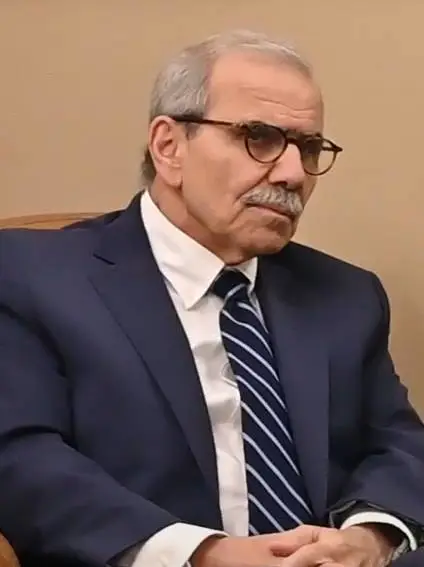
Nawaf Salam (Arabic: نواف سلام, born in 1953 in Beirut, Lebanon) is the current Prime Minister of Lebanon, a famous international law scholar and diplomat. He has served as Lebanon's ambassador to the United Nations for a long time and served as a judge of the International Court of Justice (ICJ) from 2018 to 2024. He is one of the highest-level legal figures serving in an international judicial institution in Lebanese history. In January 2025, he was appointed prime minister after the political deadlock in Lebanon was broken, shouldering the historic mission of leading this war-torn and corruption-torn country toward reconstruction.
Salam is known as a scholar-type politician and is widely regarded at home and abroad as a rare independent reformist figure outside of Lebanon's traditional factional politics. His coming to power has high hopes for many Lebanese people, and has also triggered profound discussions about whether the country can truly get out of its chronic problems.
_Want to know which historical leader your decision-making style is most similar to? Try the Political Leader Decision-Making Style Test to see if you have Salam-like leadership traits. _
Academic foundation and intellectual growth process
Nawaf Salam was born in Beirut to a Sunni Muslim family with a profound cultural background. He received elite education in Lebanon since childhood, and later went to France for further study. He obtained degrees in law and political science from Sciences Po and the University of Paris I. He then transferred to Harvard Law School in the United States and received a doctorate in law. This study experience across Europe and the United States laid a solid theoretical foundation for international law for him, and also shaped his international vision that transcends geographical limitations.
After returning from his studies, Salam taught for a long time at the American University of Beirut, teaching courses on international law and political theory. His teachings reached all walks of life in Lebanon and he accumulated a wide reputation in the intellectual community. Unlike many Lebanese politicians who rely on sectarian background and family networks to rise to the top, he is based on academic achievements and independent personality, which is quite rare in the Lebanese political ecology.
Diplomatic Years on the UN Stage
In 2007, Salam was appointed Lebanon's ambassador to the United Nations, beginning a decade-long career in multilateral diplomacy. During his tenure, he represented Lebanon in many major issues at the United Nations Security Council, including consultations on sensitive issues such as the Middle East peace process, the Syrian crisis, and the Lebanese-Israeli border situation.
He has won universal respect from the international diplomatic community for his thoughtful thinking, precise expression, and ability to safeguard the interests of small countries in complex situations. Under his representation, Lebanon has maintained a relatively active and constructive diplomatic profile on the United Nations stage despite continued domestic political turmoil.
When analyzing Salam's diplomatic philosophy that focuses on international rules and multilateralism, it helps us understand the trade-offs between liberal internationalism and sovereign nationalism in the political spectrum. You can measure your inclination on such issues by taking the 8values political values orientation test , and view detailed interpretations of all 8values ideological results .
International Court of Justice Judges: From Diplomacy to Judiciary
In 2018, Salam was elected to a nine-year term as a judge of the International Court of Justice (The Hague) with widespread international recognition. The International Court of Justice is the most important judicial institution of the United Nations, responsible for adjudicating legal disputes between states, and is the supreme arbiter of the international legal order. Being able to join this institution marks that his academic and practical accumulation in the field of international law has reached the top level.
During his tenure at the International Court of Justice, he participated in the hearing of many major cases involving state responsibility, humanitarian law and territorial disputes, and established a good reputation for his rigorous legal reasoning and independent judicial stance. This experience also allowed him to flaunt his clear separation from domestic factional politics when he returned to Lebanese politics in the future - his qualifications came from international judicial practice rather than Lebanon's factional patronage system.
Lebanon’s deep crisis and calls for reform
To understand the historical context in which Salam ascended to the position of prime minister, one must face the multiple and overlapping crises that Lebanon has experienced over the past few years.
In 2019, large-scale popular protests broke out in Lebanon, targeting the sectarian political elites who have long controlled state power and enriched themselves. At the same time, Lebanon's economy deteriorated sharply, its currency devalued significantly, its banking system actually collapsed, and people's life savings were wiped out by inflation.
On August 4, 2020, a large-scale explosion occurred at Beirut Port that shocked the world, killing more than 200 people, injuring thousands, and making hundreds of thousands homeless. It was one of the most tragic non-war disasters in the history of Lebanon. The root cause of the accident pointed directly at the serious malfeasance and corruption of the government, arousing deep public indignation against the entire political class.
From 2023 to 2024, the Lebanese-Israeli conflict intensified again, causing serious damage to the southern border area and further intensifying the pressure on national reconstruction. At the political level, the Lebanese presidential position has been vacant for more than two years. Domestic factions are in a stalemate over the distribution of power, and the government is effectively paralyzed.
Becoming Prime Minister: Commitment to Reform and Institutional Resistance
In January 2025, as Lebanon's more than two-year political deadlock finally broke through, the Congress elected a new president and immediately nominated Salam as the prime minister of the government. His appointment received positive reviews from domestic reformist forces and parts of the international community, and was seen as a signal of positive changes in Lebanon's political ecology.
After taking office, Salam made it clear that he would be committed to promoting Lebanon to implement the structural economic reforms required by the International Monetary Fund (IMF), rebuild the country's financial order, fight corruption, and repair the already riddled public service system. He emphasized that in order for Lebanon to get out of the crisis, it must break the political logic of sectarian spoils distribution under the "Taif system" that has lasted for decades and establish a governance model that is truly based on citizens' rights and national interests.
However, the resistance Salaam faces is equally huge. Lebanon's deeply entrenched sectarian political structure requires any reform efforts to strike a delicate balance among the eighteen officially recognized religious sects. Hezbollah and other armed political forces still maintain strong influence in the country, and the country's actual control over some territories is still incomplete. At the same time, a large number of well-educated young talents continue to immigrate overseas, and the loss of social human capital is accelerating, further weakening the social foundation for reform.
The governance style of scholarly politicians
Unlike traditional Lebanese politicians who are accustomed to relying on rhetoric and sectarian mobilization to maintain political capital, Salam's governing style is closer to a mixture of technocrats and scholars. He tends to elaborate on governance ideas in precise legal and policy language, focuses on institutional construction rather than the shaping of personal charisma, and rarely resorts to populist rhetoric in public.
This style has won him the trust of the international community, especially Western governments and international financial institutions, and has helped Lebanon gain a more favorable negotiating position when seeking external assistance and reconstruction funds. However, critics also point out that in a political soil like Lebanon that is highly emotional and has deep-rooted sectarian identities, whether scholar-type leaders who lack the ability to mobilize the masses can truly muster enough political will to promote reform is still a suspense that needs time to test.
Historical significance and future prospects
The rise of Nawaf Salam reflects Lebanese society's deep desire for political renewal under the impact of successive crises. He represents a political ideal of the Lebanese intellectual class - replacing sectarian patronage and family politics with professional capabilities, international vision and independent personality, and reshaping the legitimacy of national governance.
However, the distance between ideals and reality has always been presented in a very tragic way in Lebanon. The history of this country has repeatedly shown that the goodwill and abilities of individuals are often unable to withstand the interference of factional interests and external forces rooted deep in the social structure. Whether Salam can truly instigate reforms during his term, or whether he will eventually be absorbed and wasted by the system, will be one of the most important windows for observing Lebanon's future direction.
Regardless of the outcome, his unique trajectory of transformation from an international law scholar and judicial official to a national leader is itself a page worth recording in the political history of the contemporary Middle East.
Extended reading : If you want to explore your own political decision-making tendencies, you are welcome to go to the Political Test Center and experience the political leaders’ decision-making style test . Through 48 professional questions, you will analyze your leadership characteristics from six dimensions such as decision-making style, power concept, and economic philosophy to see whether you are most like Salam, Mahathir, Churchill, or other historical leaders.