John F. Kennedy: A charismatic leader and tragic legend at the height of the Cold War
As the 35th President of the United States, John F. Kennedy is one of the most charismatic and controversial figures in modern political history. He took power at the height of the Cold War, through the Cuban Missile Crisis, the nascent civil rights movement and the launch of the Apollo moon landings. By understanding his liberal tendencies and crisis management style, you can also conduct an in-depth 8values political value orientation test to compare the characteristics of different political coordinates.
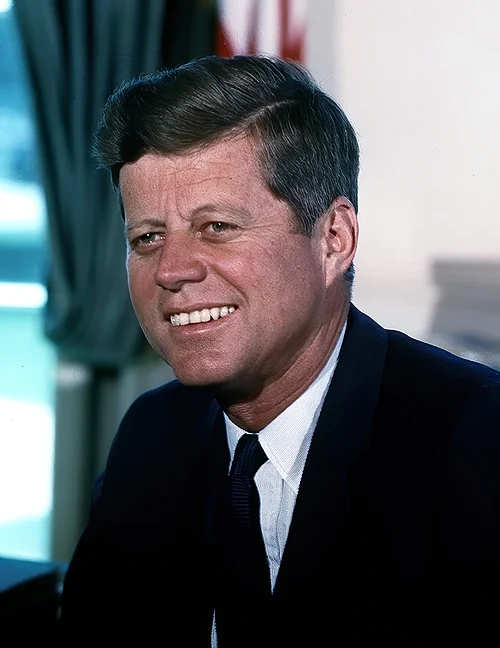
John Fitzgerald Kennedy (May 29, 1917 - November 22, 1963), often referred to as JFK , was the youngest elected president in the history of the United States and the first Catholic president. He represented the vitality and hope of the United States in the 1960s, proposing the "New Frontier" policy platform, committed to promoting civil rights, improving the economy, and leading the United States to take the lead in the space race. However, his assassination in Dallas, Texas, in 1963 was a tragic event that became one of the greatest historical mysteries of the 20th century.
Kennedy was born into a wealthy and influential Irish family in Brookline, Massachusetts, on May 29, 1917. His life was intertwined with glory and illness, mission and scandal. Finally, he was assassinated on November 22, 1963, ending his short term of only 1,036 days.
_Want to know which historical leader your decision-making style is most similar to? Try the Political Leader Decision-Making Style Test to see if you have Kennedy-like leadership traits. _
The glory of the Kennedy family and the elite training in the early years
Kennedy was born into a typical elite family. His father, Joseph Kennedy, was a successful businessman and diplomat who served as the U.S. Ambassador to Britain and had high hopes for his children. Kennedy grew up in a competitive atmosphere in his family. Although he was in poor health as a teenager and suffered from long-term digestive and spinal problems, he still showed outstanding intellectual and social talents.
While attending Harvard University, Kennedy showed a keen interest in international politics. In 1940, he published the book "Why England Slept" based on his graduation thesis, which analyzed Britain's foreign policy mistakes in the early days of World War II. The book received widespread acclaim and brought him into the public eye at a young age.
After the outbreak of World War II , despite his physical limitations, Kennedy joined the U.S. Navy through his father's relationship. He served as captain of the PT-109 torpedo boat in the Pacific Theater. In 1943, when his boat was hit by a Japanese destroyer, Kennedy heroically rescued his comrades and survived on a deserted island despite a serious back injury. This experience as a World War II hero later became his most powerful political capital when he entered the political arena.
From Congressman to White House: The 1960 Election
In 1946, Kennedy was elected to the Massachusetts House of Representatives on behalf of the Democratic Party and officially launched his political career. In 1952, he defeated veteran Republican Congressman Henry Lodge and was promoted to the U.S. Senate. While in the Senate, he not only focused on labor and foreign affairs, but also won the Pulitzer Prize for his "Profiles in Courage" about several courageous politicians in American history.
In 1960, Kennedy announced his candidacy for the presidency. He faced the experienced Vice President Richard Nixon . This election was a watershed moment in American politics because it ushered in a new era of television politics. In the first televised debate in history, the young, promising and energetic Kennedy was in sharp contrast to the pale and slightly tired Nixon.
Using the slogan "Let's get this country moving again" (Let's get this country moving again), Kennedy promised to heal racial rifts and narrow the "missile gap" between the United States and the Soviet Union. In the end, he narrowly defeated Nixon. In his inaugural speech, he left behind a famous saying: "Ask not what your country can do for you, ask what you can do for your country."
Cold War: The Cuban Missile Crisis and Geopolitical Game
When Kennedy came to power, the Cold War was at a tense stage. He pursues a "flexible response" strategy in foreign policy, trying to find a balance between all-out nuclear war and passive defense.
In 1961, Kennedy approved the CIA-planned Bay of Pigs Invasion in an attempt to overthrow the Castro regime. However, due to planning loopholes and command errors, the operation failed miserably. This defeat caused Kennedy great political humiliation, but it also prompted him to begin to doubt the judgment of the intelligence community and rely more heavily on the "Executive Committee" composed of core advisers.
In October 1962, the world faced the most dangerous 13 days. The Soviet Union secretly deployed nuclear missiles in Cuba, directly threatening the United States mainland. During the Cuban Missile Crisis , Kennedy demonstrated extremely high diplomatic skills. He rejected the military's radical proposal to immediately bomb Cuba, and instead adopted a naval blockade (Quarantine) strategy while communicating with Khrushchev through secret channels. Eventually, the Soviet Union withdrew its missiles, and the United States promised not to invade Cuba and secretly withdrew its missiles from Turkey. This crisis is considered the pinnacle of Kennedy's political career, and he successfully averted World War III.
In order to ease the nuclear arms race, Kennedy signed the Partial Nuclear Test Ban Treaty with the Soviet Union and Britain in 1963, which was an important step in limiting nuclear weapons during the Cold War.
"New Frontier" Platform: Domestic Reform and Civil Rights Awakening
On the domestic front, Kennedy proposed the "New Frontier" plan, which aimed to expand social welfare, raise the minimum wage, improve education and promote economic growth. Although he faced huge resistance from conservatives in Congress, the tax cuts he implemented later did stimulate economic growth in the United States.
One of the most important domestic issues during Kennedy's term was the civil rights movement . Although he initially acted cautiously in order to maintain the support of white Southern Democrats, Kennedy gradually moved toward supporting the legislation as protests led by Martin Luther King Jr. intensified. In June 1963, he defined civil rights as a "moral issue" in a televised speech and submitted the first draft of what would become the Civil Rights Act of 1964.
In addition, Kennedy was also the founder of the Peace Corps, which sent young American volunteers to developing countries to provide technical and educational support, which greatly enhanced the international image of the United States.
When analyzing Kennedy's ideology of seeking liberal reform under the pressure of the Cold War, it helps us understand the balance of power and value. You can measure your inclination on such issues by taking the 8values political values orientation test , and view detailed interpretations of all 8values ideological results .
To the Moon: Leaders in the Space Race
Faced with the Soviet Union's early lead in space exploration (such as Gagarin's entry into space), Kennedy realized that this was not only a technological competition, but also an ideological contest. In May 1961, he gave a speech in Congress, proposing to "send a man to the moon and return him safely to the earth" before the end of the 1960s.
Although U.S. aerospace technology was still in its infancy at the time and faced huge budget disputes, Kennedy still firmly supported the Apollo program . "We choose to go to the moon and do other things in this decade not because they are easy but because they are difficult," he said in a famous speech at Rice University. Although he did not live to see Neil Armstrong set foot on the moon in 1969, he is recognized as the founder of the American space age.
Assassination Mystery: Tragedy and Unsolved Mysteries in Dallas
On November 22, 1963, Kennedy visited Dallas, Texas, in order to bridge the differences within the Democratic Party and canvass votes for re-election. At 12:30 pm, as the presidential motorcade passed through Dealey Plaza, several gunshots pierced the sky. Kennedy was shot in the head and neck and died shortly after being rushed to the hospital.
An official commission of inquiry (the Warren Commission) subsequently determined that Lee Harvey Oswald was the sole murderer and that there was no evidence of a conspiracy. However, this conclusion did not convince the public. Over the decades, conspiracy theories about Kennedy's assassination emerged one after another, involving the Mafia, the Cuban government, Soviet intelligence, and even the CIA and Vice President Lyndon Johnson.
This assassination not only changed the political direction of the United States, but also ended the American people's absolute trust in the government. Kennedy's funeral was an unprecedented event, with hundreds of millions of people around the world witnessing the end of the young leader on television.
Personal life, scandals and health secrets
Kennedy and his wife Jacqueline Kennedy are regarded as the "First Family" template in American history. With her elegant taste, Jacqueline transformed the White House into a center of culture and art. This period is called the "Camelot" era, symbolizing the disillusionment of idealism and beauty.
However, beneath the perfect exterior, Kennedy's life was full of complexity. He suffered from Addison's disease (adrenocortical insufficiency) and chronic lumbar spondylosis for many years, and needed to take large amounts of hormones and painkillers every day. These health details were closely concealed during his lifetime.
At the same time, Kennedy's private life was also full of controversy. He maintained inappropriate relationships with many women, the most famous of which was Hollywood superstar Marilyn Monroe . Although these scandals were tacitly protected by the media at the time, in the decades after his death, the details gradually came to light, making his public image more three-dimensional and full of contradictions.
Economic Concepts and the Scientific and Technological Heritage of the Cold War
Economic and fiscal policy
Kennedy pursued a moderate Keynesian economic policy. He advocates tax cuts to stimulate personal consumption and corporate investment, thereby driving economic circulation. Although he was a Democrat, he believed that "a rising tide lifts all boats." This idea of solving poverty through growth had a profound impact on later American economic policies.
Technology and military innovation
Kennedy's understanding of modern warfare went beyond mere nuclear deterrence. He has strengthened the development of special forces (such as Green Berets) and emphasized the need for professional forces in dealing with guerrilla warfare and regional conflicts.
In terms of science and technology, in addition to the Apollo program, the Kennedy administration provided financial support for the initial research and development of satellite communications and large-scale integrated circuits, which objectively accelerated the subsequent information revolution.
Kennedy's historical influence and later evaluations
John F. Kennedy's influence on human history is more reflected in the level of spiritual charisma . Although his tenure was short and many of his legislative ideas (such as the Civil Rights Act and Medicare) were completed in the hands of his successor Lyndon Johnson, he succeeded in inspiring a passion for public service in an entire generation.
- Hope personified: JFK embodied the optimism of the early 1960s. He broke the dullness of gerontocracy and made young people believe that politics can change the world.
- A model of crisis management: His calm handling of the Cuban missile crisis remains a textbook case of "crisis decision-making" in international relations and political science courses.
- The epitome of idealism: Despite the taint of his private life, the visions he projected in his public speaking engagements—from exploring the universe to maintaining peace among humanity—made him an almost mythical political symbol.
- Global impact: Kennedy's visit to the Berlin Wall (and his famous "I am a Berliner" speech) conveyed confidence in freedom to people on the front lines of the Cold War and solidified the unity of Western allies.
Historians' assessment of Kennedy is often mixed. Some people think that he was a great leader who saved the world at a critical moment; others think that he was an overly deified public relations master whose policy achievements were mostly attributed to the sympathy points he received after his death. Regardless, Kennedy's life is a grand narrative of power, courage, charisma and tragedy. He entered history in an unfinished state, forever stuck at his most energetic age.
Extended reading : If you want to explore your own political decision-making tendencies, you are welcome to go to the Political Test Center and experience the Political Leaders Decision-making Style Test . Through 48 professional questions, you will analyze your leadership characteristics from six dimensions such as decision-making style, power concept, and economic philosophy to see whether you are most like Kennedy, Churchill, Roosevelt, or other historical leaders.