Justin Trudeau: Canada’s liberal leader’s path to power, controversies and challenges
As one of the most well-known prime ministers in Canadian history, Justin Trudeau is known for his distinctive liberalism, multicultural policies and personal charm in the social media era. By having an in-depth understanding of his political leanings and policy logic, you can also take a professional 8values political values orientation test to compare the mapping of different ideologies in global politics.
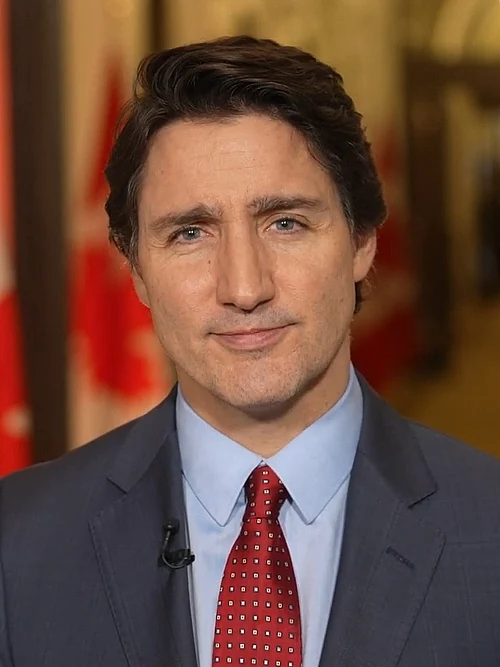
Justin Trudeau (English/French: Justin Trudeau, December 25, 1971 -) is the current Prime Minister of Canada and leader of the Liberal Party of Canada. He is the second youngest prime minister in Canadian history and the first "second generation" prime minister - his father, Pierre Trudeau, served as prime minister twice and is known as the "father of modern Canada." Since taking office in 2015, Trudeau has been committed to promoting social liberalism , environmental protection , gender equality and multiculturalism , and upholding the rules-based multilateral order on the international stage.
Justin Trudeau was born in Ottawa and grew up in a politically charged household. While his early career spanned fields including education, engineering and environmental studies, he finally entered politics in 2008. During his time in power, he has experienced a transformation from a majority government in its heyday to a fragile minority government, and his policies have won international praise while facing fierce controversy at home over economic pressures, identity politics and foreign relations.
_Want to know which historical leader your decision-making style is most similar to? Try the Political Leader Decision-Making Style Test to see if you have Trudeau-like communicative leadership traits. _
Growth background of a political family and early multiple identities
When Justin Trudeau was born, his father, Pierre Trudeau, was in the prime of his tenure as prime minister. As the "eldest son", Justin has been exposed to the spotlight since birth. In 1972, then-US President Richard Nixon prophetically proposed a toast to “future Canadian Prime Minister Justin Trudeau” at a state dinner in Ottawa. Despite his prominent family background, Justin kept a relatively low profile as a teenager and even deliberately avoided politics for a time.
He holds a Bachelor of Arts degree from McGill University and a Bachelor of Education degree from the University of British Columbia. Before entering politics, his resume was quite diverse: He worked as a high school teacher in Vancouver, teaching French and drama; he was a ski instructor, a nightclub bouncer and even dabbled in engineering.
The state funeral of Pierre Trudeau in 2000 was a turning point in Justin's life. He delivered a touching eulogy at the funeral, demonstrating his outstanding oratory talent and political potential, and rekindling the Canadian people's expectations for the "Trudeau family." Subsequently, he began to participate in the youth activities of the Liberal Party, and was finally successfully elected as a member of Parliament representing the Papineau constituency in the 2008 federal election, officially starting his career in politics.
The resurgence of the Liberal Party and the “Sunshine Policy” of 2015
After nearly a decade in power under Harper's Conservative Party, Canada's Liberal Party once hit a trough. In 2013, Justin Trudeau was overwhelmingly elected leader of the Liberal Party, promising to bring "Sunny Ways" to Canada, a more optimistic, transparent and inclusive style of governance.
In the 2015 federal election, Trudeau showed strong campaigning ability. He proposed boosting the economy through increased investment in infrastructure, rather than insisting on austerity like the Conservatives. He promised to legalize marijuana , reform the electoral system and take stronger action to combat climate change . In the end, the Liberal Party achieved a stunning reversal, becoming the majority government from the third largest party in the House of Representatives, and Trudeau became Prime Minister.
When he first came to power, Trudeau formed the first gender-balanced cabinet in Canadian history. When asked why, his succinct "Because it's 2015" quickly went viral and became a symbol of his support for progressive values.
Core policies of the administration: progressivism and multiculturalism
Trudeau's governing logic is deeply influenced by modern liberalism , emphasizing the government's active role in promoting social equity and protecting the rights and interests of minority groups.
Social Policy and Human Rights
One of the Trudeau government's most notable achievements is the legalization of marijuana (The Cannabis Act), which made Canada the first G7 country to fully legalize recreational marijuana. He said the move was aimed at protecting young people and combating organized crime. In addition, he actively promoted the process of Aboriginal reconciliation , although this process was accompanied by intense pressure on historical issues (such as the discovery of former residential school sites), and he repeatedly issued formal apologies on behalf of the country and promised to increase funding for Aboriginal communities.
Environment and climate change
Trudeau sees climate change as a core challenge. He passed a national carbon tax policy (Carbon Pricing) aimed at reducing greenhouse gas emissions through market means. However, this policy triggered a strong backlash in the oil-rich provinces of Alberta and Saskatchewan, leading to an intensification of deep-seated conflicts between the east and west regions. In order to balance economic interests, the Trudeau government also purchased the Trans Mountain Pipeline, which in turn attracted criticism from environmentalists who believed that its policy was contradictory.
Refugee and Immigration Policy
As the Trump administration tightened immigration policies, Trudeau posted his famous tweet on social media: "Welcome to Canada." He significantly increased Canada's immigration quota and accepted tens of thousands of Syrian refugees. He believes that multiculturalism is Canada's core competitiveness, not a burden.
When analyzing Trudeau’s highly progressive ideology, it helps us understand the political logic of left-wing liberals around the world. You can measure your inclination on such issues by taking the 8values political values orientation test , and view detailed interpretations of all 8values ideological results .
Economic challenges versus realism
Although Trudeau is comfortable on social issues, he has faced persistent criticism on the economic front.
The government's longstanding deficit fiscal policy reached its peak during the COVID-19 pandemic. Although huge subsidies maintained social stability in the short term, the ensuing high inflation and cost-of-living crisis (especially soaring housing prices) severely weakened his public opinion base. Critics accuse him of focusing too much on identity politics while ignoring the core economic interests of the middle class.
In terms of international trade, Trudeau successfully responded to the Trump administration’s challenge to the North American Free Trade Agreement (NAFTA) and eventually signed the new United States-Mexico-Canada Agreement (USMCA). This shows that he can also show pragmatic negotiation skills when necessary when safeguarding national economic interests.
Controversy: Scandal, Ethics and Identity Crisis
Trudeau's career in power has not been smooth sailing. He has been caught in political and ethical crises many times.
- SNC-Lavalin scandal: In 2019, Trudeau was accused of pressuring then-Justice Minister Jody Wilson-Raybould to intervene in a bribery investigation into Quebec engineering giant SNC-Lavalin. The incident led to the resignation of two cabinet ministers, and Trudeau was found by an ethics committee to have violated the Conflict of Interest Act.
- WE Charity incident: The Trudeau government had planned to hand over a student aid program involving hundreds of millions of Canadian dollars to the WE Charity charity, and the organization was exposed to have close financial dealings with members of the Trudeau family. Although the contract was later canceled, Trudeau's public image was once again tarnished.
- "Blackface" incident: During the 2019 election, some old photos were exposed, showing that Trudeau had blackfaced his face at parties many times when he was young. This is undoubtedly a huge moral blow to Trudeau, who has always advocated racial equality and anti-racial discrimination. He has made multiple public apologies for this.
Canada and foreign exchanges on the international stage
Trudeau is committed to re-establishing Canada as a "champion of multilateralism." He has strengthened relations with the European Union and actively participated in cooperation within the framework of NATO and the G7. However, his government faces severe tests in handling relations with major powers.
In terms of relations with China, Canada-China relations have hit rock bottom after the "Meng Wanzhou incident" and the long diplomatic stalemate in which two Canadian citizens (Kovrig and Michael Kovrig) were detained by China. The Trudeau government has been accused of lacking a clear strategy when dealing with relations with China. Meanwhile, Canada's diplomatic relations with India have been thrown into intense turmoil amid accusations of Indian government involvement in the assassination of a Sikh leader.
The turning point of public opinion in the middle and later stages of the administration
Since the two elections in 2019 and 2021, the Liberals have failed to win a majority of seats, and Trudeau has had to maintain a minority government by signing an agreement with the New Democratic Party (NDP).
As the administration enters its tenth year, people's "Trudeau fatigue" is becoming increasingly apparent. Rising prices, pressure on the health care system and the housing crisis have become the main weapons used by Conservative leader Pierre Poilievre to attack Trudeau. Polls show that Canadians' support for Trudeau has dropped to historic lows, with some voters believing that he is too out of touch with the reality of ordinary people's lives and is more like a political star living in social media.
Evaluation and historical heritage
Justin Trudeau is a deeply polarizing figure.
- In the eyes of supporters: He is a beacon of modern multiculturalism, making Canada more progressive and inclusive through legal social reforms (such as cannabis, euthanasia, carbon taxes). His decisive funding and care for minority groups during the epidemic are regarded as an example of humane leadership.
- In the eyes of critics: He is seen as a politician who "emphasizes performance over substance." Critics say he has undermined Canada's fiscal health, exacerbated regional divisions and used identity politics to cover up his failures in housing and economic management.
As many observers have pointed out, Trudeau successfully moved Canada from the "conservative Harper era" to a more open phase with an international presence. His life reflects how a politician who grew up in the modern media environment can reshape the political foundation of a country through his personal image, speaking skills and value leadership.
Extended reading : If you want to explore your own political decision-making tendencies, you are welcome to go to the Political Test Center and experience the political leaders’ decision-making style test . Through 48 professional questions, you will analyze your leadership characteristics from six dimensions such as decision-making style, view of power, and economic philosophy to see whether you are most like Trudeau, Merkel, Macron, or other historical leaders.