Lee Kuan Yew: The legendary governance and historical legacy of Singapore’s founding father
As the founder and first Prime Minister of the Republic of Singapore, Lee Kuan Yew's political career spanned half a century, his unique "Asian Values" governance philosophy, and his extraordinary achievements in building a small country into one of the most prosperous economies in the world. These are important coordinates for understanding modern Asian politics and development models. By fully understanding these political leanings, you can also take an in-depth 8values political values leaning test to compare the characteristics of different ideologies.
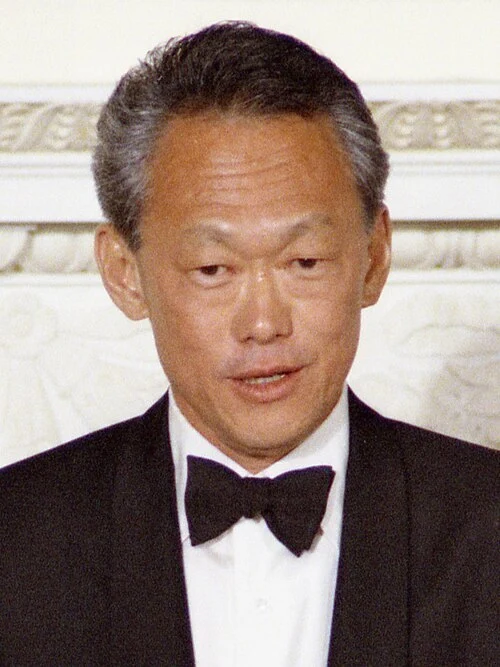
Lee Kuan Yew (English: Lee Kuan Yew, Chinese: Lee Kuan Yew, September 16, 1923 - March 23, 2015) was the first Prime Minister of the Republic of Singapore. He was in power for 31 consecutive years from 1959 to 1990. He is generally revered by the international community as the "Father of Singapore" . Known for his iron-fisted governance, he transformed a port city with scarce resources and complex ethnic groups into a modern country with a per capita income among the highest in the world in just a few decades. The governance philosophy he advocated with discipline, meritocracy and pragmatism as its core has profoundly influenced the thinking of several generations of Asian political leaders.
Lee Kuan Yew died of pneumonia at the Singapore General Hospital on March 23, 2015 at the age of 91. After the news came out, leaders from many countries around the world expressed their condolences, and Singapore was mourned by the whole country, which shows its high historical status.
_Want to know which historical leader your decision-making style is most similar to? Try the Political Leader Decision-Making Style Test to see if you have Lee Kuan Yew-like leadership traits. _
Early Career: The Colonial Years and the Shaping of Elite Education
Lee Kuan Yew was born in Singapore, the British Straits Settlements, on September 16, 1923. His ancestral home was Dabu County, Meizhou City, Guangdong Province, China. He was a descendant of Hakka immigrants. His family is highly westernized, English is their main daily language, and he received a typical British elite education in his early years.
During World War II, Japan occupied Singapore (1942-1945). This experience of witnessing the collapse of colonial rule and the tyranny of occupation had a decisive impact on the young Lee Kuan Yew. He witnessed with his own eyes the collapse of the "invincible" British Empire within a few days. From then on, he became deeply wary of any form of power rule and strengthened his political ambition to pursue autonomy and independence.
After the war, Lee Kuan Yew went to the UK to study, first at the London School of Economics, and then at Fitzwilliam College, Cambridge University, where he studied law and graduated with a double first-class honors degree. While studying in England, he extensively dabbled in political science and economics, actively participated in student political activities, and established an early political stance based on social democracy. After returning from his studies in 1950, he practiced law in Singapore and quickly devoted himself to the trade union movement and political organization.
Building a Party and a Nation: The Rise of the People's Action Party
In 1954, Lee Kuan Yew co-founded the People's Action Party ( PAP ) with a group of like-minded intellectuals and served as its Secretary-General. Taking anti-colonialism and fighting for autonomy as its banners, the People's Action Party quickly accumulated widespread political support among Singapore's lower-class workers and intellectuals.
In 1959, Singapore gained autonomous status, the People's Action Party won a landslide victory in the general election, and Lee Kuan Yew became the first Prime Minister of the autonomous state of Singapore at the age of 35. At the beginning of taking office, he faced a mess with dilapidated infrastructure, high unemployment, acute ethnic conflicts, and serious penetration of communist forces.
In 1963, Singapore joined the Federation of Malaya and became part of Malaysia. However, there is a fundamental contradiction between Singapore's Chinese-dominated population structure and Malaysia's "Malay first" policy, and relations between political leaders on both sides continue to deteriorate. On August 9, 1965, Singapore was forced to declare its separation from Malaysia and establish itself as an independent sovereign state. It is reported that Lee Kuan Yew burst into tears at the press conference announcing independence because he knew that the future of this urban island country with an area of only more than 700 square kilometers, no hinterland, and no natural resources was full of dangers.
Economic Takeoff: From Third World to First World
After independence, Singapore faced many difficulties: the withdrawal of British troops caused massive unemployment, Malaysia blocked its original economic hinterland, and local industry almost disappeared. Lee Kuan Yew's response was to take pragmatism as the highest criterion, completely abandon the shackles of ideology, and base everything on "doing whatever works."
He vigorously promotes an export-oriented industrialization strategy, actively recruits multinational companies to set up factories in Singapore, and uses an efficient and clean government, a sound legal environment and excellent infrastructure as core competitive advantages. Under his leadership, Singapore has gradually developed into one of the world's most important financial centers, shipping hubs and electronics manufacturing bases.
When analyzing Lee Kuan Yew's development path that emphasizes elite governance, efficient government and open markets, it helps us understand the complex trade-offs between freedom and authoritarianism, efficiency and democracy in the political spectrum. You can measure your inclination on such issues by taking the 8values political values orientation test , and view detailed interpretations of all 8values ideological results .
Singapore's economic achievements have attracted worldwide attention. During Lee Kuan Yew's three decades in power, per capita GDP jumped from about $500 at independence to more than $12,000, making it one of Asia's wealthiest economies. The housing problem has been systematically solved through the Housing and Development Board's (HDB) public housing program, and most Singaporean families have achieved home ownership. The education, medical and public health systems have all reached world-class standards. Corruption has been almost completely eradicated through the Independent Commission Against Corruption (CPIB), and Singapore has consistently ranked at the top of the global Corruption Perception Index.
Authoritarian rule: iron fist and controversy coexist
However, Lee Kuan Yew's governing style has always been accompanied by sharp international controversies. Under his leadership, Singapore has been politically dominated by the People's Action Party for a long time, and the living space of the opposition parties has been severely compressed. He has repeatedly invoked the Internal Security Act (ISA) to detain political dissidents without trial, and has imprisoned and bankrupted many opposition leaders through defamation lawsuits.
Singapore's press freedom has long been at a low level in international comparisons, and the government's control over the media is quite strict. Citizens' behavior in public places is subject to a series of detailed laws and regulations - spitting, littering and even smoking in elevators are illegal, hence Singapore's nickname "Fine City".
Lee Kuan Yew never shied away from the above criticisms. He made it clear that for a small country like Singapore, which is multi-ethnic, multi-religious and lacks strategic depth, social stability and economic development are the overriding priorities. Western-style liberal democratic systems may not be suitable for Asian national conditions. He summarized this system of governance philosophy as "Asian values" - emphasizing collective interests over individual rights, order over freedom, and long-term planning over short-term public opinion.
"Asian Values" and the Challenge to Western Democracy
Lee Kuan Yew's doubts about Western-style democratic systems constitute one of the most challenging legacies he left to the world of international political thought. He believes that the transplantation of Western-style democracy in developing countries often leads to the proliferation of populism, social divisions and short-sighted policies, while elite governance and strong government leadership are the fundamental guarantees for long-term peace and stability.
His legal battles with the US government and human rights organizations have never stopped. In 1994, American teenager Michael Fay was sentenced to caning in Singapore for vandalism, triggering strong protests from the U.S. government. Lee Kuan Yew resolutely refused the Clinton administration's plea and eventually executed the sentence. This incident became a landmark incident in his defense of Singapore's rule of law and sovereignty, triggering widespread discussion in the international community.
Lee Kuan Yew's stance, whether he agreed with it or not, forced the international academic community to seriously examine the complexity of the relationship between "democracy" and "development", and its ideological influence continues to this day.
Later years, family politics and the coffin of history
In 1990, Lee Kuan Yew retired as prime minister and handed over power to Goh Chok Tong. However, he continued to influence national affairs as cabinet minister until 2011 when he officially left the government. His eldest son, Lee Hsien Loong, took over as prime minister in 2004. This power inheritance was criticized by critics as a manifestation of family politics, while supporters believed that it was the result of the natural selection of the elite system.
In his later years, Lee Kuan Yew kept writing and published many political memoirs and interviews to systematically elaborate on his philosophy of governing the country. His books "Memoirs of Lee Kuan Yew" and "The Road to Independence" are regarded as first-hand documents for understanding the founding history of Singapore, and are also widely circulated in the Chinese-speaking world.
On March 23, 2015, Lee Kuan Yew died of severe pneumonia at the Singapore General Hospital. A week-long state funeral was held across the country. Hundreds of thousands of Singaporeans spontaneously lined up to pay their respects to his coffin. Leaders of dozens of countries including the United States, China, India, and the United Kingdom attended the funeral in person. The scene was shocking.
Historical legacy: legend and controversy coexist
Lee Kuan Yew's historical legacy is still a hotly debated topic among academics and the public. Supporters regard him as one of the greatest political practitioners of the 20th century, and believe that with his amazing willpower and vision, he completed one of the most successful nation-building experiments in human history, lifting millions of Singaporeans out of poverty and enjoying security and prosperity; critics believe that he has compressed civil liberties in the name of development, leaving an institutional legacy of authoritarian politics, and that family politics have weakened the possibility of Singapore's democratic transformation.
However, no matter what stance they take, almost all serious political observers admit that if it were not for Lee Kuan Yew, Singapore would never be able to stand as it is today. He single-handedly turned geopolitical disadvantages into competitive advantages, transformed lack of resources into the ultimate pursuit of talents and institutions, and wrote a miraculous history of modern nation-building.
As he himself said, all he did was to "keep Singapore alive" - and these four words are enough to be recorded in history.
Extended reading : If you want to explore your own political decision-making tendencies, you are welcome to go to the Political Test Center to experience the political leaders’ decision-making style test . Through 48 professional questions, you will analyze your leadership characteristics from six dimensions such as decision-making style, power concept, and economic philosophy to see whether you are most like Lee Kuan Yew, Mahathir, Churchill, or other historical leaders.