Juan Perón: The Life, Influence and Controversy of the Argentine Leader
As one of Argentina's most influential political leaders, Juan Perón's unique Peronism (Peronismo) ideology blended nationalism, socialism and authoritarianism, profoundly shaping the political landscape of Latin America in the 20th century. A comprehensive understanding of his political thought will help understand the rise and evolution of modern populism.
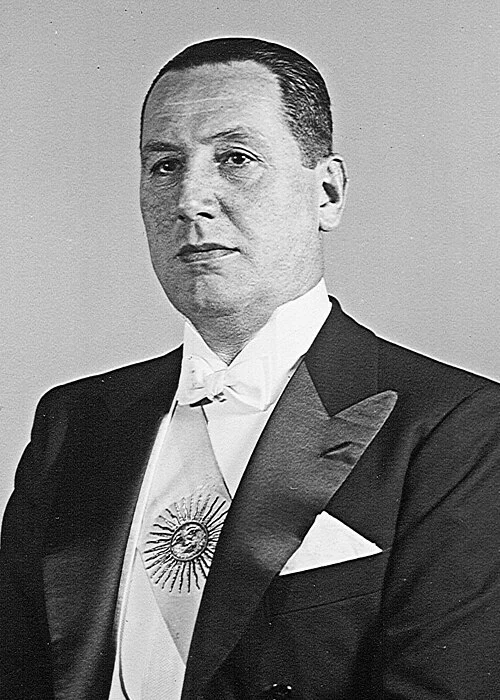
Juan Domingo Perón (Spanish: Juan Domingo Perón, October 8, 1895 - July 1, 1974) was the 29th, 34th and 36th president of Argentina. He was also the founder and spiritual leader of the Peronism movement. His political philosophy combined nationalism , labor rights protection and anti-imperialism , leaving an indelible mark on Latin American political history. He was elected president three times and implemented large-scale social reforms during his administration, which greatly improved the political status of the Argentine working class. At the same time, he was controversial for his authoritarian methods and political repression.
Peron was born on October 8, 1895 in Lobos, Buenos Aires Province, Argentina. On July 1, 1974, he died in office due to a heart attack during his third term, ending his ups and downs in his political career.
_Want to know which historical leader your decision-making style is most similar to? Try the Political Leader Decision-Making Style Test to see if you have Peronian leadership traits. _
Juan Peron's early life and military career
Peron was born into a middle-class family in Buenos Aires Province, Argentina, and moved to Patagonia with his family since he was a child. In 1911, at the age of 16, Peron was admitted to Argentina's National Military Academy (Colegio Militar de la Nación) and officially embarked on his military career. He was diligent and studious, performed well in the military academy, and was gradually promoted after graduation.
While serving in the army, Perón developed a keen interest in political and social issues. In the 1930s, he went to Europe several times for inspections and conducted in-depth research on the political operating models of Italian Fascism and German Nazism. However, he eventually combined these experiences with the local labor movement in Argentina to form a political philosophy with unique Latin American colors, rather than simply copying the European totalitarian system.
In 1943, Peron participated in the Argentine military coup that overthrew the then civilian government. In the subsequent military government, he served as Secretary General of Labor and Social Welfare, using this position to establish deep ties with the Argentine working class, laying a solid foundation for his future political rise.
The First Coming to Power and the Birth of Peronism
During his tenure as Secretary-General of Labor, Perón implemented a series of unprecedented labor protection policies, including raising the minimum wage, mandating a paid leave system, and establishing a union bargaining mechanism. These measures quickly won him the support of the Argentine working class, and he was known as the "Guardian of the Workers."
However, Perón's rapid rise alarmed conservatives within the military. In October 1945, he was arrested and imprisoned by his political opponents. Surprisingly, this incident became a turning point in Peron's political career: hundreds of thousands of workers spontaneously gathered in the Plaza de Mayo in Buenos Aires and chanted slogans demanding Peron's release. This historic "Día de la Lealtad" (Day of Loyalty) forced the military government to compromise and Perón regained his freedom.
In February 1946, Peron won the presidential election by a landslide, officially opening the most controversial political era in Argentina's history. His political movement - Peronism - takes "Justicialismo" as its core concept, advocates finding a "third way" between capitalism and communism, and emphasizes national sovereignty, social justice and national unity.
In this political movement, Peron's second wife, Eva Perón (nicknamed "Evita"), played a crucial role. Born into poverty, she was able to resonate strongly with the people at the bottom and actively promoted the realization of women's suffrage and the development of social welfare undertakings, becoming one of the most influential female politicians in Argentine history.
First and second terms: social reform and authoritarian rule in parallel
During his administration, Perón carried out a large-scale nationalization movement , nationalizing key industries such as railways, telephones, and shipping, in order to get rid of the control of the Argentine economy by British and American capital. He proposed an ambitious "Five-Year Plan" to vigorously develop domestic industry, implement the import substitution industrialization (ISI) strategy, and strive to build Argentina into an independent industrial power.
In terms of social policy, the achievements of the Peron government were particularly significant. The real wages of workers have increased significantly, medical care and education have been opened to ordinary people, and the pension system has been improved. In 1947, with the active promotion of Eva Peron, Argentine women gained the right to vote, becoming one of the first countries in Latin America to achieve female suffrage. Eva also founded a social assistance foundation named after her to provide housing, medical and educational assistance to poor people.
However, Perón's approach to power was also fraught with controversy. He gradually silenced dissent, cracking down on disobedient trade union leaders, independent media and political dissidents. Press freedom was severely restricted and newspapers critical of the government were closed. The Peron government placed supporters loyal to individuals in government agencies at all levels, forming a political patronage system with personal authority as the core.
Analyzing Perón’s unique governance model that blended populism and authoritarian control helps to understand the tension between democracy and authoritarianism across the political spectrum. You can measure your stance on such core political issues by taking the 8values political values orientation test , and view detailed interpretations of all 8values ideological results .
Years of Exile and the Continuation of the Peronist Movement
In 1952, Eva Peron died of cancer at the age of 33. Her sudden death was a major blow to Peron's political career, and also caused the Peronist movement to lose its most inspiring spiritual symbol. In the following years, Argentina's economy deteriorated, inflation intensified, foreign exchange reserves were depleted, and social conflicts became increasingly acute. The relationship between Peron and the Catholic Church also deteriorated sharply. He promoted policies such as separation of church and state and legalized divorce, which caused the church to support anti-Peron forces.
In September 1955, the Argentine army launched a coup, and Peron was forced to go into exile overseas. He traveled to Panama, Venezuela, and the Dominican Republic, and finally settled in Madrid under the protection of Spanish dictator Francisco Franco.
Despite his foreign status, Peron remained a central focus of Argentine politics. During his nearly 18 years in exile, Argentina's successive military governments banned Peronist parties from participating in elections and even banned the name "Peron" from being mentioned publicly. However, this only made Peronism more deeply rooted among the people. "Perón vuelve" (Perón vuelve) has become the political voice of millions of Argentines. The Peronist movement continues to operate underground. The labor movement and left-wing youth regard Perón as the spiritual banner of resistance to military dictatorship.
Historic return and third term
In 1973, the Argentine military government was forced to compromise under continued political turmoil and social pressure and lifted the political ban on Peronism. In June of the same year, millions of people across Argentina spontaneously gathered at Ezeiza Airport on the outskirts of Buenos Aires to welcome Peron's historic return after 18 years in exile. However, serious conflicts broke out between left-wing Peronists and right-wing Peronists in the welcoming crowd, resulting in the death of dozens of people. This was known as the "Ezeiza Massacre" in history, which foreshadowed a deep split within Peronism.
In September 1973, Perón was elected president with 61.85% of the vote in the general election. His third wife, Isabel Perón , became vice president, setting one of the record votes in Latin American electoral history. However, Peron was already 78 years old at this time, his health was deteriorating, and it was difficult to effectively control the fierce political game within Argentina.
On July 1, 1974, Perón died of a heart attack while in office. Isabel Peron immediately took over as president, but her ability to govern was limited. Argentina immediately fell into political chaos and economic crisis, and finally suffered another military coup in 1976.
Peron’s historical impact on Argentina and Latin America
The political legacy left by Perón is extremely complex and remains one of the most controversial historical issues in Argentine society.
In terms of labor rights , Peron's influence on the Argentine labor movement was profound and lasting. The labor protection system and strong trade union system he established formed the basic framework of modern labor relations in Argentina, enabling the working class to gain an unprecedented dominant position in politics.
In terms of nationalism and economic independence , Peron's nationalization policy and import substitution strategy reflected a strong resistance to foreign capital control. This idea deeply affected the economic policy orientation of Latin American countries in the following decades.
However, Perón was also criticized for his authoritarian rule, suppression of dissent and condoning political violence. His control of the media, persecution of political opponents, and instrumental use of the military and police force laid the foundation for Argentina’s political turmoil in the following decades.
In terms of international influence , Peronism, as a political model that combines nationalism, populism and social welfare policies, has been an important inspiration to left-wing movements in Latin American countries such as Cuba, Venezuela, and Bolivia, and is widely regarded as a typical example of "Latin American populism." To this day, Peronism remains one of the most influential political forces in Argentine politics. The political rise of economist Javier Milei, who was elected in 2023, is to a large extent a strong backlash against Peronism’s long-term dominance of Argentine politics.
As historians have evaluated: Peron was one of the most complex political figures in Latin America in the 20th century - he was both a sincere defender of the working class and an authoritarian leader who relied on personal charisma rather than system construction; he not only promoted social progress, but also exchanged superficial social unity at the expense of political repression. This inherent contradiction makes Peronism still arouse strong emotional resonance and fierce debate in Argentine society.
Extended reading : If you want to explore your own political decision-making tendencies, you are welcome to go to the Political Test Center and experience the political leaders’ decision-making style test . Through 48 professional questions, you will analyze your leadership characteristics from six dimensions such as decision-making style, power concept, and economic philosophy to see whether you are most like Peron, Churchill, Roosevelt, or other historical leaders.