Kim Jong Un: Supreme Leader of the Democratic People's Republic of Korea
As the current supreme leader of North Korea, Kim Jong Un has always been the focus of global attention for his governance style, insistence on the development of nuclear weapons and his unique position in international geopolitics. By analyzing its policy orientation and power structure, you can also conduct an in-depth 8values political value orientation test to explore the projection of different ideologies in real politics.
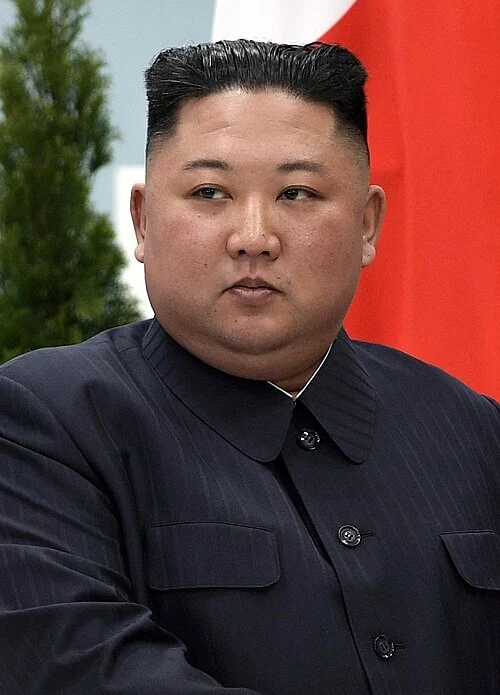
Kim Jong Un (Korean: 김정은, January 8, 1984 -) is the current General Secretary of the Workers' Party of Korea , Chairman of the State Affairs Commission of the Democratic People's Republic of Korea, and Supreme Commander of the North Korean Armed Forces. As the third generation heir of North Korea's "Paektusan bloodline", he took over power after the death of his father Kim Jong Il in 2011. During his reign, Kim Jong-un formally proposed the "Byeongjin Policy" , which means that economic construction and nuclear force construction will develop in parallel, and the legitimacy of his regime will be deeply tied to national self-esteem and national security.
As one of the most mysterious heads of state in the 21st century, every move of Kim Jong-un affects the strategic balance in Northeast Asia and even the world. He established a solid dominance through a series of tough internal purges and flexible external diplomacy.
_Want to know which historical leader your decision-making style is most similar to? Try the Political Leader Decision-Making Style Test to see if you have Kim Jong Un-like leadership traits. _
Early life and mysterious study abroad background
Kim Jong-un was born in Pyongyang, the second son of Kim Jong-il and his wife Ko Yong-hui (according to the official account). Unlike his predecessors, Kim Jong Un had a little-known Western education. In the late 1990s, he went under the pseudonym "Pak-un" and went to a public school in Bern, Switzerland, as the child of a North Korean diplomat.
While in Switzerland, Kim Jong-un was said to have shown a keen interest in basketball , especially the American NBA, and was a die-hard fan of Michael Jordan. This study abroad experience exposed him to Western material culture and political systems, but it did not change his loyalty to the North Korean political system. On the contrary, this experience may have made him more deeply aware that if he wants to maintain his regime's survival, he must have absolute force sufficient to counter the West.
After returning to North Korea in the early 2000s, Kim Jong-un began to study at the Kim Il-sung Military Comprehensive University and received systematic military and political education. At this time, although he is almost invisible in the public eye, he has begun to be intensively cultivated as a successor internally.
The transfer of power and the iron fist of political purges
In December 2011, Kim Jong Il died suddenly due to illness, and Kim Jong Un, who was only 27 years old, was pushed to the pinnacle of power. At the time, there was widespread speculation that the young, unqualified leader might become a puppet of the military or elders. However, Kim Jong-un quickly demonstrated political skills that transcended his years.
He first established the continuity of "Military Song politics" through frequent inspections of the troops, and then established his core position within the party. In order to eliminate potential threats to power, Kim Jong Un carried out a series of political purges that shocked the international community.
- Jang Song Thaek incident: In 2013, Jang Song Thaek, Kim Jong Un's uncle and regarded as the "regent", was taken away in public at an enlarged meeting of the Party Central Committee's Politburo and subsequently executed for "conspiracy to subvert the state." This move sent a clear signal to all walks of life in the party, government and military: power belongs only to the sole leader.
- High-level turnover: In the first five years of his rule, Kim Jong-un frequently replaced senior military officials and cabinet members. Through this high-frequency personnel movement, he broke up existing interest groups and achieved absolute concentration of power.
When analyzing this highly centralized and statist ideology, it helps us understand the polarization of the political spectrum. You can measure your inclination on such issues by taking the 8values political values orientation test , and view detailed interpretations of all 8values ideological results .
"Biongjin Policy" and National Strategy for Nuclear and Missile Development
The most notable label of North Korea in the Kim Jong-un era is its leapfrog development of nuclear weapons and ballistic missiles . He regards nuclear weapons as the only "universal sword" to ensure the country's survival and not to repeat the mistakes of Iraq or Libya.
From experiment to practice
Under Kim Jong-un's supervision, North Korea conducted multiple underground nuclear tests and made breakthroughs in missile technology. From "Taepodong" to "Hwasong-15" and "Hwasong-17" intercontinental ballistic missiles, North Korea claims that its strike range has covered the United States. This military "Great Leap Forward" greatly enhanced his leverage in international negotiations.
a limited economic endeavor
Unlike the long-term famine faced by Kim Jong Il, Kim Jong Un carried out some semi-market reforms in the economic field called "our economic management methods" after taking power. He allowed greater autonomy for some factories and farms and acquiesced to the development of informal markets called Jangmadang. In Pyongyang, high-rise buildings and modern facilities have sprung up, forming a relatively wealthy class known as the "Pyongyang core."
However, North Korea's gross national product stagnated in the late 2010s as continued nuclear testing led to extremely severe economic sanctions from the international community. Kim Jong Un is forced to strike a dangerous balance between nuclear deterrence and economic recovery.
The "roller coaster" of international diplomacy: from Berlin Wall-style confrontation to the Trump-Kim summit
Kim Jong-un's diplomatic strategy is extremely dramatic. In 2017, verbal attacks about "Little Rocket Man" and "Old Mad Man" broke out between him and US President Trump, and the Korean Peninsula once reached the brink of war.
However, 2018 became a year of transition. Kim Jong-un has demonstrated extremely high diplomatic flexibility:
- North-South summit meeting: He crossed the Panmunjom Military Demarcation Line and met with South Korean President Moon Jae-in to jointly sign the "Panmunjom Declaration".
- Trump-Kim meeting: In Singapore and Hanoi, Kim Jong-un held unprecedented summit talks with Trump. This is the first time that a North Korean leader has been on an equal footing with a sitting U.S. president, greatly boosting his domestic prestige.
- Consolidation of North Korea-China relations: He has visited China multiple times, strengthened strategic communication with traditional allies, and ensured basic survival support under extreme sanctions.
Although subsequent denuclearization negotiations have reached a deadlock, Kim Jong-un has successfully transformed North Korea from an isolated "hermit kingdom" into an active player that cannot be ignored in the international game.
Social control and the reshaping of ideology
Kim Jong Un's government controls the flow of information extremely tightly. In the cultural field, he severely cracked down on the so-called "reactionary ideological culture" from South Korea and strictly prohibited citizens from having access to Korean movies, songs and fashion. He knows very well that the penetration of soft power is more subversive than the confrontation of hard power.
At the same time, Kim Jong Un is committed to reshaping Juche and emphasizing self-reliance. In terms of propaganda, he deliberately imitated the hairstyle, clothing and movements of his grandfather Kim Il-sung to evoke the people's memory of the relatively prosperous period in the early days of the founding of the country, thereby enhancing the cultural legitimacy of the regime.
He was elected as the "General Secretary" at the Eighth Congress of the Workers' Party of Korea in 2021, which marks that he has completed the transformation from "successor" to "absolute mentor".
Kim Jong-un's profile, anecdotes and health controversies
Unique fashion and symbols
Kim Jong-un's signature "big back" hairstyle, black tunic (or leather coat), and occasional suits in recent years have become the benchmark for international media to study North Korea's political situation. He even has a "Modanfeng Band" composed of women, trying to incorporate modern pop elements into national propaganda.
love for basketball
His personal friendship with former NBA star Dennis Rodman has sparked global debate. Rodman visited Pyongyang many times and was called a "lifelong friend" by Kim Jong Un. Although this kind of "basketball diplomacy" failed to change national relations, it provided a window for the outside world to observe the leader's personal character.
health mysteries
Kim Jong-un's health has been a focus of intelligence agencies around the world because of his excessive weight and smoking habit. In 2020, he disappeared from public view for 20 days, sparking rumors that he had failed surgery and was even brain-dead, until he appeared at a ribbon-cutting ceremony at a fertilizer plant. This phenomenon of "absence is crisis" highlights the North Korean political system's high dependence on the individual leader.
Historical status and future expectations
Kim Jong Un's influence on North Korea is complex and profound. He was both a defender of the old system and an innovator in certain areas.
- Establishment of the identity of a nuclear-armed country: He officially allowed North Korea to enter the club of nuclear powers. This may be his most important political legacy and the root of the long-term unresolved issue on the peninsula.
- Institutional Resilience: Kim Jong Un’s regime has demonstrated a strong ability to survive despite extreme sanctions, isolation caused by the global pandemic, and chronic food shortages.
- Cultivating successors: In recent years, Kim Jong-un has taken his daughter, Kim Jong-ae, to important military occasions many times, which has triggered widespread discussions about whether North Korea is preparing for a fourth-generation succession.
As many observers have pointed out, Kim Jong Un is a rational realist. His goal has always been clear: the security and long-term stability of the regime. His rule is not only related to the fate of a country, but also involves the survival of the nuclear non-proliferation system.
Extended reading : If you want to explore your own political decision-making tendencies, you are welcome to go to the Political Test Center and experience the political leader decision-making style test . Through 48 professional questions, we conduct in-depth analysis from multiple dimensions such as power outlook, crisis management, and diplomatic tendencies to see if you are more inclined to play tough like Kim Jong-un or seek consensus like other leaders when facing complex international situations.