Narendra Modi: Reinventor, Reform and Controversy of Modern India
As the most influential political figure in contemporary India, Narendra Modi's leadership style is deeply influenced by "Hindu nationalism" (Hindutva) and "Modinomics" (Modinomics). By getting to know this charismatic leader, you can also take an in-depth 8values political values test to explore the differences in ideas across different political dimensions.
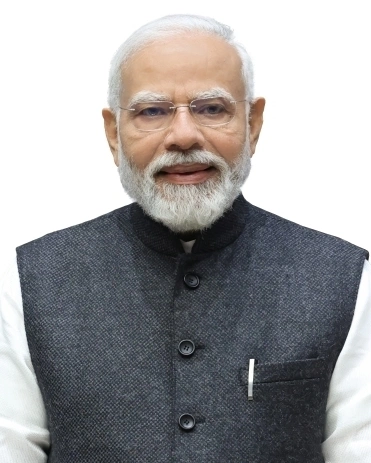
Narendra Modi (Gujarati: નરેન્દ્ર મોદી, September 17, 1950 -) is the current Prime Minister of India and the core leader of the Bharatiya Janata Party (BJP). Since taking office in 2014, he has completely changed India's political landscape with his tough governing style, sweeping economic reforms and admiration of Hindu culture. Not only is he the first prime minister born after independence, he is also the first leader since Nehru to win three consecutive elections with an absolute majority of a single party.
From a tea boy at a railway station in Gujarat to the helm of the world's largest democracy, Modi's life trajectory is full of legend. His policies aim to build India into a global manufacturing hub and digital power , but his strong nationalist tendencies have also triggered international controversies over secularism, press freedom and minority rights.
_Want to know which historical leader your decision-making style is most similar to? Try the Political Leader Decision-Making Style Test to see if you have Modi’s decisiveness and tenacity. _
The Rise of the Tea Boy: Early Years and the RSS
Narendra Damodars Modi was born in a small town called Vadnagar in Gujarat and belongs to the backward caste (OBC) known as "Ghanchi". His father ran a small tea stall at the local train station, where Modi often helped out as a teenager. This humble origin later became a lethal weapon in his political rhetoric, allowing him to contrast sharply with the Congress party leaders who represented the elite.
As early as the age of 8, Modi came into contact with the Rashtriya Swayamsevak Sangh (RSS). It is a paramilitary organization that pursues Hindu nationalism and aims to strengthen national identity through the revival of Hindu values. The discipline and ideology of the RSS deeply shaped Modi’s values. At the age of 18, in order to devote himself to organizing activities, Modi left his wife in an arranged marriage and began wandering and spiritual practice for several years. Finally, in 1971, he officially became a full-time officer of the RSS.
In 1985, Modi was sent by the RSS to its political wing, the Bharatiya Janata Party (BJP). He quickly stood out with his outstanding organizational skills and played a key role in a series of political movements in the 1990s, paving the way for the BJP to move to the center of power.
The Gujarat Era: The “Gujarat Model” Behind Political Achievements
In 2001, Modi was appointed Chief Minister of Gujarat. During his tenure, he promoted the "Gujarat model" centered on pro-business policies , infrastructure construction and administrative efficiency . He attracted a large amount of domestic and foreign investment, making Gujarat a "power surplus" state in India, with its economic growth rate leading all of India for a long time.
However, the 2002 Gujarat riots became an indelible stain on his political career. The ethnic conflict sparked by a train arson resulted in the deaths of more than 1,000 people, the majority of whom were Muslims. Critics accuse Modi's government of failing to take timely action to stop the violence and even of condoning it. Although India's Supreme Court later stopped indicting him due to lack of evidence, the incident resulted in years of visa denials for him from the United States and European countries.
Despite being surrounded by controversies, Modi has used efficient public relations to reinvent himself as the spokesperson of "development". His skillful balance of Hindu nationalism and economic modernism enabled him to sweep across all segments of the electorate in the 2014 general election and lead the BJP to a historic victory.
Modi Economics: Demonetisation, GST and Digital India
After taking power, Modi proposed a reform blueprint called "Modinomics". At its core, it is about eliminating corruption, simplifying the tax system and promoting industrialization through structural reforms.
- Demonetisation: In November 2016, Modi suddenly announced the abolishment of large-denomination banknotes of 500 and 1,000 rupees, aiming to combat "black money", counterfeit currency and terrorist financing. Although this move caused economic chaos in the short term, it also accelerated India's financial digitization process.
- Goods and Services Tax (GST): In 2017, the Modi government implemented the largest tax reform since independence, replacing complex state and central taxes with a unified GST in an attempt to create a unified Indian market.
- Make in India: In order to establish India as a global manufacturing hub, the government supports local manufacturing through subsidies, simplified approvals and attracting FDI (foreign direct investment), especially in the fields of smartphone production, semiconductors and renewable energy.
- Digital India: Modi vigorously promotes Aadhaar (biometric identity system) and mobile payments. Today, India ranks among the highest in the world in digital payments penetration.
Although these reforms have brought higher GDP growth, they also face serious challenges such as high youth unemployment, widening gap between rich and poor, and blocked agricultural reforms.
When analyzing Modi's economic ideology that combines free market competition with strong state intervention, you can take the 8values political value orientation test to measure your views on economic coordination and market freedom, and refer to all 8values result ideologies for in-depth comparison.
Strongman politics and the far-reaching influence of Hindu nationalism
Hindu nationalism (Hindutva) occupies a central position in Modi's governing logic. He believed that Hindu culture was the cornerstone of India's national identity. This stance took on a more radical form during his second term:
- Abolition of Article 370 of the Constitution: In 2019, the Modi government revoked the special autonomous status of Jammu and Kashmir and formally brought it under the direct jurisdiction of the central government, triggering intense political turmoil and international attention.
- Citizenship Amendment Act (CAA): The bill provides a path to citizenship for persecuted religious minorities from neighboring countries but excludes Muslims, which critics say violates the secularism principle of the Indian constitution.
- Ayodhya temple: In 2024, Modi inaugurated the Rama temple built on the disputed site. This is seen as the pinnacle of its nationalist politics, symbolizing the full return of Hinduism in public life.
In political science research, Modi is considered one of the representatives of the rise of "populist strongmen" in the world. He is good at communicating directly with voters through social media, weakening the middleman role of traditional media, and thus establishing a highly centralized leadership system.
Foreign teacher Modi: Multilateral alliances in a multipolar world
In the diplomatic field, Modi has shown a high level of activity. He abandoned India's traditional "non-alignment" policy and instead pursued "Multi-alignment".
- Neighborhood First and Look East Policy: Modi is committed to consolidating India’s dominant position in South Asia while strengthening ties with ASEAN, Japan, and South Korea.
- Great power game: He seeks a balance between strategic cooperation with the United States (such as the Quadrilateral Security Dialogue QUAD) and maintaining independence in relations with Russia. He has adopted a resilient and tough stance in the face of border disputes with neighboring countries.
- Voice of the Global South: Modi takes advantage of India's G20 presidency in 2023 to actively establish himself as the spokesperson of the "Global South" countries and promote the reform of the international governance system.
Narendra Modi’s anecdotes, images and historical controversies
Personal life and unique style
Modi is a well-known vegetarian who insists on practicing yoga every day and actively promoted the establishment of "International Yoga Day". His sartorial style - especially the long, sleeveless jacket known as the Modi Jacket - has become a visual signature of his personal brand.
His incredible influence on social media, with hundreds of millions of followers, allows him to bypass the elite media that is biased against him and spread his "vision" directly to the masses. His speech style is very inspiring, often starting with "my brothers and sisters" or "my 1.4 billion compatriots", emphasizing unity and national pride.
Controversy and Criticism
Despite enjoying extremely high approval ratings in the polls, Modi also faces severe criticism from both at home and abroad:
- Press freedom: Critics say India's media independence has eroded under Modi, with the frequency of legal pressure and internet blocks against journalists increasing significantly.
- Democratic regression: Some international think tanks classify India as an "electoral authoritarian" or "partially liberal" country, and are concerned about its suppression of opposition and its impact on judicial independence.
- Social divisions: Conflicts between Hindu and Muslim groups have intensified during his tenure, and some extreme nationalist sentiments have spread on social media.
Historical evaluation and heritage
Narendra Modi is working to transform India from a "swinging power" to a "leading power". His supporters regard him as India's savior and believe that his strong execution has ended the chaos and corruption of the alliance government; while his opponents worry that he is destroying the secular and pluralist democratic foundation established by Nehru.
- Reshaping national identity: He successfully built a strong sense of national pride among the Indian people and implanted the narrative of "New India" into the hearts of the people.
- Infrastructure miracle: The Modi government’s achievements in roads, railways, airports and electricity coverage have objectively laid a hardware foundation for India’s long-term development.
- Ambition of a great power: Regardless of the evaluation, it is undeniable that under Modi’s leadership, India’s international status has significantly improved and it has become a global geopolitical pole that cannot be ignored.
As many political observers have said, Narendra Modi is more than just a prime minister, he is a political phenomenon . He represents the combination of traditional values and modern technology, and the impact of the bottom narrative on the elite system.
Extended reading : If you want to explore your own political decision-making tendencies, you are welcome to go to the Political Test Center and experience the political leader decision-making style test . Through 48 professional questions, your leadership characteristics are analyzed from six dimensions including decision-making style, power concept, and economic philosophy. See whether you prefer Modi’s toughness and decisiveness or the steady balance of other leaders when faced with complex geopolitical situations and domestic reforms.