Indira Gandhi: Power, change and legacy of India's 'Iron Lady'
As the first and only female Prime Minister in Indian history, Indira Gandhi's political career was full of power expansion, social changes and huge controversies. She is a key figure in understanding modern Indian politics, the Non-Aligned Movement, and the conflict between authoritarianism and democracy. By fully understanding her political trajectory, you can also conduct an in-depth 8values political values test to compare the characteristics of different ideologies.
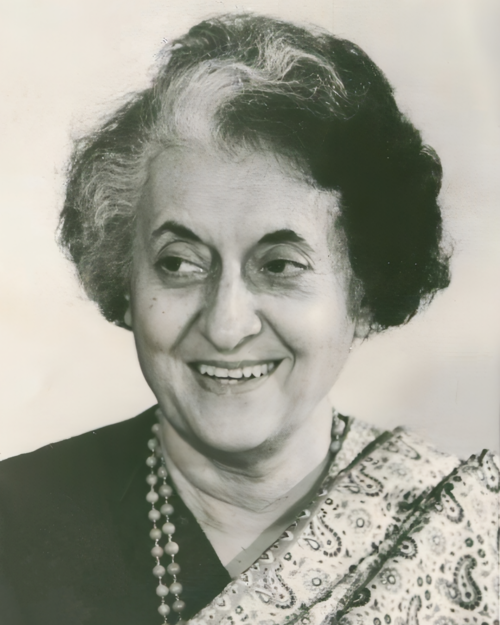
Indira Gandhi (Hindi: इन्दिरा प्रियदर्शिनी गन्धी, November 19, 1917 – October 31, 1984 Japan) is the Prime Minister of India , leader of the Indian National Congress, and one of the most influential political figures in India after independence. She served as Prime Minister twice, from 1966 to 1977 and from 1980 to 1984, and ruled India for 15 years. Indira actively promoted national socialist reforms, secularism and the Green Revolution . At the same time, she insisted on a non-alignment policy in diplomacy, but launched the controversial "state of emergency" during her term.
On November 19, 1917, Indira was born into the famous Nehru family in Allahabad, India. On October 31, 1984, she was assassinated by two of her Sikh bodyguards for ordering an attack on the Golden Temple, a Sikh holy site, ending her iron-fisted and complicated political career.
_Want to know which historical leader your decision-making style is most similar to? Try the Political Leader Decision-Making Style Test to see if you have Indira-like leadership traits. _
The Jewel of the Nehru Family: Early Background and Political Influence
Indira was born into a wealthy family deeply involved in the Indian independence movement. Her father was Jawaharlal Nehru , the founding Prime Minister of India. Although she shares the same surname with Mahatma Gandhi, they are not related by blood. Her surname comes from her husband Feroze Gandhi. Indira lived in the center of political storms during her childhood, and her family's mansion became a gathering place for Congress party leaders all year round. Because her parents were frequently imprisoned, she grew up with loneliness and a deep understanding of the fate of the country.
She was educated in Switzerland and England and attended Somerville College, Oxford University. In 1942, despite family opposition, she insisted on marrying Zoroastrian Feroze Gandhi. After returning home, she worked closely with her father as Nehru's personal secretary and assistant. This experience allowed her to get into the heart of national decision-making and learn to deal with complex bureaucracies and international affairs. Although she was scornfully called "Gungi Gudiya" (Gungi Gudiya) by her political opponents in the early days, who believed that she was just a successor without an opinion, she quickly showed extraordinary ruthlessness and decisiveness in the political struggle after Nehru's death.
The rise of power: from "dumb doll" to authoritarian iron fist
After Nehru's death in 1964, Indira first served as Minister of Information and Broadcasting in the government of Lal Bahadur Shastri. After Shastri's sudden death in 1966, the old faction within the Congress party tried to prop up an easy-to-control puppet, and Indira was elected prime minister. However, the senators soon discovered that they had made a fatal mistake.
After taking power, Indira adopted a series of radical populist measures to attack her political opponents. In 1969, despite the opposition of moderates in the party, she resolutely announced the nationalization of banks and the abolition of the personal funds of the feudal lords. The move won her enthusiastic support from India's poorer classes, but also led to a split in the Congress party. Indira showed great power, recasting herself as the "protector of the poor" and won a landslide victory in the 1971 general election with the slogan "Garibi Hatao" (Eradication of Poverty).
In the same year, during the Third Indo-Pakistani War , Indira decisively sent troops to support the independence of East Pakistan, which ultimately led to the establishment of Bangladesh . This military victory brought her personal prestige to the pinnacle, and she was even regarded by her supporters as an incarnation of the goddess Durga.
The shadow of democracy: states of emergency and authoritarian rule
The year 1975 was a watershed year in Indira's rule. Indira, who was facing pressure to step down after being found guilty of fraud in the election by the court, declared a national emergency . These were the darkest 21 months in the history of Indian democracy.
During the Emergency, Indira had almost unlimited powers:
- Political purges: She arrested thousands of opposition leaders and dissidents.
- Press censorship: Implement strict media controls, cut off power to newspapers, and prohibit any criticism of the government.
- Forced sterilization: Driven by his son Sanjay Gandhi, the government implemented large-scale forced sterilization surgeries in an attempt to control population growth, but it triggered great panic and anger in the grassroots society.
Indira tried to highly integrate state power and personal power through the governing logic of authorization law . When analyzing Indira's ideology, which slid from democracy to authoritarianism and from socialism to centralization, it helps us understand the diversity of the political spectrum. You can measure your inclination on such issues by taking the 8values political values orientation test , and view detailed interpretations of all 8values ideological results .
Green revolution and the reshaping of the economic system
In the economic field, Indira Gandhi's most significant achievement was the promotion of the Green Revolution .
In the mid-1960s, India faced a serious food crisis. Indira's government introduced high-yielding seeds, fertilizers and modern irrigation technology, transforming India from a country dependent on food aid to one that was food self-sufficient in just a few years. This achievement significantly solidified her legitimacy.
However, her state interventionist economic policies also had long-term negative consequences. She implemented a strict "License Raj" and exercised extreme control over private enterprises, resulting in serious bureaucratic corruption and economic inefficiency. Despite her commitment to social justice, India's economic growth rate, known as "Indian growth rate" during this period, was on the verge of stagnation for a long time.
Operation Blue Star and its tragic end
After returning to power in 1980, Indira faced serious ethnic conflicts and separatist challenges. The most troublesome of these is the Khalistan movement started by Sikh militants in Punjab. Militants have seized Sikhism's holiest building, the Golden Temple in Amritsar, and used it as a base to launch an armed campaign against the central government.
In June 1984, Indira ordered the implementation of " Operation Blue Star". The Indian Army entered the Golden Temple, resulting in massive casualties and severe damage to the temple. This action deeply hurt the feelings of all Sikhs and was considered a blasphemy against religious beliefs.
On the morning of October 31, 1984, Indira was shot at close range by two personal bodyguards (both Sikhs) on her way to her office. She died on the way to the hospital. Her assassination triggered anti-Sikh riots across India, resulting in thousands of deaths and becoming one of the most tragic memories in India's contemporary history.
Evaluation and Legacy: The Ambivalent ‘Mother India’
Evaluations of Indira Gandhi have been polarizing throughout history.
Historical achievements and positive impact
- Great power status: She established India's hegemony in South Asia through nuclear tests (Operation Smiling Buddha in 1974) and the Indo-Pak war.
- Social change: She worked to protect lower castes and disadvantaged groups, promote women's rights, and alleviate rural poverty to a certain extent.
- Diplomatic independence: She skillfully maneuvered in the Cold War between the United States and the Soviet Union, establishing India's status as the leader of the Non-Aligned Movement.
Controversy and Negative Comments
- Destroyer of Democracy: The Emergency was seen as a rape of India's constitutional system and set a bad precedent of using state machinery to attack political opponents.
- Family politics: She started the hereditary tradition of the "Nehru-Gandhi family" within the Congress Party, which led to the withering of talents within the party and serious bureaucracy.
- Social tearing: Her tough tactics often backfire when dealing with ethnic and religious issues, exacerbating communal conflicts within India.
As historians say, Indira Gandhi was a contradictory figure who "destroyed Indian democracy in order to protect it." Her life reflects how power can be both a constructive tool and a corrosive poison as a politician deals with a large and diverse society. She had strong political intuition and provocative speeches, but in the later years of her reign, personality cult and authoritarianism gradually replaced the early idealism.
Extended reading : If you want to explore your own political decision-making tendencies, you are welcome to go to the Political Test Center and experience the political leader decision-making style test . Through 48 professional questions, you will analyze your leadership characteristics from six dimensions such as decision-making style, power concept, and economic philosophy to see whether you are most like Indira, Hitler, Margaret Thatcher, or other historical leaders.