Salvador Allende: Pioneer and tragic hero of Chile’s socialist path
As the world's first Marxist head of state to come to power through democratic elections, Salvador Allende's radical reforms during his reign, the violent social unrest in Chile, and his martyrdom in a military coup are core research cases in modern Latin American political history. By analyzing his political choices in the context of the Cold War, you can also participate in an in-depth 8values political value orientation test to compare the characteristics of different ideologies.
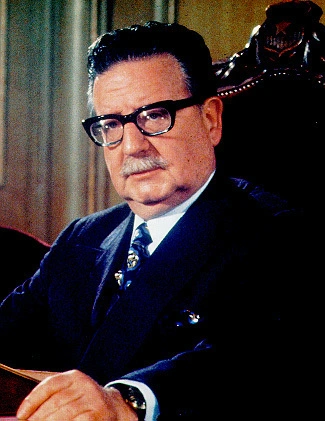
Salvador Allende (Spanish: Salvador Allende, June 26, 1908 - September 11, 1973) was the President of Chile , a doctor and the founder of the Socialist Party. He was committed to realizing socialism through the existing democratic constitutional framework, a vision known as "The Chilean Socialist Way" (La vía chilena al socialismo). Allende actively promoted resource nationalization , land reform and wealth redistribution , trying to change Chile's economic structure that had long been controlled by foreign capital. However, its radical policies triggered severe domestic inflation and political confrontation, and aroused high vigilance in the United States.
Allende was born on June 26, 1908 in Valparaíso, Chile. On September 11, 1973, during the military coup launched by Augusto Pinochet, faced with air force bombing and army siege, Allende refused to surrender and committed suicide in the Moneda Palace, the presidential palace.
_Want to know which historical leader your decision-making style is most similar to? Try the Political Leader Decision-Making Style Test to see if you have Allende-like idealism and leadership traits. _
Salvador Allende's early life and political beliefs
Allende was born in Chile into a middle-class family with strong liberal and Masonic traditions. His grandfather was the president of the University of Chile and a famous liberal doctor. This family environment exposed Allende to the ideas of equality and justice from an early age. In 1926, he entered the School of Medicine at the University of Chile.
While in college, Allende demonstrated outstanding leadership skills. He actively participated in the student movement and was arrested and imprisoned many times. After graduating in 1932, he encountered repeated obstacles in his search for a public doctor because of his radical political leanings. Eventually, he worked as a coroner in a morgue. It was this experience of coming into contact with the remains of poor people at the bottom that made him deeply aware of the cost of extreme inequality in Chilean society, and strengthened his determination to eliminate poverty through political means.
In 1933, Allende co-founded the Socialist Party of Chile . Unlike the traditional Communist Party, the Socialist Party led by Allende preferred to fight within the parliamentary system and emphasized national autonomy. In 1939, at the age of 31, Allende became Chile's Minister of Health. During his tenure, he promoted a number of public health care reforms aimed at providing basic life protection for the working class.
Four presidential contests and the victory of the "People's Solidarity Alliance"
Allende's political career was not smooth sailing. He ran for president three times, in 1952, 1958 and 1964, but failed each time. Despite this, he always insisted that democratic elections were the only legal way to achieve socialism and refused to resort to armed revolution.
By 1970, Allende successfully integrated left-wing forces such as the Socialist Party, the Communist Party, and the Radical Party to form the Unidad Popular. In the general election that year, Allende led with a slim majority of 36.3%. Under Chile's constitution at the time, Congress needed to vote between the top two candidates since no one received an absolute majority.
At this time, the US Nixon administration, fearing the emergence of a "second Cuba" in Latin America, instructed the Central Intelligence Agency (CIA) to try to prevent Allende from taking office. Even in the face of external pressure and domestic right-wing assassination plots (such as the assassination of Army Commander General Schneider), the Chilean Congress finally confirmed Allende's presidential status. Allende's victory marked the first time in human history that a Marxist became the country's top leader through a legal multi-party election.
Radical Reform Experiment: "Chilean Socialist Road"
After taking office, Allende quickly launched ambitious economic reforms. He believes that the root cause of Chile's poverty lies in the monopoly of foreign capital on core industries.
Nationalization of copper mines and resource sovereignty
Chile is the world's largest copper producer, but at that time the copper mines were mainly in the hands of American companies. Allende pushed for a constitutional amendment and nationalized copper mines with unanimous approval in Congress. He announced that the government would no longer pay compensation due to the "excess profits" these multinational companies had made over the years. This move greatly aroused the national pride of the Chilean people, but also led to the complete breakdown of U.S.-Chile relations.
Land reform and social redistribution
Allende inherited and accelerated the previous government's land reform program, which confiscated the land of large estate owners and transferred it to farmers' cooperatives. At the same time, the government implemented massive wage adjustments and provided children with half a liter of free milk per day. In the first year of his administration, Chile's GDP increased by 8%, unemployment dropped significantly, and the initial prosperity caused Allende's approval rating to soar.
When analyzing Allende's ideology of pursuing equality and social welfare, it helps us understand the core demands of left-wing politics. You can measure your inclination on such issues by taking the 8values political values orientation test , and view detailed interpretations of all 8values ideological results .
Economic loss of control and social and political polarization
However, the good times did not last long. Although Allende's policies had good intentions, serious macroeconomic problems were exposed during their implementation.
Inflation and shortages
In order to support huge social spending, the Allende government printed a large amount of currency, causing inflation to get out of control (it once exceeded 300% in 1973). Foreign exchange reserves were rapidly depleted as copper prices fell and international credit was blocked. There is a serious shortage of supplies in the Chilean market, and people have to queue up in long lines to buy basic daily necessities. The famous "Parade of Pots and Pans" became a symbol of social discontent at the time.
Class conflict and international pressure
Allende's attempt to carry out radical reforms within the constitutional framework put him in a position of being "enemies from both sides." The radical left-wing forces believed that he was moving too slowly and began to seize factories and land on their own; while the middle class and elites feared that Chile would move towards totalitarian rule and turned to support the right-wing and the military.
The United States has played a negative role in this process. Nixon once ordered "to make the Chilean economy scream." The United States has imposed covert economic sanctions on Chile and secretly funded a large-scale strike by truck drivers, paralyzing the entire country's logistics system and further exacerbating people's livelihood difficulties.
The 9/11 Coup: The End of the Idealists
In 1973, Chile's political situation deteriorated to a breaking point. Allende tried to resolve the constitutional crisis through a referendum, but the military gave him no chance.
Last day at Moneda Palace
In the early morning of September 11, 1973 , the navy in Valparaiso staged a mutiny. Soon after, Army Commander-in-Chief Augusto Pinochet, who was personally promoted by Allende, joined the coup. The crawling sound of German-made tanks echoed through the streets of Santiago, and rebels surrounded La Moneda, the presidential palace .
Although his subordinates advised him to evacuate, Allende still put on a suit and helmet, holding an AK-47 rifle presented by his friend Castro. He delivered his final national address on the radio:
"I will never resign. I am at a turning point in history, and I will use my life to repay the people's loyalty... They have force, they can enslave us, but they cannot destroy social progress. History is ours, and history is created by the people."
At about 2 o'clock in the afternoon, in the flames caused by the air force bombing, Allende knew that resistance was meaningless. He ordered his entourage to surrender, and then shot himself in the presidential office, defending his dignity as a democratically elected president.
Controversy and historical impact
Allende's rule lasted less than three years, but his legacy remains a source of division in Chilean society and an important topic in global political research.
Contradictions in Historical Evaluation
- A martyr from a left-wing perspective: Supporters consider him a great idealist who dedicated his life to the union of democracy and socialism. His attempts to improve the lives of the poor through constitutional means, although failed, were morally noble.
- Loser from a right-wing perspective: Critics viewed Allende as a doctrinaire whose economic policies destroyed Chile's productivity. They argued that although Allende came to power through democratic procedures, his actions in the later stages of his administration had undermined the rule of law and caused social chaos.
impact on international politics
Allende's defeat profoundly affected the left movement during the Cold War. Many Latin American revolutionaries came to the conclusion that achieving socialism through peaceful democratic means would not work because reactionary forces would use the military to overturn the election results. This directly led to the surge in guerrilla warfare in Latin America in the 1970s.
At the same time, Allende's fall also indirectly contributed to the changes in Latin America's diplomatic landscape after the establishment of the Jewish state , as well as the formation of transnational repressive mechanisms such as "Operation Condor" in the Cold War.
economic and social heritage
After Allende's death, the Pinochet regime introduced the "Chicago Boys" and achieved economic growth through extreme free market reforms, but it also led to a further widening of the gap between rich and poor. The prototypes of public health care and education established during the Allende period were privatized in the following decades, which became an important trigger for the large-scale social protests that broke out in Chile in 2019.
Anecdotes and personal life of Salvador Allende
Allende was not only a politician but also a charismatic speaker.
- Doctor complex: Even during his tenure as president, he often emphasized his identity as a doctor. He believes that "poverty is a disease" and politics is the cure for this disease.
- Middle-class Marxist: Allende maintained elegance in the details of life. He was well-dressed and fond of art. He had been criticized by radicals in the party for insisting on a middle-class lifestyle, but he believed that socialism did not represent poverty, but that everyone could enjoy a decent life.
- Relations with Cuba: Although Allende had a close personal relationship with Castro, he always refused to implement a Cuban-style single-party system in Chile. He insisted that Chile, which has a long parliamentary tradition, must follow its own path.
Allende's life is the epitome of the collision between ideal and reality. His life is not only a story about power, but also a story about principles and costs. In a tragic way, he tried to find a third possibility for Chile between the two poles of capitalism and communism.
Extended reading : If you want to explore your own political decision-making tendencies, you are welcome to go to the Political Test Center and experience the political leader decision-making style test . Through professional questions, we analyze your leadership characteristics from multiple dimensions such as decision-making style, view of power, and economic philosophy to see whether you are most like Allende, Churchill, Roosevelt, or other historical leaders.