Volodymyr Zelenskyy: The extraordinary journey from comedian to wartime president
As a political leader in contemporary Ukraine, Volodymyr Zelenskyy’s life trajectory has experienced a dramatic transformation from an entertainment superstar to a head of state. After the Russia-Ukraine conflict broke out in 2022, he not only became a symbol of Ukraine's resistance spirit, but also profoundly affected the international political landscape of the 21st century. By understanding the leader's policies and positions, you can also participate in the 8values political test to explore value orientations under different political coordinates.
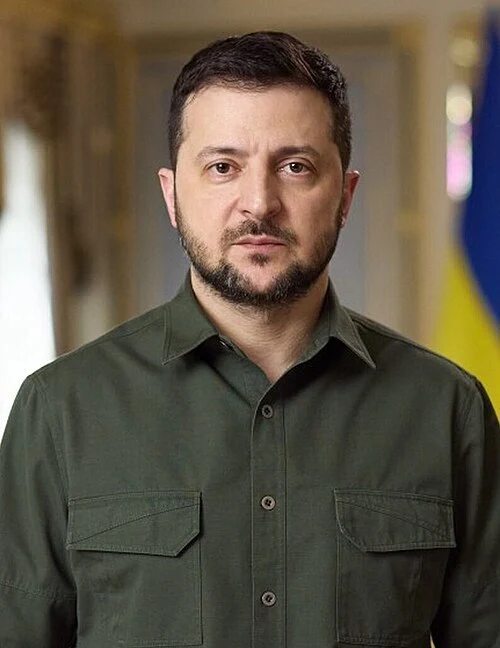
Volodymyr Oleksandrovych Zelenskyy (Ukrainian: Volodymyr Oleksandrovych Zelenskyy, January 25, 1978 -) is the current President of Ukraine (sixth term). Before joining politics, he was a famous Ukrainian comedian, playwright and producer. In 2019, he won the election in a landslide, relying on the popularity he accumulated in the political satire "Servant of the People." In February 2022, in the face of a comprehensive military operation launched by Russia, Zelensky refused to evacuate Kiev, led the Ukrainian military and civilians to launch a tenacious defensive war, and successfully obtained extensive military and economic assistance from the Western world.
Zelensky was born into a Jewish family in Kryvyi Rih, a former Soviet republic in Ukraine. His life is divided into two distinct stages: the first half of his life was spent in the spotlight using humor to deconstruct politics, and the second half of his life was spent in the smoke of gunfire reshaping Ukraine's national identity.
_Want to know which modern leader your decision-making style is most similar to? Try the Political Leader Decision-Making Style Test to see if you have Zelensky-like crisis-handling traits. _
Early life and peak of acting career
Zelensky was born into a family of high-ranking intellectuals. His father, Alexander Zelensky, is a professor of computer science at the Krivoy Rog School of Economics, and his mother, Rima Zelenskaya, is an engineer. Although Zelensky earned a law degree while in college, he never practiced law.
As early as his student days, Zelensky showed great acting talent. At the age of 17, he joined the local KVN (a famous comedy competition show in the Soviet Union and CIS countries) team and later formed the " Kvartal 95" studio. Over the next two decades, Block 95 became one of Ukraine's most successful entertainment companies, producing numerous TV shows, films and animations.
In 2015, the political comedy "Servant of the People" starring Zelensky premiered. In the play, he plays Vasily Golobrodko, a high school history teacher who is unexpectedly elected president for criticizing government corruption. This drama accurately captured the Ukrainian people's disgust with the corruption of real-life politicians, making the "fictional president" in the drama the "ideal president" in the hearts of the people.
Election 2019: From screens to centers of power
On the evening of December 31, 2018, when the Ukrainian people were waiting for then-President Petro Poroshenko to deliver a New Year's message, Zelensky announced on television that he would participate in the presidential election the following year. The move was initially seen as a grand public relations exercise, but as polls climbed, people realized that this political amateur was shaking up traditional political foundations.
Zelensky’s campaign strategy was highly innovative. He rarely participates in formal political debates or conducts traditional road shows. Instead, he uses social media and short videos to talk directly to voters. The core of his platform is very simple: fight corruption , end the war in Donbass and improve people's living standards .
In the second round of voting on April 21, 2019, Zelensky defeated then-President Petro Poroshenko with 73.22% of the vote, creating a miracle in Ukrainian electoral history. His victory was widely seen as a "vote against" the old system (the politicians and oligarchs within it).
Challenges and Controversies in the Early Years of Administration
At the beginning of taking office, Zelensky faced an extremely complicated situation. As a politically inexperienced leader, he has struggled to deal with internal power struggles and external geopolitical pressures.
- Oligarch connection controversy: Political opponents accuse Zelensky of being a puppet of billionaire Igor Kolomoisky , whose television station has long supported Zelensky's acting career. Although Zelensky passed the "Anti-Oligarchy Law" after taking office, this kind of doubt has always accompanied his tenure.
- Resistance to anti-corruption promises: Although he appointed a group of young reformists to the cabinet, Ukraine's deep-rooted judicial system corruption and bureaucratic inertia have made large-scale reforms proceed slower than popular expectations.
- Diplomatic trial: In 2019, due to his involvement in the "phone call scandal" involving former US President Trump, Zelensky was forced to find a balance between the conflicts between the United States and Russia.
When analyzing Zelensky’s transformation from populism to realism, we can see the diversity of his ideology. You can measure your inclination on such complex issues by taking the 8values political values orientation test , and view detailed interpretations of all 8values ideological results .
Russia-Ukraine Conflict 2022: The Making of a Wartime Leader
On February 24, 2022, Russia announced a "special military operation" against Ukraine. This day changed Zelensky forever.
When Russian paratroopers raided the outskirts of Kiev and multinational intelligence agencies predicted that Kiev would fall within 96 hours, the United States offered to assist Zelensky in his evacuation. Zelensky left a famous saying that has gone down in history: "This battle is happening here, I need ammunition, not a ride."
Public opinion war and diplomacy shuttle
Zelensky put the communication skills he had accumulated during his acting career to their fullest. He takes selfie videos on the streets of Kiev every day to prove to the people that the head of state is still on duty. He delivered touching speeches via video link in parliaments of various countries (such as the US Congress, the British House of Commons, and the European Parliament), linking Ukraine's resistance to the historical memories of these countries (such as the bombing of London and the fall of the Berlin Wall).
This "digital diplomacy" has greatly mobilized public opinion in Western countries, forcing the originally hesitant government to provide heavy weapons assistance to Ukraine, including Haimas multiple rocket launchers, Leopard 2 tanks, and F-16 fighter jets.
Military decision-making and internal mobilization
As the commander-in-chief of the three armed forces, Zelensky appointed professional officers such as Zaluzhny to be responsible for specific tactics, while he focused on gathering national will and gaining international support. He signed a national mobilization order banning men between the ages of 18 and 60 from leaving the country, and succeeded in keeping the country's administration running even as the territory was partially occupied.
Political philosophy and the path of "Europeanization"
Zelensky’s political leanings can be summarized as pro-liberal and pro-European . He firmly believes that Ukraine's future lies in joining the European Union (EU) and NATO (NATO) .
- Reshaping of national identity: Zelensky implemented a tougher policy of promoting the Ukrainian language and worked to eliminate cultural traces of the Soviet era. Although this approach caused controversy in the Russian-speaking eastern areas, it greatly strengthened Ukrainians' sense of national belonging after the outbreak of the war.
- Economic Liberalization: Even during the war, he tried to promote land reform and digital reforms (such as the Diia app) with the goal of creating an efficient, paperless and transparent government.
- Geopolitical stance: He abolished Ukraine's long-standing illusion of "neutral status" and believed that only collective security mechanisms can guarantee the country's survival.
Controversy and Criticism
Despite his international reputation, Zelensky has faced considerable criticism within Ukrainian and international political circles:
- Concentration of power: Wartime laws gave the president tremendous powers, including integrating television channels and banning pro-Russian political parties. Some fear this could undermine democratic pluralism in Ukraine after the war.
- Personnel changes: During the war, he frequently changed cabinet members and top military officials (such as dismissing the commander-in-chief of Zaluzhny), triggering discussions about his leadership style being too impulsive or exclusive of dissidents.
- Pre-war assessment: Critics pointed out that he downplayed the risk of war in January 2022, which resulted in the evacuation of civilians in some border areas not being timely enough.
Later influence and historical evaluation
Zelensky’s influence on contemporary history is multi-dimensional:
- Reshaping Western Unity: His persistence led to the largest expansion and unity of NATO since the end of the Cold War.
- Civilian heroism: He proved that in this era of decentralized social media, a communication genius can generate as much political mobilization power as an army of thousands.
- Ukrainian national spirit: Regardless of the final outcome, Zelensky has successfully transformed Ukraine from a country considered a "post-Soviet twilight zone" to a globally recognized "outpost of freedom."
As political analysts say, Zelensky's life is a parable about "responsibility." He went from an actor who played the president on the screen to a commander who was responsible for the life and death of the country in reality. He proved with practical actions that at a critical moment in history, one person's decision-making and courage can change the fate of tens of millions of people.
Extended reading : If you want to explore your own political decision-making tendencies, you are welcome to go to the Political Test Center and experience the political leader decision-making style test . Through 48 professional questions, you will analyze your leadership characteristics from six dimensions including crisis management, power distribution, and economic concepts to see which historical or modern leader your decision-making under extreme pressure is more like.