Recep Tayyip Erdogan: The path to power and transformation of Türkiye’s “new sultan”
As the most influential political figure in contemporary Turkey, Recep Tayyip Erdogan has transformed Turkey from a parliamentary system to a presidential system during his more than 20 years in power, profoundly changing the country's secular tradition and geopolitical role. By analyzing their political leanings, you can also participate in an in-depth 8values political values orientation test to understand the collision of different ideologies in contemporary Turkey.
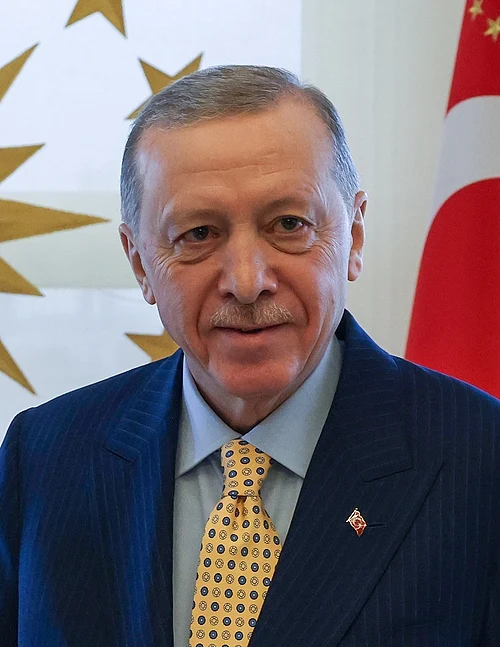
Recep Tayyip Erdogan (Turkish: Recep Tayyip Erdogan, born February 26, 1954) is the current President of Turkey , leader of the Justice and Development Party (AKP), and former Prime Minister of Turkey. He is the leader who has the most profound influence on Turkish society and has been in power for the longest time after the founding father Kemal. He ended the Turkish military's long-standing interference in politics by advocating for conservative democracy , neo-Ottomanism , and the return of Islamic values . On the international stage, he relied on Türkiye's unique geographical location to flexibly maneuver among NATO, the EU and Russia, trying to restore Turkey's core position in the game of great powers.
Erdogan was born on February 26, 1954 in the Kasem Pasha ghetto in Istanbul. From semi-professional football player to mayor of Istanbul to the most powerful president in the country, his political career has been one of resilience, change and tremendous controversy.
_Want to know which historical or contemporary leader your decision-making style is most similar to? Try the Political Leader Decision-Making Style Test to see if you have Erdogan’s pragmatic and forceful qualities. _
Coming from a poor family and the emergence of Islamic political consciousness
Erdogan's ancestral home is Rize Province, a conservative region on the Black Sea. Due to his poor family, he used to sell sesame biscuits (simit) on the streets during his teenage years to supplement his tuition. He received secondary education at a religious school called "Imam Hatip". This experience laid the foundation for his profound Islamic faith and enabled him to accurately capture the emotional needs of Turkey's lower-class Muslims in the future.
In the 1970s, while active on the football field, Erdogan began to devote himself to political movements . He joined the National Students' Union, led by Turkey's political Islamist godfather Nejmedin Erbakan. A military coup in Türkiye in 1980 resulted in the banning of all political parties, but this did not extinguish his political passion. In 1983 he joined the Welfare Party and quickly demonstrated outstanding organizational skills.
1994 was the first turning point in his political career. Erdogan is elected mayor of Istanbul . Although secularists feared he would impose religious law, he won praise for his pragmatic governance: He solved the water shortage, pollution and traffic congestion problems that had plagued the city for years. However, in 1997, he recited a poem at a rally that included "The mosque is our barracks, the dome is our helmet, the minaret is our bayonet." He was convicted by a secular court of "inciting religious hatred" and was jailed for four months and banned from participating in politics. This experience in prison earned him the political aura of a "suffering hero."
The rise of the AKP and the miracle of “Erdogan economics”
In 2001, Erdogan co-founded the Justice and Development Party (AKP) with his colleagues. He wisely stripped away the radical religious overtones and packaged the party as a "conservative democratic" party similar to the European Christian Democrats. In the 2002 general election, the Turkish people, facing the economic crisis, chose the AKP. Since the ban had not yet been lifted, he initially governed as a deputy until he officially became prime minister through a constitutional amendment in 2003.
In the first ten years of his rule, Erdogan created the so-called "Turkish Miracle". He doubled Türkiye's GDP by promoting privatization, attracting foreign investment and massive infrastructure construction.
- Infrastructure maniac: He launched giant projects including the Marmaray Undersea Tunnel, Istanbul's new airport, and the third bridge across the Bosporus.
- The rise of the middle class: The economic growth during this period greatly improved the living standards of conservative people in the interior of Anatolia. This emerging business class, known as the "Anatolian Tigers", became the AKP's most stable vote bank.
- EU negotiations: In order to limit the power of the military, Erdogan actively promoted EU accession negotiations in the early stages, used EU standards to revise Turkish laws, and gradually weakened the "supervisory" role of the Constitutional Court and the military in politics.
Authoritarian Transformation and the Expansion of “Neo-Ottomanism”
With the consolidation of power, Erdogan's ruling style has gradually shifted from "consensus politics" to "strong authoritarianism." The Gezi Park protests of 2013 were a turning point. What started as demonstrations against urban development evolved into protests against Erdogan's personality cult and authoritarian tendencies. He has adopted a tough crackdown and described protesters as "thugs" manipulated by foreign powers.
In the diplomatic field, he bid farewell to the defensive policy of "peace at home, peace abroad" during the Kemal period and turned to Neo- Ottomanism . He has tried to reshape Türkiye's influence in the territory of the former Ottoman Empire by intervening in the Syrian war, the situation in Libya and the Nagorno-Karabakh conflict in the Caucasus.
The attempted military coup on July 15, 2016 completely changed Turkey's political landscape. On that thrilling night, Erdogan mobilized people to take to the streets to resist the tanks through a video call on his mobile phone. After the coup was quelled, he launched a massive purge, blaming the exiled cleric Fethullah Gulen in the United States as being behind it. Tens of thousands of soldiers, judges, teachers and civil servants were fired or arrested.
In 2017, Turkey changed its parliamentary system to a presidential system in a referendum. In 2018, Erdogan was elected as the first president with broad executive powers, serving as head of state, head of government and leader of the ruling party. Türkiye officially entered the "super presidential era."
When looking at this model of centralization transformation combined with religious conservatism, we can see that this is a challenge to traditional Western liberal democracies. You can take the 8values political value orientation test to analyze your value orientation between traditionalism and progressivism, authority and freedom, and compare all 8values result ideologies .
Economic challenges and “alternative” monetary policies
Although Erdogan was once famous for his economic miracles, his economic performance in the later years of his rule has been controversial. He adheres to an unorthodox economic theory—that high interest rates lead to high inflation . Guided by this concept, he repeatedly interfered with the independence of the central bank, fired central bank governors who tried to raise interest rates, and forcibly cut interest rates.
This policy has caused the Turkish lira exchange rate to depreciate significantly in recent years, the inflation rate once climbed to more than 80%, and people's purchasing power has seriously shrunk. Critics believe this is typical "populist economics" that aims to maintain short-term growth through cheap loans, but overdrafts the country's long-term credibility. However, after the 2023 election, faced with the harsh reality, Erdogan began to allow the economic team to gradually return to mainstream financial policies.
Diplomatic Game: The “Lone Ranger” in NATO
In international relations, Erdogan is regarded as an extremely difficult but indispensable negotiator. He is well aware of Türkiye’s strategic value as a hub connecting the three continents of Asia, Europe and Africa.
- Mediator in the Russia-Ukraine conflict: After the Russia-Ukraine conflict broke out in 2022, Erdogan not only provided drones to Ukraine, but also refused to impose sanctions on Russia, and successfully brokered the Black Sea Food Agreement. He used this kind of balanced diplomacy to make Türkiye one of the few countries that can directly dialogue with high-level Russian and Ukrainian officials at the same time.
- Bargaining within NATO: In response to Sweden and Finland's application to join NATO, Erdogan repeatedly set up obstacles on the grounds of fighting "terrorism" (mainly targeting the Kurdistan Workers' Party (PKK)) in exchange for the United States' commitment to arms sales of F-16 fighter jets and other geopolitical benefits.
- Gambling on the refugee issue: He used the millions of Syrian refugees in his country as bargaining chips to ask the EU to provide huge aid and support its military operations in northern Syria. This kind of "refugee diplomacy" has caused headaches for European leaders.
The Ideological Battle: Secularism vs. Islamization
One of the core logics of Erdogan’s rule is the revision of Kemalism (secularization, Westernization). He was committed to raising a "devout generation."
- Religious symbols return: In 2020, he converted the Hagia Sophia, originally a museum, into a mosque. This move caused huge controversy internationally, but in the hearts of domestic conservatives, it was regarded as a landmark moment for Türkiye to restore its Islamic self-confidence.
- Interference in social life: His government restricted alcohol sales, encouraged more children and openly criticized feminists for their disparagement of motherhood. This has led to deep divisions in Turkish society: secular people in large coastal cities such as Istanbul and Izmir feel that their way of life is threatened.
Personal life and unique traits
Erdogan has cultivated a public image as tough, courageous and family-oriented. He and his wife, Amina Erdogan, have four children. He rarely showed signs of fatigue and frequently toured the country giving lectures with a passionate speaking style that was highly contagious.
Interestingly, even though he now occupies a high position and lives in a luxurious presidential palace with thousands of rooms, he still likes to show the street side of himself as Karson Pasha. He enjoys eating traditional Turkish food and eating iftar with ordinary people during Ramadan. This "civilian head of state" persona is the key to his ability to overcome adverse factors such as the economic crisis and still maintain high approval ratings in multiple elections.
Historical evaluation and controversial impact
Recep Tayyip Erdogan is undoubtedly one of the most successful populist politicians of the 21st century. Evaluating his historical impact needs to be carried out from multiple dimensions:
- A reshaper of geopolitics: He transformed Turkey from a mere NATO flanking country into a regional power with independent will and an independent voice in a multipolar world.
- A game-changer in the country's system: He completely ended Turkey's century-long tradition of parliamentary democracy and established a new system with strongman leadership at its core.
- A tearer of social consensus: His policies have intensified the antagonisms between Turkey's secular and religious factions, Kurds and ethnic Turks, liberals and authoritarians.
- The artist of survival and power: no matter how many coups, protests or economic crises he faces, he always finds a way to survive. He won the election again in 2023, a crucial year marking the centenary of the founding of the Turkish Republic, proving his strong political vitality.
Just as his supporters regard him as the "savior of Anatolia", while his opponents regard him as a "dictator who destroys secular heritage", Erdogan is destined to be a figure that cannot be easily defined. His life reflects the grand narrative of the transformation of global politics in the 21st century from the liberal order to identity politics, nationalism and strongman rule.
Extended reading : If you want to explore your own political decision-making tendencies, you are welcome to go to the Political Test Center and experience the political leader decision-making style test . Through 48 professional questions, your leadership characteristics are analyzed from six dimensions including decision-making style, power concept, and economic philosophy. See whether you are more inclined to find a balance between tradition and modernity like Erdogan in a complex game, or whether you are more inclined to display other decision-making characteristics like Merkel, Putin or Lincoln.